Friday, May 30, 2025

Health and Wellness News: New Israeli study links poor hydration to increase heart failure risk

New Israeli study links poor hydration to increase heart failure risk
Many don't consume enough water on regular days, even when it's cold, and as a result could have a higher risk of heart failure and high blood pressure (hypertension).

By Judy Siegel-Itzkovich, Jerusalem Post, May 25, 2025

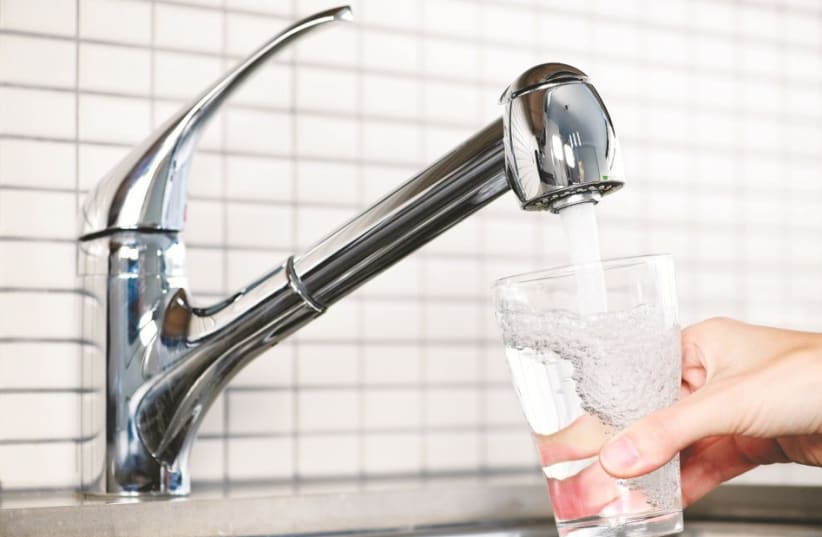
Water faucet, illustration (photo credit: INGIMAGE)


Most Israelis were aware enough of last week’s nearly 40 C temperatures and drank a lot of water. Nevertheless, many don’t consume enough liquid on ordinary days – even when it’s cold outside – and as a result could have a higher risk of heart failure and high blood pressure (hypertension).

Water reduces sodium levels. Researchers at Ramat Gan’s Bar-Ilan University, in a landmark study, found that people worldwide with sodium (salt) levels at the higher end of the “normal” range are significantly more likely to develop those two most common age-related chronic diseases. They have just published their findings in the European Journal of Preventive Cardiology under the title “Risk of hypertension and heart failure linked to high-normal serum sodium and toxicity in general healthcare electronic medical records.”  

They analyzed electronic health records from between 2003 and 2023 of an impressive 407,000 healthy adults who were members of Leumit Healthcare Services, the smallest of the four public health funds. It was one of the largest and longest-running analysis to date examining the link between hydration status and cardiovascular health.


Sodium levels of 140 to 142 mmol/L (still within normal range) were linked to a 13% higher risk of hypertension and a 20% higher risk of heart failure. Almost 60% of the healthy adult population had sodium levels in ranges associated with these risks. Many Israelis add a lot of salt to their food or regularly eat salty snacks.


Sodium, which is routinely tested in standard blood tests, has long been considered normal within the 135 to 146 mmol/L range. But this study challenges that assumption, suggesting a strong, long-term association between higher sodium levels and cardiovascular risk, even among those considered otherwise healthy.


PROF. JONATHAN RABINOWITZ from BIU’s School of Social Work practices what he preaches (credit: Razel Rabinowitz)


These associations remained strong even after adjusting for age, sex, smoking, body mass index, blood pressure, and potassium levels. The analysis did not include people with medical conditions that affect water balance, in order to ensure a more accurate reflection of hydration-related risk.


 “The aging of the population is driving a global epidemic of age-dependent chronic diseases, including cardiovascular, chronic respiratory, musculoskeletal, neurological, and mental disorders. These disorders in those aged 60 years and older account for about 23% of the total global disease burden, and this proportion is rapidly increasing as life expectancy rises,” said the study’s lead author, Prof. Jonathan Rabinowitz from BIU’s School of Social Work, who collaborated on the research with Dr. Natalia Dmitrieva, from the US National Institutes of Health (NIH).


“Thus, identifying mechanisms and implementing preventive measures to decelerate the aging process have emerged as new challenges for biomedical research and public health.”

 “Our findings point to hydration as a critical and overlooked part of chronic disease prevention. A simple blood test might flag people who could benefit from basic lifestyle adjustments – such as drinking more water, which reduces sodium levels,” he continued.

He told The Jerusalem Post that the team had decided to work with Leumit because the health fund is “very cooperative and has the longest computerized medical records among all the health funds. I work with health statistics and have a wellness lab at the university where I look for tweaks that can have a positive impact on people’s health.”


Rabinowitz, who was born in Indiana but made aliyah from Cleveland 35 years ago, said that usually, personal physicians here don’t routinely ask patients how much water they drink, “so I wasn’t surprised by our findings. I suggest that people drink two glasses of water – ordinary tap water is fine – before they have their morning coffee.


“They can drink tea without sugar instead of water if they like, but not so many cups of coffee – and certainly not sugar-sweetened or artificially sweetened drinks like cola. One needn’t buy bottled water, as tap water is fine and ordinary plastic bottles can leak harmful plastic into the water, especially when it’s hot.


“Reusable plastic or metallic water bottles are safe. People think that in the winter, they don’t have to drink much, but they are wrong. They can become dehydrated just from the heating inside the house.”


Rabinowitz added that “One doesn’t have to go for a blood test to see if one is drinking enough water; if your urine is clear or light colored, you’re OK (although a multivitamin may affect the color). If it’s dark yellow, you’re not getting enough.”

Healthcare system focus on illness, not wellness

The healthcare system focuses on illness, not wellness. “There are smartphone apps that remind you to drink water, they are very useful  – like the apps that check how much you have walked. There are even smart water bottles that measure how much you have drunk and give you an automatic reminder if you haven’t gotten enough. It would be great if a smart watch could know from your skin if you’ve had enough water and send you a reminder.”


The NIH is even studying a connection between lack of hydration and dementia.

Rabinowitz and his team are now doing a national study on walking. “Twenty minutes a day is excellent. Walking with your dog daily, rain or shine, is very beneficial; bring water for yourself and for your pet. It has also been found that people who walked got to work in the same time it took to get there by bus or other public transport.”

"Hydration is often overlooked in chronic disease prevention,” Rabinowitz concluded. “This study adds compelling evidence that staying well-hydrated may help reduce the long-term risk of serious conditions, such as hypertension and heart failure.”


With population aging and chronic disease rates on the rise, these insights may inform future clinical guidelines, preventive screenings, and public health campaigns aimed at encouraging healthy hydration habits, he said.




THIS PAGE WAS POSTED BY SPUTNIK ONE OF THE SPUTNIKS ORBIT BLOGhttps://disqus.com/HOME/FORUM/THESPUTNIKSORBIT-BLOGSPOT-COM

Thursday, May 29, 2025

Archaeology News: Egypt: Archaeologists discover three ancient tombs dating back more than 3,500 years

Egypt: Archaeologists discover three ancient tombs dating back more than 3,500 years

The new discoveries date back to the New Kingdom period (1550 BC), according to officials.

By Sky News, Monday May 26, 2025

https://news.sky.com/story/egypt-archaeologists-discover-three-ancient-tombs-dating-back-more-than-3-500-years-13375066

Pic: Egypt Ministry of Tourism and Antiquities (via AP)


Archaeologists in Egypt have discovered three tombs dating back more than 3,500 years.

The tombs of prominent statesmen were discovered in the Dra Abu el-Naga necropolis in the southern Egyptian city of Luxor, according to officials.

The new discoveries date back to the New Kingdom period (1550 BC), with the names and titles of the tombs' owners also found through inscriptions within.

Mohamed Ismail Khaled, secretary-general of Egypt's Supreme Council of Antiquities, said a further study of other inscriptions was needed to gain a greater understanding of the tombs' owners.

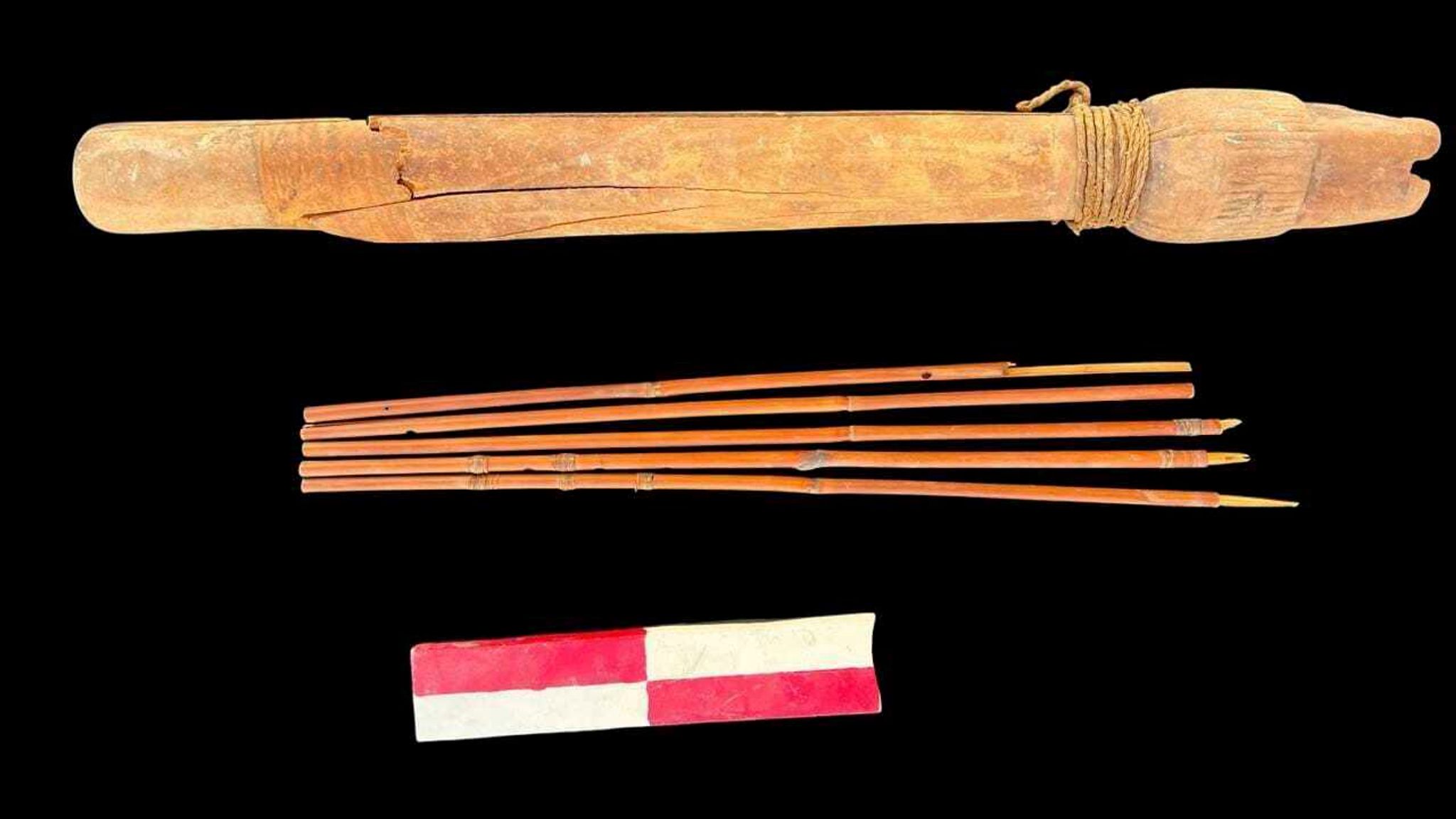
The tourism and antiquities ministry released pictures of items discovered in the tombs, including artefacts and statues.

Items discovered in the tombs. Pic: Egypt Ministry of Tourism and Antiquities (via AP)


One of the tombs, which was mostly destroyed, belonged to Amum-em-Ipet, from the Ramesside period.

Baki worked as a supervisor of the grain silo, while S was a supervisor at the Temple of Amun, a write and the mayor of the northern oases.

Sherif Fathir, Egypt's tourism and antiquities minister, described the discovery as a significant scientific and archaeological achievement.

Archaeology is one of the areas expected to greatly boost cultural tourism in the country, according to Mr Fathir.


Wednesday, May 21, 2025

Defense News: Heckler & Koch Begins Delivery of New G95A1 Assault Rifles to German Armed Forces


Heckler & Koch Begins Delivery of New G95A1 Assault Rifles to German Armed Forces


First official order marks the start of series production for over 118,000 rifles, reinforcing H&K’s central role in modernizing Germany’s small arms arsenal


By Eyal Boguslavsky, Israel Defense, 20/05/2025

 The Heckler & Koch  G95A1 assault rifle. Photo by Heckler & Koch


German small arms manufacturer Heckler & Koch has announced the receipt of the first official order for the delivery of the new standard-issue G95A1 assault rifle and its shorter variant, the KA1, to the German Armed Forces.

The procurement process began in 2017 with a Europe-wide tender and was legally concluded in 2023. The newly placed order marks the operational start of series production and delivery. According to current plans, a total of 118,718 G95A1 and KA1 rifles are to be procured. Depending on the future development of the German Army’s size—an end strength of 460,000 troops has been mentioned—this number could increase significantly, even as the existing G36 remains in service.

The G95A1 is based on the HK416 A8 and features minor modifications compared to the G95K, which is based on the HK416 A7 and is already in service with the German Army’s Special Forces.

While the KSK (Kommando Spezialkräfte) uses the G95K equipped with the EOTech EXPS3-0 NV reflex sight, and the Kampfschwimmer (combat swimmers) use an Aimpoint red dot sight, the G95A1 is reportedly outfitted with the ELCAN Specter DR riflescope offering 1x to 4x magnification. The rifle also includes mechanical backup sights.

This order highlights the key and ongoing role of Heckler & Koch in arming the German military. Just this week, the company delivered its 15,000th MG5 machine gun to the Bundeswehr. The MG5 universal machine gun is gradually replacing the MG3, which has served the German Armed Forces for decades.

 The Heckler & Koch  MG5 universal machine gun Photo by Ruediger Hess, Training Support Activity Europe


THIS PAGE WAS POSTED BY SPUTNIK ONE OF THE SPUTNIKS ORBIT BLOGhttps://disqus.com/HOME/FORUM/THESPUTNIKSORBIT-BLOGSPOT-COM

Sunday, May 18, 2025

Health and Wellness News: The one snack longevity experts swear by—and it’s not what you think

The one snack longevity experts swear by—and it’s not what you think

High in polyphenols and fiber, air-popped popcorn can reduce inflammation and aid in weight loss.

By Jerusalem Post Staff, May 14, 2025

https://www.jpost.com/health-and-wellness/health-and-wellness-around-the-world/article-853898

High in polyphenols and fiber, air-popped popcorn can reduce inflammation and aid in weight loss.(photo credit: baibaz. Via Shutterstock)


Popcorn, often associated with movie nights and buttery indulgence, is gaining recognition as a healthful snack when prepared correctly. To maximize the health benefits, it's important to enjoy popcorn air-popped instead of laden with butter to avoid excessive calories and fat, making it healthy and potentially helpful for weight loss, as reported by the New York Post. With its low calorie content and high fiber, popcorn can aid in weight management by promoting feelings of fullness.


Preparing popcorn at home can turn it into a functional snack. It can be made on the stove without oil by placing the kernels in a pot with a lid, heating them, and occasionally shaking the pot to prevent burning. Contrary to what most people think, you don't need an air fryer to make air-popped popcorn.


Microwave popcorn can also be made at home by placing purchased kernels in a paper bag, sealing it tightly, and microwaving for two minutes. If there are still many unpopped kernels, an additional minute can be added to the microwave time. This method avoids the additives and artificial flavors often found in industrial versions or microwave popcorn with artificial butter, which may not have the aforementioned benefits.


One of the main benefits of consuming popcorn is its high content of polyphenols, which can help protect the body from inflammation and oxidative stress, according to ¡HOLA! Research shows that popcorn can contain more antioxidants than some fruits and vegetables in proportion to its weight.


According to the Mayo Clinic and various studies, eating whole grains such as brown rice, oatmeal, and popcorn can lower blood pressure and LDL "bad cholesterol" levels, as reported by the New York Post. Lowering blood pressure and LDL "bad cholesterol" levels reduces the risk of heart disease, stroke, diabetes, and colon cancer. Research has shown that incorporating more whole grains like popcorn into your diet can reduce the risk of dementia.


Fiber favors digestive health, contributes to appetite control, and helps maintain stable blood glucose levels, as mentioned by ¡HOLA! Popcorn is a whole grain and a 100% natural snack option. In its purest form, popcorn is free of additives or industrial processing, making it perfect to include in a balanced diet and is ahead of most snacks found in the market, according to ¡HOLA! The key to enjoying the benefits of popcorn is in how it is prepared and consumed.


Dan Buettner discovered the Blue Zones, which are five areas where people live the longest and healthiest lives, according to 20 Minuten. His insights into diet and lifestyle have been influential in promoting longevity and well-being. Incorporating healthy snacks like prepared popcorn not only satisfies cravings but can also provide benefits to long-term well-being. These benefits of popcorn have an impact on weight and reduce the risk of metabolic diseases like diabetes.


The article was written with the assistance of a news analysis system.


THIS PAGE WAS POSTED BY SPUTNIK ONE OF THE SPUTNIKS ORBIT BLOGhttps://disqus.com/HOME/FORUM/THESPUTNIKSORBIT-BLOGSPOT-COM

Wednesday, May 14, 2025

Archaeology News: New three-eyed Cambrian predator Mosura fentoni discovered

New three-eyed Cambrian predator Mosura fentoni discovered

Mosura fentoni possessed a unique abdomen-like segmented body region not seen in other radiodonts.

By Jerusalem Post Staff, May 14, 2025

https://www.jpost.com/archaeology/archaeology-around-the-world/article-853890

 New three-eyed Cambrian predator Mosura fentoni discovered. (photo credit: Danielle Dufault, © ROM)


Scientists unveiled a 506-million-year-old predator, Mosura fentoni, an anthropod possessing three eyes, discovered in the Canadian Burgess Shale site. The anatomy of Mosura fentoni was described in the journal Royal Society Open Science.


Measuring 6.3 cm long, Mosura fentoni's body was divided into as many as 26 segments, defying the trend of early arthropods with relatively simple body plans. It had 16 segments covered with gills at the posterior end of its body. According to the researchers, this region resembles the abdomen-like structures that horseshoe crabs, woodlice, and some insects use to breathe.


Atop Mosura fentoni's head were three eyes that, although not especially sharp, fulfilled their function much better than those of the prey it stalked. Below the eyes, two serrated spirals extended with which Mosura fentoni trapped its prey. Once it caught its quarry, a pair of spine-covered grasping claws, which were serrated spirals trapping prey against its small, circular mouth, would finish the job.


The new species demonstrates features that place it within the extinct order of radiodonts (Radiodonta). The team drew inspiration from a Japanese pop culture reference, naming it Mosura fentoni after Mothra, Godzilla's winged nemesis. Over recent decades, paleontologists at the Royal Ontario Museum uncovered dozens of additional Mosura fentoni fossils.


Mosura fentoni possessed a characteristic not seen in any other radiodont: a body region resembling an abdomen formed by multiple segments at its posterior end, leading researchers to place it within its own group. "It's something that we've never seen in this group before, not just in terms of the large number of segments, but also in terms of how they're differentiated from other parts of the body," explained Joseph Moysiuk from the Manitoba Museum.


"Radiodonts were the first group of arthropods to branch off in the evolutionary tree, so they provide a key insight into the ancestral traits of the whole group," said Jean-Bernard Caron from the Royal Ontario Museum. "The new species highlights that these early arthropods were already surprisingly diverse and adapting comparably to their distant modern relatives."


The fossils of Mosura fentoni show details of internal anatomy, including elements of the nervous, circulatory, and digestive systems, and were extracted from the Burgess Shale between 1975 and 2022. Some specimens even possessed traces of nerve bundles in each of the creature's three eyes.


The team observed other features in Mosura fentoni, including dark, reflective patches within the creature's body and swim flaps. The researchers posit that these patches represent lacunae: internal cavities that held the animal's blood after it was pumped out of its tubelike heart. However, not all researchers are convinced that these marks represent fossilized blood pouches. Joanna Wolfe, a paleontologist at Harvard University who was not involved in the new paper, suggested they could represent other features, like gut glands.


The adaptation of Mosura fentoni's gilled segments may be related to a particular habitat preference or behavioral characteristics that required more efficient breathing.


Mosura fentoni most likely had to dart away from larger contemporaries like the 60 cm long Anomalocaris or the spaceship-shaped Titanokorys. The radiodont group also included Anomalocaris canadensis, a predator one meter long that shared the waters with Mosura fentoni.

"Having this collection of both old and new specimens kicked us into gear to finally figure this animal out," said Moysiuk.

The discovery of Mosura fentoni underscores the rich diversity preserved in the Burgess Shale, a substantial fossil deposit in the Canadian Rockies, designated a UNESCO World Heritage Site in 1980. "The Burgess Shale has been astonishing us for decades, and it is a geological formation from which we have unearthed true monsters from a remote past," according to La Razón.

While some of Mosura fentoni's features may be up for scientific debate, Caron believes the body segments of the ancient sea creature make clear its connection with living arthropods. "It's a very strange animal indeed, but maybe not necessarily as strange as it initially looks," he remarked.


The article was written with the assistance of a news analysis system.


Tuesday, May 13, 2025

Archaeology News: Archaeologists discover first known Maya tattooing tools in Belize cave


Archaeologists discover first known Maya tattooing tools in Belize cave


Microscopic analysis reveals tools had wear patterns consistent with tattooing on skin.

By Jerusalem Post Staff, May 11, 2025

Archaeologists discover first known Maya tattooing tools in Belize cave. Illustration. (photo credit: Oleg Elkov. Via Shutterstock)


Archaeologists have, for the first time, identified what appear to be tools used by the ancient Maya for tattooing, according to a report in Nature. The discovery includes a pair of chert points found alongside human skeletons in a cave in Belize, which may represent the first known tattooing needles from a site linked to the Maya civilization.


The tools were discovered at Actun Uayazba Kab cave in Belize's Roaring Creek Valley. Archaeologists investigating the site found two elongated pieces of obsidian with sharp points, alongside jade beads and tattooing tools, suggesting the site held ritual importance. The obsidian artifacts date to between CE 250 and 900.


James Stemp at Keene State College in New Hampshire and his team analyzed two fragments of stone discovered in the late 1990s in the cave. They announced the discovery of two burin spalls—or stone flakes—believed to have been used by the ancient Maya for tattooing. The fragments analyzed by Stemp's team were coated with pigment and then used to puncture skin, leading the study authors to speculate that they may have been used to create "puncture tattoos."


Microscopic analysis determined that the obsidian artifacts had wear patterns consistent with repeated use on skin. Observing the microscopic pattern of use-wear on the burin spalls, the researchers noted that these markings are "clearly consistent with what would be expected on chert tools used on meat, skin, and fresh hide given comparisons with experimental and archaeological tools."


To further their hypothesis that the items were used for tattooing, the study authors used a replica spall to create a puncture tattoo on fresh pig skin. They stated that fresh pig skin "is recognized as the best biological proxy for human skin." The use-wear pattern left on the experimental spall was consistent with those on the two ancient tools found in the cave. This consistency "provides additional support for the use of these artifacts as tattooing tools."


Microscopic analysis also detected traces of black pigment on the artifacts, possibly from soot-based ink. The researchers wrote, "Although the chemical composition of the residues is unknown, it is conceivable that they are traces of soot-based inks like those reported in the ethnohistoric literature."


The researchers believe the obsidian artifacts were used to pierce the skin to create permanent tattoos. The presence of jade beads and obsidian blades alongside tattooing tools supports the hypothesis of religious or ritual significance in Mayan tattooing. They also believe that the puncture tools may have been purposefully and ritually broken and deposited in the cave as an offering.


Historical accounts and Mayan imagery, along with reports from Spanish conquistadors, indicate that the Maya used tattoos for social and ceremonial purposes. Communities like the Mopan Maya sported tattoos on their breasts and penises, among other body parts. According to Spanish historical accounts, tattoos were seen as symbols of bravery for young men and symbols of beauty for women among the Maya. The images in Maya tattoos often depicted animal figures such as bats, eagles, or snakes.


Until recently, no tattooing tools had ever been found in Maya archaeological sites. No examples of preserved tattooed skin have ever been recovered from ancient Maya sites, but a pre-Hispanic mummy from the neighboring Toltec culture has been found with tattoos on her arms.


Puncture tattoos, sometimes called "hand/stick-poked tattoos," are created by applying pigment to the tip of a needle in order to directly insert it into the skin. This tattooing technique is thought to have been the most common method of creating tattoos prior to the invention of modern electric tools. The technique was also used to decorate the skin of the prehistoric mummy Ötzi the Iceman.


The study was published in the Journal of Archaeological Science: Reports.


Mayan Tattoo Tools Found


https://disqus.com/HOME/FORUM/THESPUTNIKSORBIT-BLOGSPOT-COM

Monday, May 12, 2025

Medical Science News: Israeli copper dressings match gold standard in diabetic wound care, study finds


Israeli copper dressings match gold standard in diabetic wound care, study finds


A groundbreaking study finds that copper-infused dressings developed in Israel are as effective as standard therapies — at a fraction of the cost.

By Jerusalem Post Staff, May 11, 2025

Copper infused wound dressings for diabetic foot ulcers (photo credit: Courtesy)


A major clinical study has revealed that Israeli-developed copper-infused dressings can treat diabetic foot ulcers as effectively as the costly gold standard — Negative Pressure Wound Therapy (NPWT) — while offering a significantly cheaper and more comfortable alternative.


The three-year randomized controlled trial, led by Dr. Eyal Melamed from Rambam Health Care Campus and researchers at Loyola University in Illinois, showed that copper dressings healed wounds at the same rate as NPWT. However, the copper dressings required far less technical skill to apply, caused less discomfort, and cost just one-seventh of the price.


“Our mission has always been to make advanced wound care accessible to everyone,” said Danny Lustiger, CEO of MedCu Technologies, the Herzliya-based company behind the innovation. “This clinical trial proves that innovation doesn’t have to come at a high price — it can come from nature and smart science,” he said in a statement.


Shift in global diabetic care

The study, soon to be published in Advances in Wound Care, could represent a paradigm shift in global diabetic care, especially in countries where expensive equipment is out of reach. Diabetic foot ulcers are one of the leading causes of amputations worldwide and pose a serious burden on both patients and healthcare systems.


“This could be a real game changer,” said Dr. Gadi Borkow, Chief Scientist at MedCu. “A simple, effective, and low-cost solution like copper dressings offers real hope.”


The copper dressings used in the study are single-use, FDA- and CE-cleared wound care products embedded with copper oxide microparticles. Copper is a naturally antimicrobial mineral known to promote angiogenesis, collagen production, and tissue regeneration — all essential for wound healing.


The clinical trial compared NPWT and copper dressing treatments for diabetic foot ulcers using advanced 3D AI imaging to ensure unbiased results under Good Clinical Practice standards. The copper dressings demonstrated equal efficacy while reducing infection risks and offering greater ease of use — making them especially promising for widespread adoption.


MedCu’s products are already distributed globally and are available in Israel through health providers Maccabi, Clalit, Meuhedet, and Leumit. With the global wound care market valued at over $30 billion, the company believes its copper-based solution could become a leading force in affordable wound management worldwide.


https://disqus.com/HOME/FORUM/THESPUTNIKSORBIT-BLOGSPOT-COM