Sunday, August 31, 2025

Archaeology News: Unearthed in Morocco's Atlas Mountains: a 165-million-year-old 'porcupine' dinosaur


Unearthed in Morocco's Atlas Mountains: a 165-million-year-old 'porcupine' dinosaur


The unique and striking neck armor of Spicomellus Afer must have been energetically expensive to form and carry, suggesting it served a display function rather than practical use.

By Jerusalem Post Staff, August 29, 2025


A life reconstruction of Spicomellus afer. (photo credit: Matthew Dempsey/Natural History Museum)


Researchers published a new analysis in Nature that unveiled a more complete specimen of Spicomellus Afer from Morocco’s Middle Atlas, confirmed it as the earliest known ankylosaur, and described armor unlike anything seen in living or extinct vertebrates, according to Live Science. The paper, released this week, details neck spikes approaching a meter in length, spiky ribs, a pelvic shield bristling with large spines, and evidence that tail weaponry in ankylosaurs evolved far earlier than previously thought.

The team, led by Susannah Maidment of the Natural History Museum in London and the University of Birmingham, analyzed new partial skeletal fossils from Middle Jurassic strata near Boulemane in the Atlas Mountains. After a local farmer reported saving unusual bones from floodwaters, researchers located additional remains, secured permits to visit the site, and excavated more material while keeping the exact location confidential to protect it, ScienceAlert reported.

The specimen included vertebral and rib fragments, parts of the pelvis, and osteoderms, allowing a reconstruction despite the incomplete skeleton. The most striking feature was a robust bony collar around the neck bearing 10 cervical spikes; the longest reached at least 87 centimeters and was likely longer in life. Additional armor included large spikes above the hips and a pelvic shield with a mix of long and short spikes, while ribs carried three or four large spikes on their upper surfaces, a configuration unknown in other animals.

“The armor of Spicomellus is jaw-droppingly weird, unlike that of any other dinosaur - or any other animal alive or dead - that we’ve ever discovered,” said Richard Butler, a vertebrate paleontologist at the University of Birmingham and co-leader of the research. “It was so weird that the first thing we did was a CT scan to check that it wasn’t fake and that somebody hadn’t stuck spines onto the top of the ring,” said Maidment.

The discovery indicated that characteristic ankylosaur adaptations, especially tail weapons, evolved much earlier than suspected. Traces of weapon structures in the tail region and fused handle vertebrae showed that mechanisms for the tail clubs of later ankylosaurs were underway in the Middle Jurassic, about 30 million years earlier than previously known.

The team suggested that the elaborate armor was not purely defensive. “It’s hard to imagine that the one-meter-long spikes around the neck served exclusively for defense. They were probably for display,” said Butler. “As is the case in living animals with elaborate and often awkward structures (e.g., the antlers of deer or the tail of the peacock), in Spicomellus the large spikes likely had a role in courtship or competition for mates,” said Maidment. The researchers added that later ankylosaurs evolved simpler armor primarily for defense as predation pressure increased in the Cretaceous, when predators grew exceptionally large.

Spicomellus Afer lived about 165 million years ago on Gondwana, on a coastal floodplain in what is now Morocco, and measured roughly 4 meters long and 1.5 to 2 tonnes, a short-limbed, wide-bodied, slow-moving herbivore that walked on four legs and carried plates and spines. Initially known in 2021 from a single rib with fused spikes, the new material allowed researchers to reconstruct an animal with extreme adornments from its neck collar to spiky ribs and hips.  

“Our team will continue to explore the exciting and never-before-seen ecosystem in the Middle Atlas Mountains. We hope to reveal many more weird dinosaurs, and perhaps another skeleton of Spicomellus. It would be great to find its skull!” said Maidment.

THIS PAGE WAS POSTED BY SPUTNIK ONE OF THE SPUTNIKS ORBIT BLOG

https://disqus.com/HOME/FORUM/THESPUTNIKSORBIT-BLOGSPOT-COM

Friday, August 29, 2025

Science News: Two evolutionary changes underpinning human bipedalism are discovered


Two evolutionary changes underpinning human bipedalism are discovered


Scientists have now identified two innovations that occurred long ago in the human evolutionary lineage that helped facilitate this defining characteristic.

By Reuters, August 28, 2025

Illustrative depiction of the Australopithecus Afarensis (photo credit: Wikimedia Commons)


Bipedal locomotion - walking upright on two legs - is a fundamental trait underpinning humankind's success. Scientists now have identified two innovations that occurred long ago in the human evolutionary lineage that reshaped the pelvis and helped facilitate this defining characteristic.

The researchers examined the genetic basis for bipedalism, an ability that distinguishes humans from other primates, by studying stored samples of embryonic tissues from people and various other primate species, discerning a pair of genetic shifts that took place in our ancestors.

The first of these innovations involved cartilage formation during embryonic pelvic development. It allowed the ilium, the bone forming the upper part of the pelvis, to morph from being tall, flat, and narrow, as it is in other primates, to short, wide, and curved, helping to stabilize the body for upright walking and running.

The second innovation, representing a crucial complement to the growing brain size of our ancestors, allowed for a delay and rearward shift in pelvic bone formation during embryonic development. This preserved the new advantageous shape of the ilium while allowing for women to possess a birth canal large enough to accommodate big-brained babies.

The skull of the child from Israel's Skhul Cave, showing the typical cranial curvature of Homo sapiens. (credit: TEL AVIV UNIVERSITY)


Bipedalism key factor in human development

"Without these changes, human walking likely wouldn't have been possible, and subsequent brain size increases would have been difficult to envision," said Harvard University human evolutionary biologist Terence Capellini, senior author of the study published on Wednesday in the journal Nature.

"Bipedalism is the form of locomotion that allowed our ancestors to traverse large areas and eventually the entire globe," Capellini added.

Bipedalism, replacing locomotion using all four limbs, freed the hands for other things such as using tools, gathering and preparing food, wielding weapons, creating art, carrying infants, and toting materials long distances. An upright posture enabled better observation of the environment and lessened the body's surface area exposed to direct sunlight, helping to cool more efficiently in hot climates.

Humans employ a type of bipedalism not found in other living primates.

"It's a key step in what made us human," said study lead author Gayani Senevirathne, a Harvard postdoctoral fellow in evolutionary biology.

For instance, chimpanzees occasionally walk on two legs but primarily use quadrupedal locomotion. Human bipedalism differs anatomically from the bipedalism displayed by animals such as birds and kangaroos and previously by certain dinosaurs such as Tyrannosaurus.

"Our form of bipedalism is exceptionally efficient in its striding form, allowing us to walk or run long distances with limited energy expenditures. Other primates that try to walk bipedally use lots more energy, and this is taxing on them," Capellini said.

The researchers identified more than 300 genes involved in the two innovations behind human bipedalism, including three with outsized roles.

"We didn't find a single 'bipedalism gene.' It looked like many small DNA switches - regulatory elements - were working together," Senevirathne said.

Chimpanzees are the closest genetic relatives to our species, Homo sapiens, which arose roughly 300,000 years ago in Africa. The lineage that led to Homo sapiens split from the lineage that led to chimpanzees roughly 6-8 million years ago, according to Capellini.

The oldest fossilized pelvis in the human lineage, discovered in Ethiopia, comes from Ardipithecus ramidus and is about 4.4 million years old. This species was a hybrid upright walker and tree climber, and bore some humanlike pelvic features.

The celebrated fossil called "Lucy," dating to about 3.2 million years ago from Ethiopia and representing a species called Australopithecus afarensis that combined apelike and humanlike traits, showed further humanlike pelvic traits.

Capellini said these fossils indicate that the evolutionary change involving the shape of the ilium had already occurred by the time these species roamed the African landscape.

The pelvis forms through a process that starts when cartilage cells arrange into structures called growth plates, which later harden into bone, a transition known as ossification.

The first of the two pelvic innovations involved the reorientation of a growth plate by 90 degrees to make the ilium wide instead of tall. This rearrangement provided attachment points for gluteal muscles to maintain balance as a person shifts weight from one leg to the other during locomotion.

The second innovation, involving a delay in pelvic ossification, probably occurred by the time our ancestors achieved significant increases in brain size around 1.6 million years ago, Capellini said. 

"This way, the pelvis could grow in size and maintain a shape important for walking - but also it retained the shape of a birth canal that eventually would be used to allow the passage of a big-brained baby," Capellini added.

Wednesday, August 27, 2025

Space News: NASA finds new tiny moon around Uranus, raising total to 29


NASA finds new tiny moon around Uranus, raising total to 29


The 10-kilometer-wide body orbits 56,000 kilometers from Uranus's center between Ophelia and Bianca and awaits an IAU-approved name.

By Jerusalem Post Staff, August 21, 2025


NASA finds new tiny moon around Uranus, raising total to 29. (photo credit: NASA, ESA, CSA, STScI, M. El Moutamid (SwRI), M. Hedman (University of Idaho))

NASA announced the discovery of a new small moon around Uranus on Tuesday, revealing a faint world designated S/2025 U1 that raised the planet’s known satellite family to 29, including 10 irregular moons. The object did not yet have a formal name, which required approval from the International Astronomical Union, the authority that assigns names and official designations to astronomical objects. The finding added to Uranus’s known system of moons and made it the planet with the most moons in the solar system.

The James Webb Space Telescope detected the moon with high-resolution Near-Infrared Camera imaging during observations made in February, according to Space.com. NASA said the data came from ongoing Webb research that had not undergone peer review, according to Libertatea. NASA also released a short video showing the faint speck of the new moon orbiting Uranus.

“This object was observed in a series of 10 long-exposure images of 40 minutes each captured by the Near-Infrared Camera. It’s a small moon, but a significant discovery—something that even NASA’s Voyager 2 spacecraft did not see during its flyby nearly 40 years ago,” said Maryame El Moutamid, a lead scientist at SwRI, according to Phys.org. Researchers said Webb’s resolution and infrared sensitivity made it well suited to detect faint, distant objects that earlier instruments missed.

With an estimated diameter of about 10 kilometers, or approximately six miles, S/2025 U1 was a small satellite that likely escaped detection by Voyager 2 and other telescopes. The moon orbited near Uranus’s equatorial plane at about 56,000 kilometers from the planet’s center, moving between the orbits of Ophelia and Bianca. Its nearly circular path suggested it formed near its current location. For scale, Earth’s moon orbits at an average distance of 238,855 miles, or 384,400 kilometers, from Earth.

S/2025 U1 was the 14th member of the tight-knit group of small inner moons orbiting inside the paths of Miranda, Ariel, Umbriel, Titania, and Oberon. About half of Uranus’s moons were small and orbited at close distances, with some helping to maintain the shape of the rings. Small moons like S/2025 U1 may stabilize Uranus’s rings and influence their structure. Unlike the ring systems of Jupiter and Saturn, Uranus’s rings contained dark material and were more difficult to observe.

Voyager 2 remained the only spacecraft to have visited Uranus, flying past the planet in January 1986 and returning more than 7,000 images. At the time of the flyby, astronomers knew of only five moons. The new finding showed how modern space telescopes continued work begun by earlier missions.

“No other planet has as many small inner moons as Uranus, and their complex inter-relationships with the rings hint at a chaotic history that blurs the boundary between a ring system and a system of moons,” said Matthew Tiscareno of the SETI Institute, according to Space.com. “Moreover, the new moon is smaller and much fainter than the smallest of the previously known inner moons, making it likely that even more complexity remains to be discovered,” Tiscareno also wrote, according to Phys.org. 

Scientists said Webb’s capabilities opened new opportunities to study the outer solar system and suggested that more tiny moons likely awaited discovery around Uranus. All of Uranus’s moons, including S/2025 U1, were named after characters from the works of William Shakespeare and Alexander Pope, and the International Astronomical Union would approve an official name for S/2025 U1 in the future. Astronomers continued to analyze the new moon’s size and orbit using Webb data. 

Written with the help of a news-analysis system.

Tuesday, August 26, 2025

Archaeology News: The Lod Mosaic: A rare piece of ancient Rome on display in Israel


The Lod Mosaic: A rare piece of ancient Rome on display in Israel


The main figures in this impressive piece of art shows the beauty in the natural world with depictions of birds, mammal, fish, plants, and flowers.

By Itsik Marom, Jerusalem Post, August 24, 2025


the Lod Mosaic (photo credit: ITSIK MAROM)

Archaeology in Israel has a well-known reputation and feels seemingly endless. It uncovers a history of human presence and activity since prehistoric times, through the Middle Ages and to modern times.

So tiny is our state and yet so vast in its archaeological findings, some of which have yet to be discovered. As life in the country goes on, in 1996, the municipality of Lod was interested in developing a local project.

The Israel Antiquities Authority, which by law is the first to check the ground for ancient findings, exposed a beautiful and rare mosaic. This impressive mosaic was determined to be of Roman origin dating to around the 3rd century.

The Lod Mosaic

The artistic fine mosaic was used as a colorful floor in a private villa of a rich or important family. The assumption of it being private and not in a public building came from the lack of inscriptions on the mosaic. Typically, public buildings in the Roman era carried inscriptions.

the Lod Mosaic (photo credit: ITSIK MAROM)
The Lod mosaic is a large one spanning 180 sq.m. It is considered the largest that has been uncovered in Israel. The main figures in this impressive piece of art shows the beauty in the natural world with depictions of birds, mammal, fish, plants, and flowers. There are scenes of predators and prey and most in perfect condition. In addition, sail ships and houseware from that era are detailed in vibrant colors. 
In June of 2022, the Lod Mosaic Archaeological Center was opened. The building serves as a visitor center housing the exhibit along with activities and workshops such as interactive games and creating mosaics with the family. Whether as a venue for events or a vacation day trip with the kids during the long summer vacation, don’t overlook Lod as an interesting choice.

THIS PAGE WAS POSTED BY SPUTNIK ONE OF THE SPUTNIKS ORBIT BLOGhttps://disqus.com/HOME/FORUM/THESPUTNIKSORBIT-BLOGSPOT-COM

Thursday, August 21, 2025

Archaeology News: Rare gold coin depicting Egyptian queen unearthed in Jerusalem


Rare gold coin depicting Egyptian queen unearthed in Jerusalem


Discovered in the Givati parking lot of Jerusalem, the coin was minted for Queen Berenice II, wife of the Hellenistic ruler Ptolemy III of Egypt.

By Jerusalem Post Staff, August 20, 2025


The rare coin with the portrait of Queen Berenice II. (photo credit: ELIYAHU YANAI, CITY OF DAVID)

A tiny but extremely rare gold coin dating back over 2,200 years has been uncovered during excavations at the City of David National Park in Jerusalem, the Israel Antiquities Authority (IAA) announced on Wednesday.

The coin, a quarter-drachma made of nearly pure gold (99.3%), was minted between 246 and 241 BCE for Berenice II, wife of the Hellenistic ruler Ptolemy III of Egypt. There are only 20 such coins worldwide, and this is the first ever found in an archaeological context. It will be displayed publicly for the first time in early September at the 26th annual City of David Research Conference.

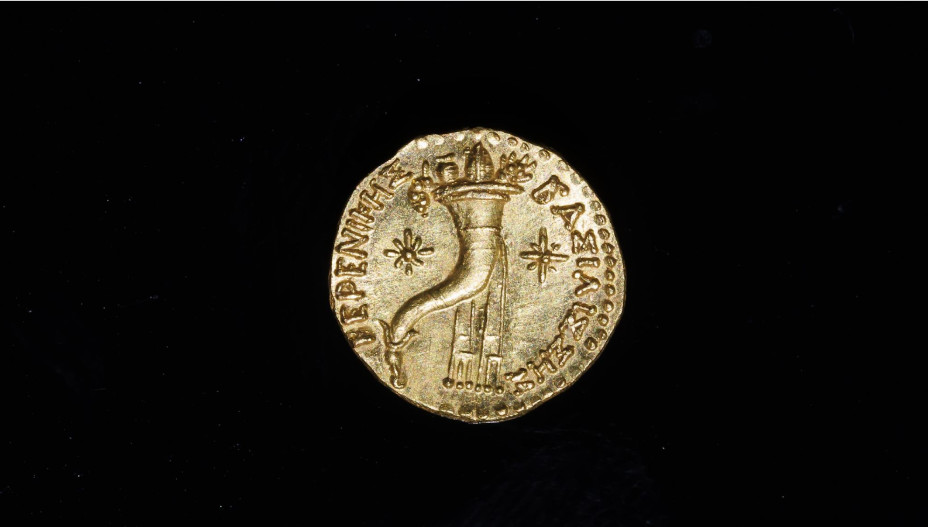
The obverse of the coin shows Berenice wearing a diadem and veil, as well as a necklace. The reverse depicts a cornucopia, an ancient symbol of prosperity and fertility, flanked by two stars and encircled by a Greek inscription reading “of Queen Berenice.”

1 of 20 found: Extremely rare 2,200-year-old gold coin found in Jerusalem. (photo credit: Israel Antiquities Authority)

Berenice II, often remembered by the epithet euergetis (“the benefactress”), was born around 267 BCE and became one of the most prominent queens of the Hellenistic world. Initially ruling Cyrenaica (eastern Libya) after the death of her father, Magas, she secured her position by marrying Demetrius the Fair, though his reign was short-lived. Following a turbulent struggle with her mother, Berenice later married her half-cousin Ptolemy III, thereby bringing Cyrenaica back under Ptolemaic control.

As queen of Egypt, Berenice played an active role in political life. She was honored within the royal cult alongside her husband and venerated as a goddess in her own right. Her most enduring cultural legacy came when she dedicated a lock of her hair as a religious offering, an act that inspired the naming of the constellation Coma Berenices.

Dr. Robert Kool, Head of the Numismatics Department, Israel Antiquities Authority. (credit: Emil Aladjem, Israel Antiquities Authority.)

Her reign ended violently in 221 BCE when she was assassinated on the orders of the regent Sosibius, shortly after her son, Ptolemy IV Philopator, took the throne.

The discovery was made by excavator Rivka Langler while sifting soil near the Givati Parking Lot. “I saw something shiny and realized it was a gold coin. At first, I couldn’t believe it… I’ve been excavating for two years and kept waiting for my moment, and now it finally arrived,” she said.

Experts say the coin is remarkable not only for its rarity but also for its inscription. Robert Kool, head of the IAA Numismatics Department, and Haim Gitler, chief curator of Archaeology at the Israel Museum, explained that the inscription “basilisses” – “of the queen” – is highly unusual.

“This is one of the earliest examples of a Ptolemaic queen depicted with such a title during her lifetime, suggesting her exceptional status and political power,” Kool and Gilter said.

Coin likely minted in Alexandria as a bonus for soldiers returning from Third Syrian war 

The coin was likely minted in Alexandria, possibly as a bonus for soldiers returning from the Third Syrian War, the conflict between the Ptolemaic Kingdom of Egypt and the Seleucid Kingdom of Syria.

According to excavation directors Yiftah Shalev of the IAA and Efrat Bocher of the Center for Research on Ancient Jerusalem, the find sheds new light on Jerusalem’s development after the destruction of the First Temple in 586 BCE.

“Until now, the prevailing view was that Jerusalem remained a small, weak town. This coin, along with other finds from the mid-3rd century BCE, shows the city was already recovering during the Persian period and grew stronger under Ptolemaic rule,” they said. “Jerusalem was not desolate and isolated but a city renewing itself and reestablishing ties with the great powers of the time.”

Heritage Minister Amichai Eliyahu welcomed the discovery, calling it “a small find with great significance for understanding Jerusalem.” He added: “Excavations in the City of David uncover entire chapters of the city’s history – from the Kingdom of Judah to the period after the First Temple’s destruction. After 2,000 years, we have returned to our capital, and now we are privileged to uncover its rich past.”

The gold coin will be presented alongside other jewelry unearthed in the Givati Parking Lot excavation at the upcoming City of David Research Conference.


A rare gold coin of the Egyptian Queen Berenice II. (credit: Israel Antiquities Authority)


THIS PAGE WAS POSTED BY SPUTNIK ONE OF THE SPUTNIKS ORBIT BLOGhttps://disqus.com/HOME/FORUM/THESPUTNIKSORBIT-BLOGSPOT-COM

Tuesday, August 19, 2025

Defense News: The IDF’s New Machine Gun: A Major Boost to Infantry Independence and Lethality

The IDF’s New Machine Gun: A Major Boost to Infantry Independence and Lethality


The introduction of a SIG Sauer .338-caliber machine gun into the IDF marks a rare and dramatic step in infantry weaponry—offering greater range, higher accuracy, reduced weight, and advanced capabilities

by Ami Rojkes Dombe, Israel Defense,18/08/2025


Photo: IDF Spokesperson’s Unit

In the defense establishment, a rare—almost historic—decision was recently made to introduce into the IDF a new family of machine guns, manufactured by SIG Sauer, chambered in .338 caliber. This is an exceptionally rare step, since the introduction of a new machine gun family into the IDF occurs only once every three decades or so.

The last time was in the late 1990s, when the Negev 5 was adopted, followed later by an upgraded version, the Negev 7. Since the 1990s, no new family of machine guns has entered IDF service.

The new machine gun is not intended to replace the MAG, one of the most iconic weapons of the Israeli infantry. As Elad, a training commander in the Ground Forces’ shooting division, explains: “I want to be clear—we are not replacing the MAG. It is a reliable, veteran, and excellent weapon. Our goal is to add another layer to the platoon’s capabilities, to give fighters an additional level of accurate and lethal covering fire, thereby improving their independence in the field.”

Over the years, infantry gradually lost the ability to deploy a mobile medium machine gun that allows long-range combat. As a result, dependence increased on APC-mounted firepower or other external means. The introduction of a machine gun chambered in .338 Norma is meant to restore to maneuvering infantry—the foot soldiers—the ability to provide themselves with lethal, precise covering fire.

Operational Advantages

The new machine gun brings with it several significant advantages. First, it is much lighter than previous heavy machine guns, allowing soldiers to move with it more easily even in dense or urban terrain. Second, thanks to its unique .338 Norma ammunition, it can reach ranges of 800 to 1,000 meters with extremely high accuracy. Soldiers who tested it on the battlefield in Gaza reported that its accuracy even surpasses that of designated marksmen and sometimes snipers. Elad describes: “Fighters who used the new machine gun in Gaza told me—it’s more accurate than our marksmen’s rifles, and sometimes even than the snipers’. This is a weapon that makes a difference.”

In addition, the machine gun is equipped with advanced optics, including telescopic sights with at least 6x magnification and the ability to observe and fire at night. This makes it more than just a machine gun—it is a complete weapon system that also grants the soldier enhanced observation capability. In terms of comfort and deployment, there has also been a major upgrade, with a lighter, sturdier tripod that enables quick and stable setup. A built-in suppressor was also added, reducing firing noise and gas dispersion, making it harder for the enemy to locate the source of fire and protecting soldiers’ hearing.

A Shift in Thinking and Logistical Aspects

Beyond the physical advantages, the introduction of the new machine gun brings with it a conceptual shift. Soldiers are not only learning how to operate it, but also how to tactically exploit its advantages: controlling elevated terrain, delivering precise long-range fire, and providing effective cover for any maneuvering unit. Elad stresses that the weapon forces both fighters and commanders to think differently: “I tell the soldiers—don’t just look at the building in front of you. Look for dominant terrain, positions from which you can provide covering fire at 800 meters and beyond. This is a weapon that doubles your range and changes combat thinking.”

Logistically, introducing the machine gun presents a considerable challenge. It is a “multi-caliber” weapon capable of firing 7.62mm, but its true strength lies in the unique .338 Norma round, produced specifically for it. This means building an entirely new supply, maintenance, and storage system to ensure steady availability of ammunition and spare parts.

In terms of training, there is also an advantage. The transition to the new machine gun takes place over a relatively short period. However, the main difference lies in the accompanying equipment and in the concept of use. Soldiers learn to exploit its extended range and accuracy to generate combat superiority on the battlefield, with far greater operational independence than they had in the past.

A Rare Step

The introduction of the new machine gun is an extremely rare event in the IDF, the first time in 30 years that an entirely new machine gun family—not just an upgrade—has entered service. It stems both from technological advances—the emergence of the .338 Norma cartridge, advanced optics, and new night systems—and from accumulated lessons learned from fighting in Lebanon and Gaza.

Ultimately, this move gives infantry platoons a clear operational advantage. The new machine gun makes the foot soldier more independent, more lethal, and more capable of influencing the course of battle without relying on external cover. No longer dependent only on APCs or distant fire support—the platoon itself can now generate fire superiority on the battlefield.


THIS PAGE WAS POSTED BY SPUTNIK ONE OF THE SPUTNIKS ORBIT BLOGhttps://disqus.com/HOME/FORUM/THESPUTNIKSORBIT-BLOGSPOT-COM