
Rare gold coin depicting Egyptian queen unearthed in Jerusalem

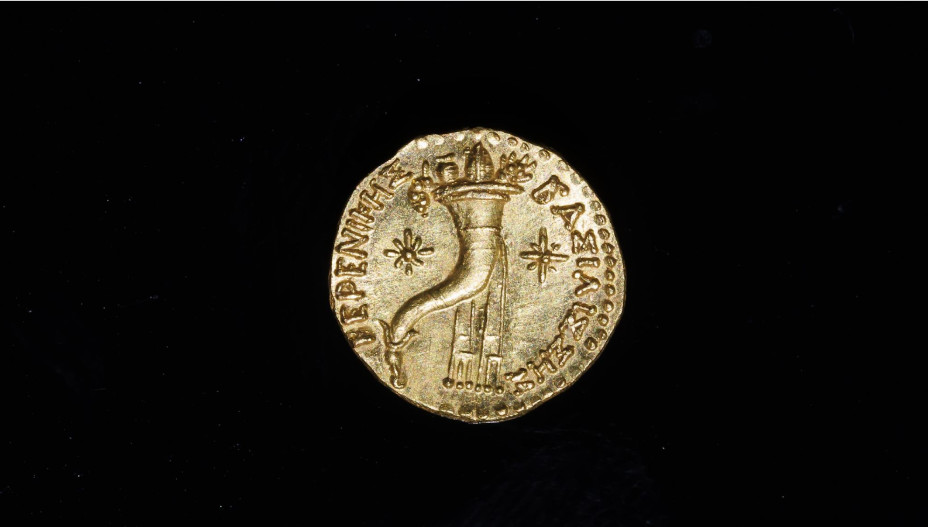
The coin, a quarter-drachma made of nearly pure gold (99.3%), was minted between 246 and 241 BCE for Berenice II, wife of the Hellenistic ruler Ptolemy III of Egypt. There are only 20 such coins worldwide, and this is the first ever found in an archaeological context. It will be displayed publicly for the first time in early September at the 26th annual City of David Research Conference.
The obverse of the coin shows Berenice wearing a diadem and veil, as well as a necklace. The reverse depicts a cornucopia, an ancient symbol of prosperity and fertility, flanked by two stars and encircled by a Greek inscription reading “of Queen Berenice.”

Berenice II, often remembered by the epithet euergetis (“the benefactress”), was born around 267 BCE and became one of the most prominent queens of the Hellenistic world. Initially ruling Cyrenaica (eastern Libya) after the death of her father, Magas, she secured her position by marrying Demetrius the Fair, though his reign was short-lived. Following a turbulent struggle with her mother, Berenice later married her half-cousin Ptolemy III, thereby bringing Cyrenaica back under Ptolemaic control.
As queen of Egypt, Berenice played an active role in political life. She was honored within the royal cult alongside her husband and venerated as a goddess in her own right. Her most enduring cultural legacy came when she dedicated a lock of her hair as a religious offering, an act that inspired the naming of the constellation Coma Berenices.

The discovery was made by excavator Rivka Langler while sifting soil near the Givati Parking Lot. “I saw something shiny and realized it was a gold coin. At first, I couldn’t believe it… I’ve been excavating for two years and kept waiting for my moment, and now it finally arrived,” she said.
Experts say the coin is remarkable not only for its rarity but also for its inscription. Robert Kool, head of the IAA Numismatics Department, and Haim Gitler, chief curator of Archaeology at the Israel Museum, explained that the inscription “basilisses” – “of the queen” – is highly unusual.
“This is one of the earliest examples of a Ptolemaic queen depicted with such a title during her lifetime, suggesting her exceptional status and political power,” Kool and Gilter said.
Coin likely minted in Alexandria as a bonus for soldiers returning from Third Syrian war
According to excavation directors Yiftah Shalev of the IAA and Efrat Bocher of the Center for Research on Ancient Jerusalem, the find sheds new light on Jerusalem’s development after the destruction of the First Temple in 586 BCE.
“Until now, the prevailing view was that Jerusalem remained a small, weak town. This coin, along with other finds from the mid-3rd century BCE, shows the city was already recovering during the Persian period and grew stronger under Ptolemaic rule,” they said. “Jerusalem was not desolate and isolated but a city renewing itself and reestablishing ties with the great powers of the time.”
Heritage Minister Amichai Eliyahu welcomed the discovery, calling it “a small find with great significance for understanding Jerusalem.” He added: “Excavations in the City of David uncover entire chapters of the city’s history – from the Kingdom of Judah to the period after the First Temple’s destruction. After 2,000 years, we have returned to our capital, and now we are privileged to uncover its rich past.”
The gold coin will be presented alongside other jewelry unearthed in the Givati Parking Lot excavation at the upcoming City of David Research Conference.


No comments:
Post a Comment