
Groundbreaking discovery: Karahan Tepe reveals 12,000-year-old human face
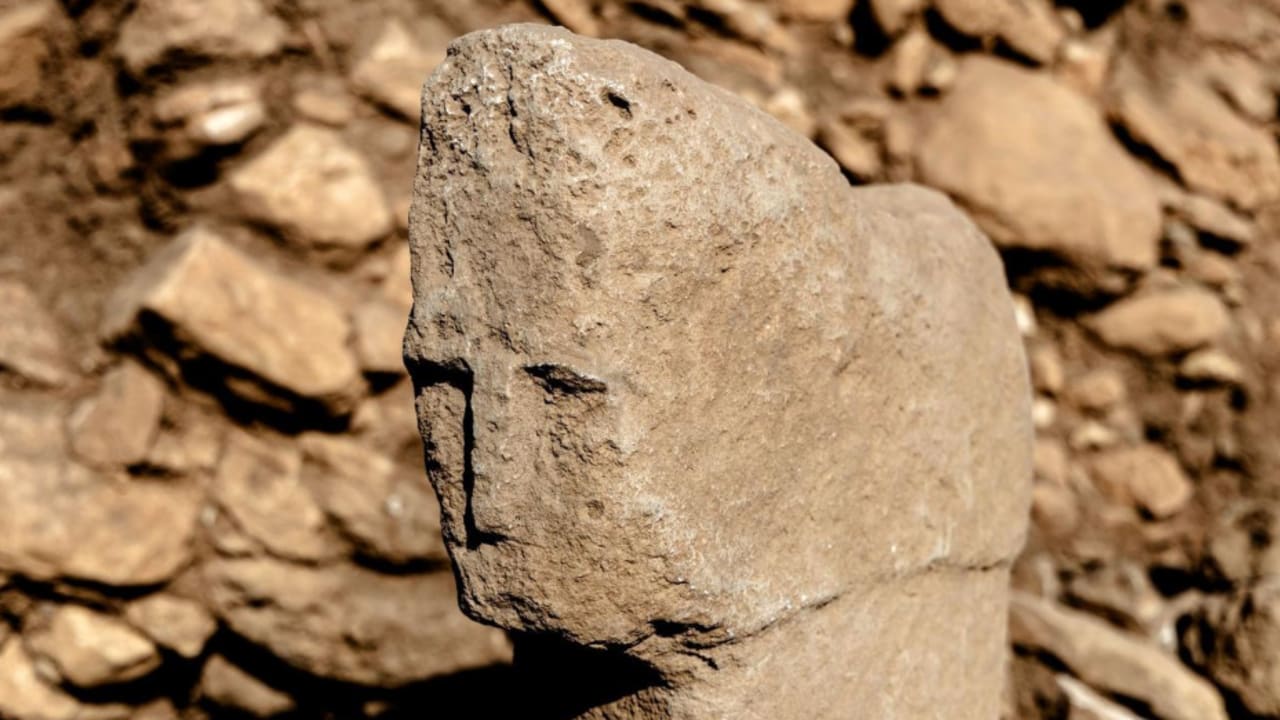
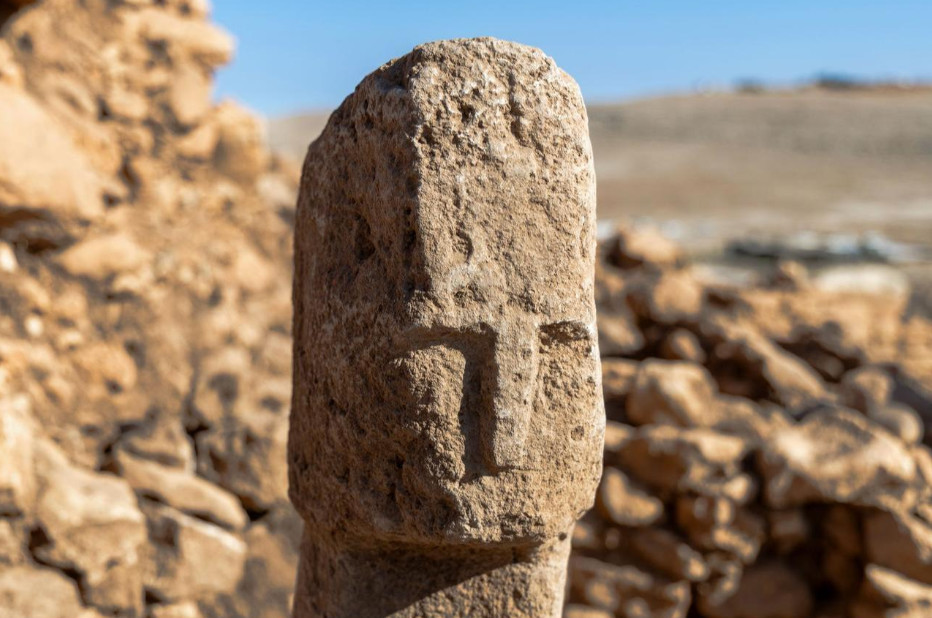
For the first time, a T-shaped stele featuring a depiction of a human face was unearthed in the Neolithic site of Karahantepe in southeastern Turkey, near famed Göbekli Tepe. The find provides compelling evidence of early Neolithic communities' artistic self-expression and technical prowess. Münchner Merkur reported that the stele is not only historically significant but also symbolizes a new understanding of how Neolithic societies depicted their own likeness.
The T-shaped stele, unearthed during excavations, is characterized by distinctive features such as sharp contours, deep eye sockets, and a broad-shaped nose. These stylistic traits are consistent with other human sculptures previously found at the Karahantepe site, emphasizing artistic continuity in the region. "This discovery could serve as one of the clearest pieces of evidence that T-shaped steles symbolize humans," said Professor Necmi Karul, the head of the Karahantepe excavations, according to a report by Haberler.
The excavation at Karahantepe, occurring in conjunction with efforts at the contemporaneous site of Göbekli Tepe, is part of a comprehensive archaeological project aimed at documenting humanity's transition from a hunter-gatherer lifestyle to a settled existence approximately 12,000 years ago.
The preparation of this article relied on a news-analysis system.
The T-shaped stele is expected to expand the understanding of early human societies by illustrating early Neolithic communities' ability for self-representation. Such archaeological discoveries are pivotal in retracing the evolution of belief systems and social structures within prehistoric contexts. Reliefs of arms and hands on similar T-shaped steles have long supported the notion that they serve a symbolic purpose, representing human forms rather than merely being architectural components.
The ongoing archaeological work in Şanlıurfa, which includes Karahantepe and other sites covering an area of 6,000 square meters within 10 different locations, aim to further catalog the cultural and social developments during the first known epochs of human society. Professor Karul stated that the discovery not only provides tangible evidence of Neolithic symbolism but also underscores the intricate societal dynamics of these early communities. Moreover, the latest discovery reinforces the symbolic interpretation of T-shaped steles as not merely structural elements but embodiments of the human form.
These columns, with their anthropomorphic features, suggest a level of abstract thinking and technical sophistication that was previously unrecognized in such early societies.


No comments:
Post a Comment