Thursday, November 27, 2025

Archaeology News: Possible double-burial of pharaohs in Osorkon II’s tomb, newly discovered statues show

  Possible double-burial of pharaohs in Osorkon II’s tomb, newly discovered statues show

Archaeologists uncovered 225 inscribed funerary statues beside an unmarked sarcophagus in Osorkon II’s tomb, strengthening the case for two royal burials at Tanis, Egypt.

By Jerusalem Post Staff, November 25, 2025

https://www.jpost.com/archaeology/archaeology-around-the-world/article-875130

Shabti figurines inscribed with the name of Pharaoh Shoshenq III, found inside Osorkon II’s tomb at Tanis, northern Egypt.
(photo credit: Screenshot via Maariv/section 27A, SCREENSHOT/X)


An Egyptian-French team in Tanis uncovered 225 shabti figurines inscribed with the name of Shoshenq III inside Osorkon II’s tomb, indicating a royal reburial, the Egyptian Ministry of Tourism and Antiquities revealed in a Monday Facebook post.

Archaeologists working in northern Egypt said the cache was found beside an unmarked sarcophagus in the Tanis complex. The figurines, inscribed with Shoshenq III’s name, point to his burial in his predecessor’s tomb during the 22nd Dynasty, according to the report.

The figurines, traditionally placed to serve the deceased in the afterlife, were recovered during conservation work led by a French mission.

Their placement next to an anonymous sarcophagus suggests that Shoshenq III was interred in Osorkon II’s burial rather than in his own.

Researchers said newly documented inscriptions from the chamber are under study. The tomb and sarcophagus were recorded in 1939, but the shabtis were identified only during the current project.

(ILLUSTRATIVE) A 2,300-year old mummy is displayed after it was found by the Sakkara pyramids south of Cairo, May 3, 2005 (credit: REUTERS)

Why the king might have been moved

Shoshenq III ruled amid political fragmentation, when tomb reuse was not uncommon. Experts suggested his original burial may have been displaced, or that a successor appropriated his tomb, forcing a reburial within Osorkon II’s complex.

Reburial inside earlier royal structures has surfaced elsewhere in Egypt.

Earlier this year, officials reported a later-period burial inserted into a powerful ruler’s older complex at Abydos, underscoring the practice of later interments within established sacred spaces.


THIS PAGE WAS POSTED BY SPUTNIK ONE OF THE SPUTNIKS ORBIT BLOGhttps://disqus.com/HOME/FORUM/THESPUTNIKSORBIT-BLOGSPOT-COM

Wednesday, November 26, 2025

Space News: NASA releases images of comet 3I/ATLAS, rejects alien spacecraft 'rumors'

 NASA releases images of comet 3I/ATLAS, rejects alien spacecraft 'rumors'


While the comet's precise point of origin remains unclear, the NASA scientists said they believe it hails from a solar system older than our own, which formed about 4.5 billion years ago.

By Reuters, November 24, 2025


This image of interstellar comet 3I/ATLAS was captured by the Hubble Space Telescope’s Wide Field Camera, July 21, 2025.
(photo credit: NASA, ESA, D. Jewitt (UCLA); Image Processing: J. DePasquale (STScI))
NASA released fresh images on Wednesday of the interstellar object called 3I/ATLAS that astronomers have determined is a comet, probably even older than our solar system, as US space agency officials dismissed speculation that it is actually an alien spacecraft.

3I/ATLAS was first spotted in July by an Asteroid Terrestrial-impact Last Alert System, or ATLAS, telescope located in Rio Hurtado, Chile, and has been tracked by astronomers since then. Its unusual trajectory indicated that it was passing through our solar system from parts unknown.

"It's natural to wonder what it is. We love that the world wondered along with us," Nicola Fox, associate administrator of NASA's Science Mission Directorate, told a news briefing in Greenbelt, Maryland, referring to the comet as "our friendly solar system visitor."

"We were quick to be able to say, 'Yup, it definitely behaves like a comet. We certainly haven't seen any technosignatures or anything from it that would lead us to believe it was anything other than a comet."

An image from the High Resolution Imaging Science Experiment (HiRISE) camera aboard NASA's Mars Reconnaissance Orbiter shows the interstellar comet 3I/ATLAS on October 2, 2025. (credit: NASA/JPL-CALTECH/REUTERS)
3I/ATLAS is only the third interstellar object ever observed by astronomers traveling through the solar system. The others were comets called 1I/'Oumuamua (pronounced oh-MOO-uh-MOO-uh), detected in 2017, and 2I/Borisov, discovered in 2019.

Comets are small solid celestial bodies that are a combination of rocky and icy material that evaporates as they warm when getting close to a star like our sun.

3I/ATLAS has attracted particular attention because of one scientist's suggestion that it is not a comet but rather alien technology due to its trajectory, composition and other factors.

At the outset of Wednesday's briefing, NASA Associate Administrator Amit Kshatriya said, "To start with, I'd like to address the rumors" about the nature of 3I/ATLAS.

"I think it's important that we talk about that. This object is a comet," Kshatriya said. "It looks and behaves like a comet. And all evidence points to it being a comet."

Kshatriya noted that NASA missions are actively searching for signs of possible life beyond Earth, pointing to research published in September showing that a sample obtained by NASA's Perseverance rover of rock formed billions of years ago from sediment on the bottom of a lake contains potential signs of ancient microbial life on Mars.

"We want very much to find signs of life in the universe," Kshatriya said.

NASA said 3I/ATLAS poses no threat to Earth and will get no closer than about 170 million miles (275 million km) to our planet.

New images released of 3I/ATLAS

Fox said NASA has studied 3I/ATLAS with more than a dozen scientific platforms including the Hubble and James Webb space telescopes and satellites orbiting Mars.

The new NASA images, all taken from afar, showed it with a blurry appearance but with the clear presence of a telltale coma - the hazy cloud of gas and dust around its nucleus - and the tail of dust following its orbit. The release of the images had been delayed by the US government shutdown.

Tom Statler, lead NASA scientist for solar system small bodies, said the size of the comet's nucleus is hard to pin down, but estimated it based on Hubble observations to be in the range of "a couple of thousand feet to a couple of miles" in diameter. Statler said the nucleus seems to be "not very far from being round.

While the comet's precise point of origin remains unclear, the NASA scientists said they believe it hails from a solar system older than our own, which formed about 4.5 billion years ago. The scientists also said its composition differs in some ways from comets from our own solar system, as might be expected because it formed in a solar system that may have a different makeup than ours.

Astronomers around the world have intensively studied 3I/ATLAS.

University of Oxford astrophysicist Chris Lintott told Reuters: "So far, it seems to be made of the same sort of stuff we see for comets in our solar system - plenty of carbon dioxide and some water, carbon monoxide and other such molecules. We've also seen cyanide - normal for a comet - and lots of nickel, which is a bit surprising but not too unprecedented. We saw similar things in a previous interstellar comet, 2I/Borisov, and in some solar system comets."

"The idea that 3I/ATLAS could be an alien spacecraft is simply nonsense. There's nothing about it that suggests such a thing, and you might as well argue that the moon is made of cheese," Lintott said.

3I/ATLAS is now on its way out of the solar system, according to University of Hawaii astronomer Larry Denneau, co-principal investigator for ATLAS. Its closest approach to the sun came in October, and its closest approach to the Earth will come in about a month, Denneau said.


THIS PAGE WAS POSTED BY SPUTNIK ONE OF THE SPUTNIKS ORBIT BLOGhttps://disqus.com/HOME/FORUM/THESPUTNIKSORBIT-BLOGSPOT-COM

Tuesday, November 25, 2025

Biology News: Rare prehistoric Atlantic sturgeon washes ashore in South Carolina

 Rare prehistoric Atlantic sturgeon washes ashore in South Carolina

A rare federally protected Atlantic sturgeon fish found in Hilton Head, South Carolina, is drawing attention from marine experts.

By Anna Claire Miller / TNS November 24, 2025 

                    Pre-historic giant sturgeon fish at Hilton Head. (credit: SCREENSHOT/X)


A prehistoric sturgeon fish was spotted by beachgoers on Wednesday in front of the Islanders Beach Club, in Hilton Head, South Carolina. 

The Shore Beach Services removed it and then turned it over to marine biologist Amber Kuehn, executive director of Sea Turtle Patrol Hilton Head Island.

Kuehn froze the fish at the request of the South Carolina Department of Natural Resources and will deliver it to the agency’s office in Charleston.

From there, the SCDNR Diadromous Fishes Program will measure it, take samples and photos, and submit a record to the National Marine Fisheries Service, according to Ellen Waldrop, a biologist with the program.

The discovery drew immediate attention because sturgeon sightings on Hilton Head are rare.

                       Pre-historic giant sturgeon fish at Hilton Head.(photo credit: SCREENSHOT/X)

The species is protected under federal law

Waldrop confirmed that the fish has been identified as a young Atlantic sturgeon, one of two species found in the South Carolina waters, alongside the smaller shortnose sturgeon. Both species are federally protected, making it illegal to harm or keep them.

Even a dead or stranded sturgeon should be reported.

Atlantic sturgeon are known for their impressive lifespan and size.

The US Fish and Wildlife Service says that sturgeons have a long fossil record, dating back 120 million years. Sturgeon ancestors even roamed the earth with dinosaurs 245 million years ago.

Adults can reach up to 14 feet and weigh up to 800 pounds, according to the National Oceanic and Atmospheric Administration Fisheries.

South Carolina’s populations tend to live 25 to 30 years and take 5 to 19 years to mature. These fish hatch in freshwater rivers, then spend much of their lives in coastal waters and return to their birthplace to spawn.

NOAA states that tagging data indicate that young Atlantic sturgeon travel widely up and down the East Coast.

The two types of sturgeons can appear similar, but Atlantic sturgeons can be distinguished by their larger size, smaller mouth, different snout shape, and tail scute pattern. Once abundant, now endangered.

Sturgeon populations were once abundant, but their numbers have plummeted due to overfishing and habitat loss. During the late 1800s, in what’s sometimes called the “Black Gold Rush,” sturgeon eggs were a prized find that fueled a booming caviar trade.

Today, all US Atlantic sturgeon population segments are protected under the Endangered Species Act.

Sturgeons are bottom feeders, sifting through riverbeds and coastal shallows for crustaceans, worms, mollusks, and bottom-dwelling fish.

Officials urge anyone who finds a dead or stranded sturgeon, or catches one accidentally, to report it to NOAA or the SCDNR. 

Atlantic sturgeon fish in aquarium


T
HIS PAGE WAS POSTED BY SPUTNIK ONE OF THE SPUTNIKS ORBIT BLOGhttps://disqus.com/HOME/FORUM/THESPUTNIKSORBIT-BLOGSPOT-COM

Monday, November 24, 2025

Science News: Israeli woman's vision restored in world's first-ever 3D-printed cornea implant

 Israeli woman's vision restored in world's first-ever 3D-printed cornea implant

The new Israeli technology allows for the creation of hundreds of cornea implants from a single donor sample, offering a scalable solution.

By Dr. Itay Gal, Jerusalem Post, November 20, 2025

https://www.jpost.com/health-and-wellness/article-874646

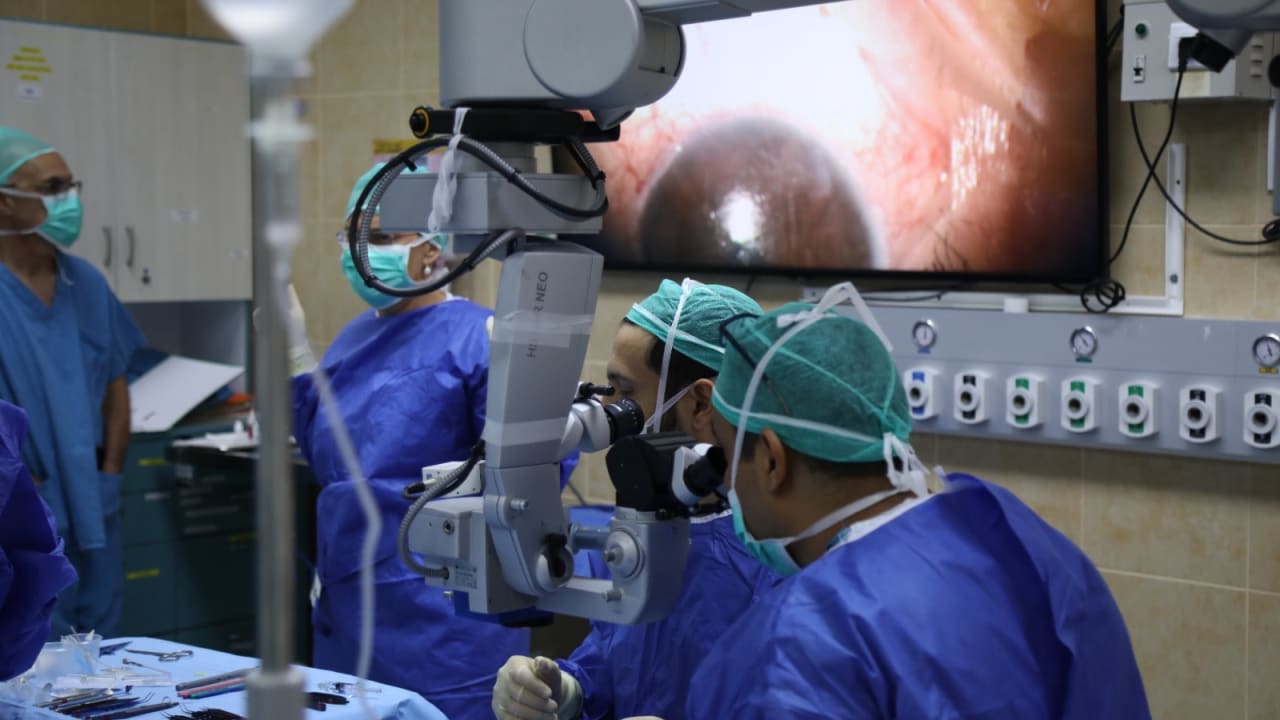
The surgery team working on the implant at Rambam Hospital in Haifa.
(photo credit: RAMBAM MEDICAL CENTER)

A woman in her 70s has regained partial vision after receiving what may be the world’s first implant of a 3D-printed biological cornea, in a pioneering surgery performed at Rambam Health Care Campus in Haifa.

The cornea was bio-printed using human cells and implanted in a patient who had suffered from corneal blindness in one eye. Developed by Israeli biotech company Precise Bio, the implant represents a major breakthrough in regenerative medicine and could help resolve the global shortage of donor corneas.

More than 13 million people around the world are currently waiting for a corneal transplant due to a critical lack of donor tissue. The new technology allows for the creation of hundreds of implants from a single donor sample, offering a scalable solution.

“This transplant is a moment of real hope for millions of people waiting for corneal donations,” said Arie Batt, co-founder and CEO of Precise Bio. “It’s the first time an implant made entirely in a laboratory from human source cells has been successfully used in a human being. This is not only a scientific breakthrough—it’s a historic moment.”

The printed cornea was produced through a process combining biological materials and human cells to replicate the structure and function of a natural cornea. The technology includes advanced quality control measures and offers improved predictability during surgery, according to the company.


The surgery team working on the implant at Rambam Hospital in Haifa. (credit: RAMBAM MEDICAL CENTER)

Rambam implants world’s first 3D-printed biological cornea

Unlike synthetic or traditional donor implants, the printed cornea is free from contaminants and features a high cell density, which could improve healing outcomes and visual clarity over time.

Prof. David Tzadok, head of ophthalmology at Jerusalem’s Shaare Zedek Medical Center and a medical adviser to Precise Bio, said the implant was the result of nearly a decade of research.

"Over nearly a decade of work with the company, we have seen how a combined team of researchers, engineers, and physicians succeeds in peeling away layer after layer of the challenges posed by evolution. The cornea managed to simulate the essential properties of human tissue, including transparency and biomechanics, which are so crucial for long-term results while reducing the risk of complications."

Prof. Michael Mimouni, head of Rambam’s cornea unit, confirmed that the surgery went well and that the patient’s vision has already begun to improve. The team continues to monitor her recovery closely.

Prof. Eitan Livni, head of the cornea unit at Rabin Medical Center and also a medical adviser to Precise Bio, emphasized the international importance of the innovation.

"Just last week, I returned from performing a series of eye surgeries in Africa, where many patients suffer from blindness due to a lack of corneal implants and the absence of cornea banks responsible for processing them," he said.

"It is moving to think that the day is approaching when we will be able to offer blind people worldwide, who have no access to corneal implants, an engineered cornea that does not require processing by a cornea bank and arrives ready for transplantation directly from the distributing company. This will be nothing short of a revolution and will restore vision to thousands of blind people."

THIS PAGE WAS POSTED BY SPUTNIK ONE OF THE SPUTNIKS ORBIT BLOGhttps://disqus.com/HOME/FORUM/THESPUTNIKSORBIT-BLOGSPOT-COM

Sunday, November 23, 2025

Archaeology News: Figurine unearthed near Sea of Galilee reveals earliest human–animal connection

Figurine unearthed near Sea of Galilee reveals earliest human–animal connection


At the Nahal Ein Gev II archaeology site, a figurine was discovered to be the earliest item depicting human-animal interaction.

By Joanie Margulies, Jerusalem Post, November 19, 2025

https://www.jpost.com/israel-news/article-874509


The 12,000-year-old Natufian clay figurine from Nahal Ein Gev II, depicting a woman leaning forward and a goose 
enveloping her (accompanied by an artistic reconstruction).
(photo credit: LAURENT DAVIN)

Overlooking the Sea of Galilee lies a prehistoric village, where a team of archaeologists uncovered a clay figurine dating back 12,000 years, unlike anything previously found. Uncovered by professionals at the Hebrew University of Jerusalem, archaeologists say that a symbolic figurine uncovered shows a mythological or ritual scene, giving a glimpse into the spiritual world of early communities in Southwest Asia.

At the site of Nahal Ein Gev II (NEG II), this figurine is the earliest known item depicting human and animal interaction, in a project led by Dr. Laurent Davin and professors Leore Grosman and Natalie Munro. Associated with the Institute of Archaeology at the Hebrew University of Jerusalem, their findings were originally published in PNAS, in a study that combined advanced analytical techniques to reconstruct both its physical composition and its cultural meaning and significance. Measuring at 3.7 centimeters tall, the figurine was made of clay and finished with heat around 400°C.

The level of heat used and matter of control suggest early pyrotechnology, or technology related to fire. Further analysis revealed a red pigment residue on both the woman and the goose she is seen with. A fingerprint from the artisan who made the item remained on it. 

The goose was a common part of the Natufian diet, a Mesolithic culture of the region, but was also highly symbolic. In the figure, the goose is alive rather than hunted. This discovery sheds light on artistic developments and innovations in a period that was believed not to have such a skillset. This foreshadowed artistry that was to come and flourish in the Neolithic era.

The figurine was found in an area of a semicircular stone structure containing burials and other ceremonial deposits from a Late Natufian settlement at Nahal Ein Gev II, dating back approximately 12,000 years. 


Different views of the 12,000-year-old Natufian clay figurine from Nahal Ein Gev II, depicting a woman leaning forward and a goose enveloping her (accompanied by technical and artistic drawings). (credit: LAURENT DAVIN)

The Natufian culture lived between 11,500 and 15,000 years ago, marking a change from a nomadic foraging society to a settled community. 

This figurine portrays the society as not just agricultural, but likely experimental with narrative art and symbolic expression. 

Bird feathers were used for decoration, and certain bones were used as ornaments

Other discoveries show that there was a connection between geese and ritual. Bird feathers were used for decoration, and certain bones were used as ornaments. "This discovery is extraordinary on multiple levels," Dr. Laurent Davin, the paper's lead author, said. "Not only is this the world's earliest figurine depicting human-animal interaction, but it's also the earliest naturalistic representation of a woman found in Southwest Asia." “The NEG II figurine captures a transformative moment,” 
Prof. Grosman added. “It bridges the world of mobile hunter-gatherers and that of the first settled communities, showing how imagination and symbolic thinking began to shape human culture.''
Craftsmanship and cultural significance aside, the piece depicts some of the earliest forms of storytelling and spiritual connection through handmade items, over a millennium older than the rise of civilization as we know it.


THIS PAGE WAS POSTED BY SPUTNIK ONE OF THE SPUTNIKS ORBIT BLOGhttps://disqus.com/HOME/FORUM/THESPUTNIKSORBIT-BLOGSPOT-COM

Thursday, November 20, 2025

Defense News: ParaZero Secures European Distribution Deal for DefendAir Anti-Drone Systems


ParaZero Secures European Distribution Deal for DefendAir Anti-Drone Systems


Israeli aerospace defense company partners with a leading Dutch integrator to expand Counter-UAS solutions across Western Europe


By Eyal Boguslavsky, Israeldefense,co, 20/11/2025

The patented net is launched to capture a drone in midair (Photo: ParaZero Technologies)


Israeli ParaZero Technologies, an aerospace defense company pioneering smart, autonomous solutions for the global manned and unmanned aerial systems (UAS) industry, announced a purchase order for its DefendAir anti-drone defense systems from a Dutch distributor, one of Europe’s largest integrators.

The order covers the company’s Counter-UAS DefendAir solutions and includes multiple DefendAir products for resale and distribution through the distributor’s established European network.

ParaZero highlights this partnership as a key expansion in Western Europe, where the distributor serves as a leading supplier of defense and homeland security (HLS) solutions.

According to ParaZero, the DefendAir system has demonstrated a 100% success rate in multiple field trial demonstrations. It is a multi-layered, soft-hard kill Counter-UAS solution that uses a patented net launcher against hostile drones, enabling safe urban interception while minimizing collateral damage.

“We believe this order reflects the growing demand for robust anti-drone defenses worldwide, and in Europe in particular, where airspace security is paramount,” said Ariel Alon, CEO of ParaZero. “Our Dutch partner, a top distributor in Europe, aims to bring DefendAir to a wider customer base. We’re thrilled to support their growth and strengthen our foothold in the Western European market.”

Parazero will participate at UVID Dronetech 2025, Israel’s leading unmanned systems and defense innovation event, that will take place on November 26, 2025, at Expo Tel Aviv. The conference will bring together global industry leaders, government officials, and defense experts to discuss emerging technologies and operational trends in the UAV and dual-use sectors. 


THIS PAGE WAS POSTED BY SPUTNIK ONE OF THE SPUTNIKS ORBIT BLOGhttps://disqus.com/HOME/FORUM/THESPUTNIKSORBIT-BLOGSPOT-COM