The fully 3D-printed flexible organic light-emitting diode (OLED) display prototype is about 1.5 inches on each side and has 64 pixels. Every pixel works and displays light. The 3D-printed display is also flexible, which could make it useful for a wide variety of applications, such as foldable smartphone displays.
Credit: McAlpine Group, University of Minnesota
In a groundbreaking new study, researchers at the University of Minnesota Twin Cities used a customized printer to fully 3D print a flexible organic light-emitting diode (OLED) display. The discovery could result in low-cost OLED displays in the future that could be widely produced using 3D printers by anyone at home, instead of by technicians in expensive microfabrication facilities.
The research is published in Science Advances.
The OLED display technology is based on the conversion of electricity into light using an organic material layer. OLEDs function as high quality digital displays, which can be made flexible and used in both large-scale devices such as television screens and monitors as well as handheld electronics such as smartphones. OLED displays have gained popularity because they are lightweight, power-efficient, thin and flexible, and offer a wide viewing angle and high contrast ratio.
"OLED displays are usually produced in big, expensive, ultra-clean fabrication facilities," said Michael McAlpine, a University of Minnesota Kuhrmeyer Family Chair Professor in the Department of Mechanical Engineering and the senior author of the study. "We wanted to see if we could basically condense all of that down and print an OLED display on our table-top 3D printer, which was custom built and costs about the same as a Tesla Model S."
The group had previously tried 3D printing OLED displays, but they struggled with the uniformity of the light-emitting layers. Other groups partially printed displays but also relied on spin-coating or thermal evaporation to deposit certain components and create functional devices.
In this new study, the University of Minnesota research team combined two different modes of printing to print the six device layers that resulted in a fully 3D-printed, flexible organic light-emitting diode display. The electrodes, interconnects, insulation, and encapsulation were all extrusion printed, while the active layers were spray printed using the same 3D printer at room temperature. The display prototype was about 1.5 inches on each side and had 64 pixels. Every pixel worked and displayed light.
https://youtu.be/k7KV_lOIp8o
"I thought I would get something, but maybe not a fully working display," said Ruitao Su, the first author of the study and a 2020 University of Minnesota mechanical engineering Ph.D. graduate who is now a postdoctoral researcher at MIT. "But then it turns out all the pixels were working, and I can display the text I designed. My first reaction was 'It is real!' I was not able to sleep, the whole night."
Su said the 3D-printed display was also flexible and could be packaged in an encapsulating material, which could make it useful for a wide variety of applications.
"The device exhibited a relatively stable emission over the 2,000 bending cycles, suggesting that fully 3D printed OLEDs can potentially be used for important applications in soft electronics and wearable devices," Su said.
The researchers said the next steps are to 3D print OLED displays that are higher resolution with improved brightness.
"The nice part about our research is that the manufacturing is all built in, so we're not talking 20 years out with some 'pie in the sky' vision," McAlpine said. "This is something that we actually manufactured in the lab, and it is not hard to imagine that you could translate this to printing all kinds of displays ourselves at home or on the go within just a few years, on a small portable printer."
In addition to McAlpine and Su, the research team included University of Minnesota mechanical engineering researchers Xia Ouyang, a postdoctoral researcher; Sung Hyun Park, who is now a senior researcher at Korea Institute of Industrial Technology; and Song Ih Ahn, who is now an assistant professor of mechanical engineering at Pusan National University in Korea.
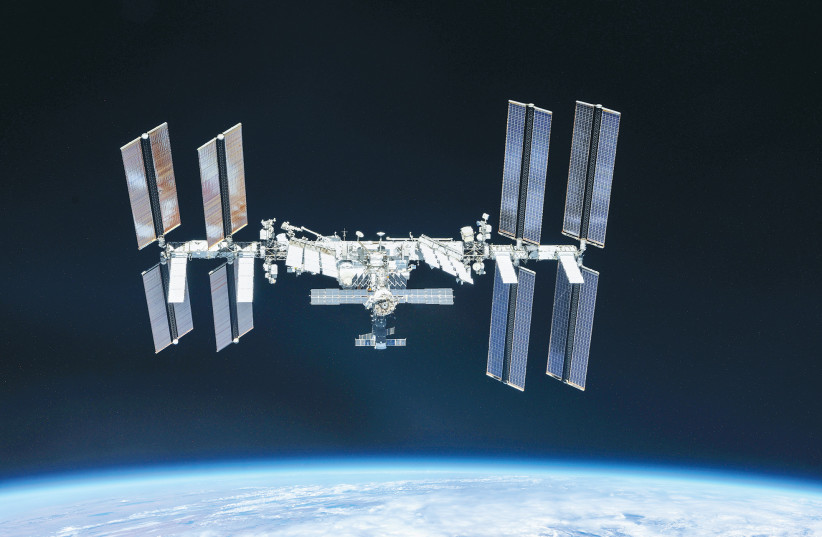
The International Space Station photographed by Expedition 56 crew members from a Soyuz spacecraft after undocking in 2018. (photo credit: NASA/Roscosmos/Handout via REUTERS)
According to researchers at Cedars-Sinai Medical Center in Los Angeles, the future of biotechnology may be in space.
The research, which was published in the peer-reviewed journal Stem Cell Reports
last Thursday, shows that the low-gravity conditions of space present
an unprecedented opportunity for the development of advanced medical
technologies.
The
microgravity conditions experienced by astronauts gradually accelerate
aging and muscle and bone degradation. Scientists can therefore use
these conditions to simulate models of disease progression and even the
aging process far more quickly than they could by observing these
processes on Earth.
These
conditions may also be useful for the mass production of stem cells and
for 3D printing of biological tissues, as the lack of gravity makes it
easier to use low-viscosity materials. "The processes involved in
biofabrication are heavily reliant on biomechanical cues that are
affected by gravity," they said, "and microgravity conditions should
enable full control over these cues in ways not possible on Earth."
The International Space Station is
hosting relevant experiments to promote cutting-edge research in the
microgravity environment. Meanwhile, biotech companies are developing
satellites and vehicles for use in this area of research.
A
laboratory technician looks through a microscope during a demonstration
showing the 3D printing of what Israeli scientists from Tel Aviv
University say is the world’s first 3D-printed, vascularised engineered
heart, at a laboratory in the university, Tel Aviv, Israel April 15,
2019 (credit: REUTERS/AMIR COHEN)
The Cedars-Sinai scientists are anticipating that space will be the frontier of a revolution in medical technology.
"While
we are still in the exploratory phase of some of this research, this is
no longer in the realm of science fiction," said Arun Sharma, PhD,
study co-author and head of a research laboratory at the Cedars-Sinai
Board of Governors Regenerative Medicine Institute, Smidt Heart
Institute and Department of Biomedical Sciences.
"Within
the next five years we may see a scenario where we find cells or
tissues that can be made in a way that is simply not possible here on
Earth," he said. "And I think that’s extremely exciting."
Please recommend this page & follow the Sputniks Orbit
A plasma ejection during a solar flare. Immediately after the eruption, cascades of magnetic loops form over the eruption area as the magnetic fields attempt to reorganize.
Credit: NASA/SDO and the AIA, EVE, and HMI science teams.
Why the sun's corona reaches temperatures of several million degrees Celsius is one of the great mysteries of solar physics. A "hot" trail to explain this effect leads to a region of the solar atmosphere just below the corona, where sound waves and certain plasma waves travel at the same speed. In an experiment using the molten alkali metal rubidium and pulsed high magnetic fields, a team from the Helmholtz-Zentrum Dresden-Rossendorf (HZDR), a German national lab, has developed a laboratory model, and for the first time experimentally confirmed the theoretically predicted behavior of these plasma waves—so-called Alfvén waves—as the researchers report in the journal Physical Review Letters.
At 15 million degrees Celsius, the center of our sun is unimaginably hot. At its surface, it emits its light at a comparatively moderate 6000 degrees Celsius. "It is all the more astonishing that temperatures of several million degrees suddenly prevail again in the overlying sun's corona," says Dr. Frank Stefani. His team conducts research at the HZDR Institute of Fluid Dynamics on the physics of celestial bodies—including our central star. For Stefani, the phenomenon of corona heating remains one of the great mysteries of solar physics, one that keeps running through his mind in the form of a very simple question: "Why is the pot warmer than the stove?"
That magnetic fields play a dominant role in heating the sun's corona is now widely accepted in solar physics. However, it remains controversial whether this effect is mainly due to a sudden change in magnetic field structures in the solar plasma or to the dampening of different types of waves. The new work of the Dresden team focuses on the so-called Alfvén waves that occur below the corona in the hot plasma of the solar atmosphere, which is permeated by magnetic fields. The magnetic fields acting on the ionized particles of the plasma resemble a guitar string, whose playing triggers a wave motion. Just as the pitch of a strummed string increases with its tension, the frequency and propagation speed of the Alfvén wave increases with the strength of the magnetic field.
"Just below the sun's corona lies the so-called magnetic canopy, a layer in which magnetic fields are aligned largely parallel to the solar surface. Here, sound and Alfvén waves have roughly the same speed and can therefore easily morph into each other. We wanted to get to exactly this magic point—where the shock-like transformation of the magnetic energy of the plasma into heat begins," says Stefani, outlining his team's goal.
A dangerous experiment?
Soon after their prediction in 1942, the Alfvén waves had been detected in first liquid-metal experiments and later studied in detail in elaborate plasma physics facilities. Only the conditions of the magnetic canopy, considered crucial for corona heating, remained inaccessible to experimenters until now. On the one hand, in large plasma experiments the Alfvén speed is typically much higher than the speed of sound. On the other hand, in all liquid-metal experiments to date, it has been significantly lower. The reason for this: The relatively low magnetic field strength of common superconducting coils with a constant field of about 20 tesla.
But what about pulsed magnetic fields, such as those that can be generated at the HZDR's Dresden High Magnetic Field Laboratory (HLD) with maximum values of almost 100 tesla? This corresponds to about two million times the strength of the Earth's magnetic field: Would these extremely high fields allow Alfvén waves to break through the sound barrier? By looking at the properties of liquid metals, researchers knew in advance that the alkali metal rubidium actually reaches this magic point already at 54 tesla.
But rubidium ignites spontaneously in air and reacts violently with water. The team therefore initially had doubts as to whether such a dangerous experiment was advisable at all. The doubts were quickly dispelled, recalls Dr. Thomas Herrmannsdörfer of the HLD: "Our energy supply system for operating the pulse magnets converts 50 megajoules in a fraction of a second—with that, we could theoretically get a commercial airliner to take off in a fraction of a second. When I explained to my colleagues that a thousandth of this amount of chemical energy of the liquid rubidium does not worry me very much, their facial expressions visibly brightened."
Pulsed through the magnetic sound barrier
Nevertheless, it was still a rocky road to the successful experiment. Because of the pressures of up to fifty times the atmospheric air pressure generated in the pulsed magnetic field, the rubidium melt had to be enclosed in a sturdy stainless steel container, which an experienced chemist, brought out of retirement, was to fill. By injecting alternating current at the bottom of the container while simultaneously exposing it to the magnetic field, it was finally possible to generate Alfvén waves in the melt, whose upward motion was measured at the expected speed.
The novelty: While up to the magic field strength of 54 tesla all measurements were dominated by the frequency of the alternating current signal, exactly at this point a new signal with halved frequency appeared. This sudden period doubling was in perfect agreement with the theoretical predictions. The Alfvén waves of Stefani's team had broken through the sound barrier for the first time. Although not all observed effects can yet be explained so easily, the work contributes an important detail to solving the puzzle of the sun's corona heating. For the future, the researchers are planning detailed numerical analyses and further experiments.
Research on the heating mechanism of the sun's corona is also being carried out elsewhere: The Parker Solar Probe and Solar Orbiter space probes are about to gain new insights at close range.
Roughly 13.8 billion years ago, our Universe was born in a massive explosion that gave rise to the first subatomic particles and the laws of physics as we know them.
About 370,000 years later, hydrogen had formed, the building block of stars, which fuse hydrogen and helium in their interiors to create all the heavier elements. While hydrogen remains the most pervasive element in the Universe, it can be difficult to detect individual clouds of hydrogen gas in the interstellar medium (ISM).
This makes it difficult to research the early phases of star formation, which would offer clues about the evolution of galaxies and the cosmos.
An international team led by astronomers from the Max Planck Institute of Astronomy (MPIA) recently noticed a massive filament of atomic hydrogen gas in our galaxy. This structure, named 'Maggie', is located about 55,000 light-years away (on the other side of the Milky Way) and is one of the longest structures ever observed in our galaxy.
(ESA/Gaia/DPAC/T. Müller/J. Syed/MPIA)
Above: The section of the Milky Way, as measured by ESA's Gaia satellite (top). The box marks the location of the 'Maggie' filament and the false-color image of atomic hydrogen distribution (bottom), the red line indicating the 'Maggie' filament.
The study that describes their findings, which recently appeared in the journal Astronomy & Astrophysics, was led by Jonas Syed, a Ph.D. student at the MPIA.
He was joined by researchers from the University of Vienna, the Harvard-Smithsonian Center for Astrophysics (CfA), the Max Planck Institute for Radio Astronomy (MPIFR), the University of Calgary, the Universität Heidelberg, the Centre for Astrophysics and Planetary Science, the Argelander-Institute for Astronomy, the Indian Institute of Science, and NASA's Jet Propulsion Laboratory (JPL).
https://youtu.be/sLX7HNclaFA
The process of how atomic hydrogen transitions to molecular hydrogen is still largely unknown, which made this extraordinarily long filament an especially exciting find.
Whereas the largest known clouds of molecular gas typically measure around 800 light-years in length, Maggie measures 3,900 light-years long and 130 light-years wide. As Syed explained in a recent MPIA press release:
"The location of this filament has contributed to this success. We don't yet know exactly how it got there. But the filament extends about 1600 light-years below the Milky Way plane. The observations also allowed us to determine the velocity of the hydrogen gas. This allowed us to show that the velocities along the filament barely differ."
The team's analysis showed that matter in the filament had a mean velocity of 54 km/s-1, which they determined mainly by measuring it against the rotation of the Milky Way disk. This meant that radiation at a wavelength of 21 cm (aka the "hydrogen line") was visible against the cosmic background, making the structure discernible.
"The observations also allowed us to determine the velocity of the hydrogen gas," said Henrik Beuther, the head of THOR and a co-author on the study. "This allowed us to show that the velocities along the filament barely differ."
From this, the researchers concluded that Maggie is a coherent structure. These findings confirmed observations made a year before by Juan D. Soler, an astrophysicist with the University of Vienna and co-author on the paper.
When he observed the filament, he named it after the longest river in his native Colombia: the Río Magdalena (Anglicized: Margaret, or "Maggie"). While Maggie was recognizable in Soler's earlier evaluation of the THOR data, only the current study proves beyond a doubt that it is a coherent structure.
Based on previously published data, the team also estimated that Maggie contains 8 percent molecular hydrogen by a mass fraction.
On closer inspection, the team noticed that the gas converges at various points along the filament, which led them to conclude that the hydrogen gas accumulates into large clouds at those locations. They further speculate that atomic gas will gradually condense into a molecular form in those environments.
"However, many questions remain unanswered," Syed added. "Additional data, which we hope will give us more clues about the fraction of molecular gas, are already waiting to be analyzed."
Fortunately, several space-based and ground-based observatories will become operational soon, telescopes that will be equipped to study these filaments in the future. These include the James Webb Space Telescope (JWST) and radio surveys like the Square Kilometer Array (SKA), which will allow us to view the very earliest period of the Universe ("Cosmic Dawn") and the first stars in our Universe.
The Taurus molecular cloud (grey scale), of which L1544 is a part, is superimposed onto the 2MASS sky image and the field orientation based on Planck data (thin white lines). The HINSA Zeeman spectrum (thick white line) is shown with the fitted Zeeman signature (blue).
Credit: NAOC
Magnetic fields are the essential, but often "secret" ingredients of the interstellar medium and the process of making stars. The secrecy shrouding interstellar magnetic fields can be attributed to the lack of experimental probes.
While Michael Faraday was probing the link between magnetism and electricity with coils in the early 19th century in the basement of the Royal Institution, astronomers today still cannot deploy coils light-years away.
Using the Five-hundred-meter Aperture Spherical radio Telescope (FAST), an international team led by Dr. LI Di from National Astronomical Observatories of Chinese Academy of Sciences (NAOC) has obtained accurate magnetic field strength in molecular cloud L1544—a region of the interstellar medium that seems ready to form stars.
The team employed the so-called HI Narrow Self-Absorption (HINSA) technique, first conceived by LI Di and Paul Goldsmith based on Arecibo data in 2003. FAST's sensitivity facilitated a clear detection of the HINSA's Zeeman effect. The results suggest that such clouds achieve a supercritical state, i.e., are primed for collapse, earlier than standard models suggest.
"FAST's design of focusing radio waves on a cable-driven cabin results in clean optics, which has been vital to the success of the HINSA Zeeman experiment," said Dr. LI.
The study was published in Nature on Jan. 5.
The Zeeman effect—the splitting of a spectral line into several components of frequency in the presence of a magnetic field—is the only direct probe of interstellar magnetic field strength. The interstellar Zeeman effect is small. The frequency shift originating in the relevant clouds is only a few billionths of the intrinsic frequencies of the emitting lines.
In 2003, the spectra of molecular clouds were found to contain an atomic-hydrogen feature called HINSA, which is produced by hydrogen atoms cooled through collisions with hydrogen molecules. Since this detection was made by the Arecibo telescope, the Zeeman effect for HINSA has been deemed a promising probe of the magnetic field in molecular clouds.
HINSA has a line strength 5–10 times higher than that of molecular tracers. HINSA also has a relatively strong response to magnetic fields and, unlike most molecular tracers, is robust against astrochemical variations.
FAST's HINSA measurements put the magnetic field strength in L1544 at about 4 µGauss, i.e., 6 million times weaker than that of Earth. A combined analysis with quasar (active supermassive blackhole) absorption and hydroxyl emission also revealed a coherent magnetic field structure throughout the cold neutral medium, the molecular envelope, and the dense core, with similar orientation and magnitude.
Therefore, the transition from magnetic subcriticality to supercriticality—i.e., when the field can and cannot support the cloud against gravity, respectively—occurs in the envelope instead of the core, in contrast with the conventional picture.
How the interstellar magnetic field dissipates to enable cloud collapse remains an unsolved problem in star formation. The main proposed solution has long been ambipolar diffusion—the decoupling of neutral particles from plasma—in cloud cores.
The coherence of the magnetic field revealed by the HINSA Zeeman effect means that dissipation of the field occurs during the formation of the molecular envelope, possibly through a different mechanism than ambipolar diffusion.
Swedish Army Acquires Saab Anti-Tanks Missiles Systems
As part of this process, Sweden acquired Carl-Gustaf launchers and rockets worth $39 million, as well as RBS 56 BILL guided missile systems, worth about $23 million
The Swedish Army is being equipped with various Saab anti-tanks missile systems. As part of this process, the FMV (Swedish Defense Materiel Administration) has acquired Carl-Gustaf launchers and rockets worth $39 million to be supplied in the years 2022-2023, as well as RBS 56 BILL guided missile systems, worth about $23 million.
The RBS 56 BILL is a man-portable anti-tank guided missile system developed in Sweden by the Bofors and now produced by SAAB. An RBS 56 launcher station consists of a tripod, a missile in its container, and a sighting unit. Both day and infrared night sights are available, with the day sight having a 1x magnification, and the night sight has a 7x magnification. The RBS 56 BILL missile can be used against both static and moving targets with a firing range from 150m to 2,200m.
BILL Anti Tank Missile Blowing up a Tank
According last week's FMV announcement, Sweden collaborates with France for the acquisition of the new MMP (Medium-Range Missile) designed and developed by the French company MBDA that could be delivered in 2025.
Armyrecognition.com website tells that in July 2021, France and Sweden agreed to co-develop a new anti-tank missile based on MBDA’s Missile Moyenne Portée (Medium-Range Missile/MMP) missile. The French Direction générale de l'armement (DGA French Defense Procurement Agency) has signed a letter of intent with Swedish Defense Materiel Administration (FMV) to produce these new missiles. In November 2021, Army Recognition has reported that Sweden has conducted firing tests with the French MMP (Medium-Range Missile) designed and developed by the company MBDA.
Please recommend this page & follow the Sputniks Orbit
Scientists have created a theory of how geomagnetic storms could threaten life on Earth using data from the European Space Agency’s Cluster and Swarm mission.
Life on Earth depends on the bubbles created by its magnetic field, also known as the magnetosphere. It is a region that begins about 65,000 km from Earth during the day and can extend up to 6,000,000 km at night. Scientists recently discovered new truths about how geomagnetic storms create hell-type space weather from a scenario that could threaten all life on Earth using information from ESA’s Cluster and Swarm mission and measurements from Earth.
Geomagnetic storms can affect space weather
The Earth’s magnetosphere is formed by the interaction between the magnetic field and supersonic winds flowing from the Sun. These interactions are highly dynamic and consist of complex configurations of magnetic fields and electric current systems; Some solar conditions, such as space weather, can affect it. This solar condition drives high-energy particles and currents that interfere with space equipment such as satellites as well as terrestrial communications networks and power systems.
The European Space Agency’s triple Swarm satellites were launched in 2013 and are mostly used to measure magnetic signals generated by Earth as well as from the ionosphere and magnetosphere, and they provide various insights into space weather.
Scientists get a unique opportunity to dig deep into Earth’s magnetosphere because of these satellites and understand the dangers of space weather. Scitechdaily.com quotes Malcolm Dunlop, of the Rutherford Appleton Laboratory in the UK, as saying: “Together with other measurements taken from the Earth’s surface, we can confirm that the disturbance of the intense magnetic field near Earth is associated with the arrival of the aggregate outflow. (exploding) a very fast moving ball of ionic fire) deep into space.”
A summary of the study was published in a research paper in Geophysical Research Letters.
In theory, charged particles can damage communication networks and navigation systems such as GPS and satellites. Also, these storms can affect the earth’s surface and underground, potentially causing widespread power outages. If geomagnetic storms are large enough, they can damage all communication systems on Earth. It’s kind of a circle. Once power is reached, it will disrupt the internet, which in turn will hit all communication systems on Earth, including even your humble smartphone – no power, no phone charging. In addition, it has been hypothesized that geomagnetic storms could also disrupt the global internet for months by completely disrupting the submarine cables that carry most of the world’s internet load. However, some areas of Earth may be more affected than others.
The women-only unit is being set up for female recruits who have religious qualms about serving alongside men.
The Israel Defense Forces (IDF) is reportedly creating a new women-only combat unit for religious female soldiers who want to serve on the frontlines but have “modesty” concerns about being in close quarters with male troops.
Beginning in March, the military will assign conscripts from women enlisting for combat roles into the new platoon, which will be established within an existing, mixed-gender border defense unit, according to the Times of Israel. The IDF said the move to allow more women to serve in fighting units was based on practical considerations and not a “social agenda,” according to the Times.
The heads of religious seminaries, where many female high school graduates study before undertaking national service, reportedly told the IDF that their students had a “strong desire” to serve in combat roles, but were unable to reconcile this with their observance of “strict modesty laws.” Women who are considered religious are allowed to choose to perform their national service in a civilian vocation, the paper reported.
Single-sex military units already exist for religious men who request these positions for similar reasons, the paper noted, adding that there are four mixed-gender infantry units within the IDF’s Border Defense Corps, which is tasked with watching over Israel’s borders with Jordan and Egypt.
However, the topic of female soldiers is apparently a hot button issue for some religious leaders and opponents of gender integration in the military. According to the paper, some critics have denounced such measures as a “dangerous social experiment with potential ramifications for national security.”
Detractors say that service requirements have been lowered for female combat soldiers and that the military’s effectiveness has been sacrificed in the name of gender equality.
A recent online spat on a Facebook group about IDF service highlighted the continued sensitivity of the matter. The Israel Hayom news outlet noted that a post on the ‘IDF Confessions’ page by a self-declared former member of a mixed-gender infantry battalion sparked controversy after they wrote that “there’s no such thing as women in combat.”
“Anyone who served in a mixed [gender] battalion knows that the men do everything considered difficult and are more trusted,” the poster claimed, adding that the initiative had “failed” because “the requirement to be a [female] combat soldier is so low.”
The image above may look like a fairly normal picture of the night sky, but what you're looking at is a lot more special than just glittering stars. Each of those white dots is an active supermassive black hole.
And each of those black holes is devouring material at the heart of a galaxy millions of light-years away – that's how they could be pinpointed at all.
Totaling 25,000 such dots, astronomers created the most detailed map to date of black holes at low radio frequencies in early 2021, an achievement that took years and a Europe-sized radio telescope to compile.
"This is the result of many years of work on incredibly difficult data," explained astronomer Francesco de Gasperin of the University of Hamburg in Germany. "We had to invent new methods to convert the radio signals into images of the sky."
(LOFAR/LOL Survey)
When they're just hanging out not doing much, black holes don't give off any detectable radiation, making them much harder to find. When a black hole is actively accreting material – spooling it in from a disc of dust and gas that circles it much as water circles a drain – the intense forces involved generate radiation across multiple wavelengths that we can detect across the vastness of space.
What makes the above image so special is that it covers the ultra-low radio wavelengths, as detected by the LOw Frequency ARray (LOFAR) in Europe. This interferometric network consists of around 20,000 radio antennas, distributed throughout 52 locations across Europe.
Currently, LOFAR is the only radio telescope network capable of deep, high-resolution imaging at frequencies below 100 megahertz, offering a view of the sky like no other. This data release, covering four percent of the Northern sky, was the first for the network's ambitious plan to image the entire Northern sky in ultra-low-frequencies, the LOFAR LBA Sky Survey (LoLSS).
Because it's based on Earth, LOFAR does have a significant hurdle to overcome that doesn't afflict space-based telescopes: the ionosphere. This is particularly problematic for ultra-low-frequency radio waves, which can be reflected back into space. At frequencies below 5 megahertz, the ionosphere is opaque for this reason.
The frequencies that do penetrate the ionosphere can vary according to atmospheric conditions. To overcome this problem, the team used supercomputers running algorithms to correct for ionospheric interference every four seconds. Over the 256 hours that LOFAR stared at the sky, that's a lot of corrections.
This is what has given us such a clear view of the ultra-low-frequency sky.
"After many years of software development, it is so wonderful to see that this has now really worked out," said astronomer Huub Röttgering of Leiden Observatory in the Netherlands.
Having to correct for the ionosphere has another benefit, too: It will allow astronomers to use LoLSS data to study the ionosphere itself. Ionospheric traveling waves, scintillations, and the relationship of the ionosphere with solar cycles could be characterized in much greater detail with the LoLSS. This will allow scientists to better constrain ionospheric models.
And the survey will provide new data on all sorts of astronomical objects and phenomena, as well as possibly undiscovered or unexplored objects in the region below 50 megahertz.
"[This] will allow for the study of more than 1 million low-frequency radio spectra, providing unique insights on physical models for galaxies, active nuclei, galaxy clusters, and other fields of research. This experiment represents a unique attempt to explore the ultra-low frequency sky at a high angular resolution and depth."
Make Pluto a planet again? Removing the 9th planet may be wrong - study
The decision to downgrade Pluto may
have been rooted in astrology, not science. Under Galileo's definition
of planet, our solar system might even have 150 planets.
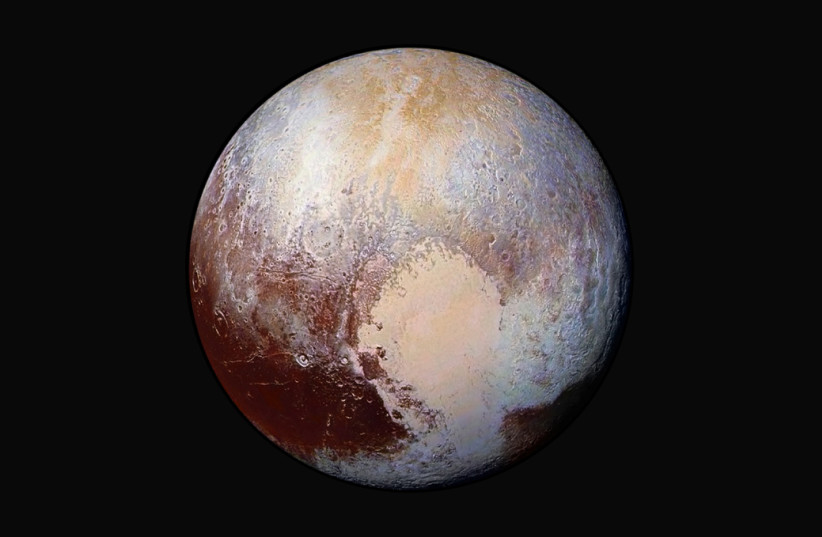
An image of Pluto captured by the New Horizons spacecraft in 2015 (photo credit: NASA)
Have scientists greatly misunderstood what a planet is, and has Pluto,
formerly the 9th planet in the solar system, been wrongfully revoked of
its planetary status? According to one recent academic study, that may
very well have been the case.
Indeed, this study, published in the academic journal Icarus,
posits that our entire traditional understanding of what constitutes a
planet may be wrong - a theory that has significant implications.
When nine become eight
Until
2006, it was commonly accepted that the solar system had nine planets:
Mercury, Venus, Earth, Mars, Jupiter, Saturn, Uranus, Neptune and Pluto.
However, in 2006, the International Astronomical Union (IAU), which
classifies the various objects in our solar system, made a ruling that
shook the astronomy world: Pluto was no longer a planet, but instead a dwarf planet, bringing our total number of planets in the solar system down to eight.
The reason for this was, ostensibly, because Pluto failed to meet
one of the three criteria needed to be considered a planet. It was
spherical and orbited the sun, but its orbit wasn't cleared of other
objects and it was influenced by Neptune's gravity.
But
according to this new study, the reason to remove Pluto's planet status
wasn't based on scientific understanding of what is a planet, but is
rather based on astrology.
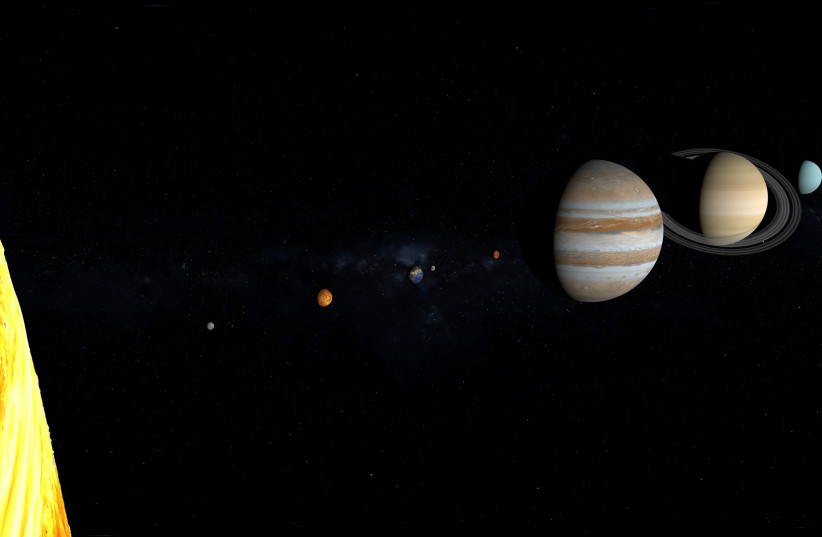
The solar system (illustrative). (credit: PIXABAY)
This
paper was, essentially, the culmination of a careful five-year study of
the academic literature of astronomy and planetary sciences going back
four centuries to figure out just what is a planet.
According to Galileo, the definition of a planet was simple: An object in space that is geologically active.
And
indeed, according to the literature, that definition held firm from the
1600s until the early 20th century. Here, two things came into play: a
decline in planetary science articles in academia and the popularity of
almanacs, books that were rooted in astrology.
And this could have caused astrology to worm its way into planetary classification.
“We
found that there were enough almanacs being sold in England and in the
United States that every household could get one copy every year,” lead
author Philip Metzger, PhD of the University of Central Florida's
Florida Space Institute said in a statement.
“This
might seem like a small change, but it undermined the central idea
about planets that had been passed down from Galileo,” he explained.
“Planets were no longer defined by virtue of being complex, with active
geology and the potential for life and civilization. Instead, they were
defined by virtue of being simple, following certain idealized paths
around the Sun.”
This
began to change in the 1960s when interest in planetary science was
renewed. But in 2006, the IAU ruled Pluto was not a planet and did this
by creating a third requirement, of having a clear orbit, which
seemingly had seldom been used in planetary science before.
Should Pluto Be a Planet Again?
The removal of Pluto
According
to Metzger, the idea was to intentionally keep the number of planets in
the solar system small. This was not just because of Pluto though, but
because of other objects. A few other objects had been known in the
solar system by 2006, when this decision was made. These include the
dwarf planets Makemake and Eris.
Metzger believes the decision was meant to exclude them as well as Pluto.
This
usage of astrology to limit the number of planets and inclusion of
never-before-used criteria has, as Metzger puts it, led most scientists
to ignore the IAU, NBC reported.
So why does this debate over planetary classification in our solar system and the status of Pluto matter?
For
several reasons. One of these is that using this astrology-based
classification system is harmful to the study of planetary science as it
leaves what should be considered planets disregarded.
But
one of the biggest reasons is that planetary science is rapidly
expanding and the possibilities for further study are increasing.
This
is especially true with growing interest in the study of exoplanets -
planets outside the solar system - and the recent launch of NASA's new
James Webb Space Telescope, the most advanced space telescope ever
launched, which will be able to change how scientists study the many
objects and phenomenon populating the universe - including planets.
That's Why Pluto Is Not a Planet Anymore
In
fact, it also brings greater attention to our own solar system as well,
because it isn't just Pluto that has been misclassified under the
Galileo definition.
Other
objects traditionally considered moons like Titan, Triton and more
would, under this definition, be considered a planet because they are
geologically active.
But
this begs the question: If our understanding of planets is wrong, and
other objects in the solar system could qualify as planets under the
Galileo definition, then how many planets does the solar system really
have? According to Metzger: Probably around 150.
This
definition, if accepted back into the mainstream properly, could help
expand our understanding of planetary science and see that our solar
system may be a lot more crowded than we first thought.
Please recommend this page & follow the Sputniks Orbit
* Based on mean solar day. Numbers provided by the International Earth Rotation and Reference System Service (IERS).
Earth's Rotation Defines Length of Day
Modern timekeeping defines a day as the sum of 24 hours—but that is not entirely correct. The Earth's rotation is not constant, so in terms of solar time, most days are a little longer or shorter than that.
The Moon is—very gradually—slowing the Earth's rotation because of friction produced by tides. Over the course of a century, the length of a day increases by a couple of milliseconds (where 1 millisecond equals 0.001 seconds).
Within this general trend, however, there is fluctuation: sometimes the Earth spins a bit faster, sometimes a bit slower. Recently, our planet has been speeding up a little, making for slightly shorter days.
How Long Is Today?
Today is predicted to be 0.3130 ms (milliseconds) or 0.0003130 seconds shorter than 24 hours. This is the time it takes Earth to rotate 14.56 cm (5.73 in), as measured at the equator.
This means that today lasts: 23.9999999131 hours or 24 hours minus 0.31 ms
On average, a mean solar day in the last 365 days was -0.18 ms under 24 hours, so today's day length is below average. Over this period, 228 days have been longer than today, while 138 have been shorter than today.
If every day were as long as today, a negative leap second would have to be added every 3194.89 days.
Today's Day Length* in Context
Day .....,,,, length ........... Date
Yesterday: ........ 24 hours -0.19 ms ........ Sat, Jan 1, 2022
Today : ..............24 hours -0.31 ms ...........Sun, Jan 2, 2022 Tomorrow: ....... 24 hours -0.29 ms .......... Mon, Jan 3, 2022 Shortest 2022 .... 24 hours -1.56 ms ..........Wed, Jun 29, 2022 Longest 2022 ..... 24 hours +0.88 ms .........Fri, Apr 15, 2022 Last Year Average 24 hours -0.18 ms ......
Year 2021* Yesterday's, today's, and future day lengths are predictions.
Average Day Lengths & Leap Seconds
Overall, the Earth is a good timekeeper: the length of a day is consistently within a few milliseconds of 86,400 seconds, which is equivalent to 24 hours. However, over the course of months and years, these small differences can add up and put our clocks out of sync with the Earth's spin. When this happens, a leap second is used to bring them back into alignment.
Leap seconds can be positive or negative. A positive leap second adds a second to our clocks, while a negative leap second subtracts a second.
The system of leap seconds was introduced in 1972. So far, there have been 27 leap seconds, and they have all been positive.
The table below shows the yearly average day lengths since 1973. Average Solar Day Length*
Year -Avg. dayTot....yearly diff... -Shortest day ......Longest day- Leap sec. added
2022.. -0.21 ms .........-77.51 ms .. Jun 29 -1.56 ms... -Apr 15..... +0.88 ms - 2021.. -0.18 ms ........-65.28 ms.... Jul 9 -1.46 ms ......-Apr 26..... +1.00 ms - 2020.. -0.00 ms.........-1.30 ms .....Jul 19 -1.47 ms .....-Apr 8....... +1.62 ms - 2019 ..+0.39 ms .......+141.25 ms .Jul 16 -0.95 ms .....-Mar 22 .....+1.68 ms - 2018 ..+0.69 ms .......+252.47 ms. Jun 30 -0.64 ms.....- Feb 4 .......+1.69 ms - 2017 ..+1.03 ms .......+375.01 ms. Aug 4 +0.06 ms.....- Apr 25 .....+2.20 ms - * Current year's average day length and total yearly difference are predicted.
How Is True Day Length Measured?
Astronomers and timekeepers express mean solar time as Universal Time (UT1), a time standard based on the average speed of the Earth's rotation. UT1 is then compared to International Atomic Time (TAI), a super-precise time scale calculated by a network of atomic clocks.
The actual length of a day is expressed as the deviation of UT1 from TAI over 24 hours.
Why Isn't Earth's Rotation Constant?
The speed of the Earth's rotation varies from day to day. One of the main factors are the celestial bodies surrounding us.
For example, the Moon's gravitational pull causes tides and changes the Earth's shape, ultimately resulting in a lower rotational speed. The distance between Earth and Moon changes constantly, which makes for daily variations in the speed our planet rotates around its axis.
How Far Back Does the Data Go?
Super-accurate atomic clocks were first developed in the 1950s and 1960s. So measurements of the Earth's rotation using atomic clocks only go back as far as then.
However, telescopic timings of stellar occultations by the Moon provide information about the Earth's rotation going back to the 17th century. An occultation is when the Moon, as seen from the Earth, passes in front of a star.
Ancient Records Give Away Earth's Speed
Going back even further, records of solar and lunar eclipses provide information from the 8th century BCE onwards.
For example, a Babylonian clay tablet tells us that a total solar eclipse was observable in the ancient city of Babylon on April 15, 136 BCE.
Modern computer models can calculate the path of totality for this eclipse with a high degree of accuracy. From this, we can work out the Earth's spin. For instance, if the Earth had been spinning a bit faster at that time, the path of totality would have passed to the west of Babylon—not directly over the city.