Tuesday, July 21, 2026

Space News: Scientists identify nearby 'super-Earth' as promising candidate in search for alien life - study


Scientists identify nearby 'super-Earth' as promising candidate in search for alien life - study


NASA plans to launch the Habitable Worlds Observatory in the 2040s, a mission whose goal is “to image Earth-like planets around other sun-like stars,” according to NASA’s website.

By Eitan Elias, Jerusalem Post, July 10, 2026


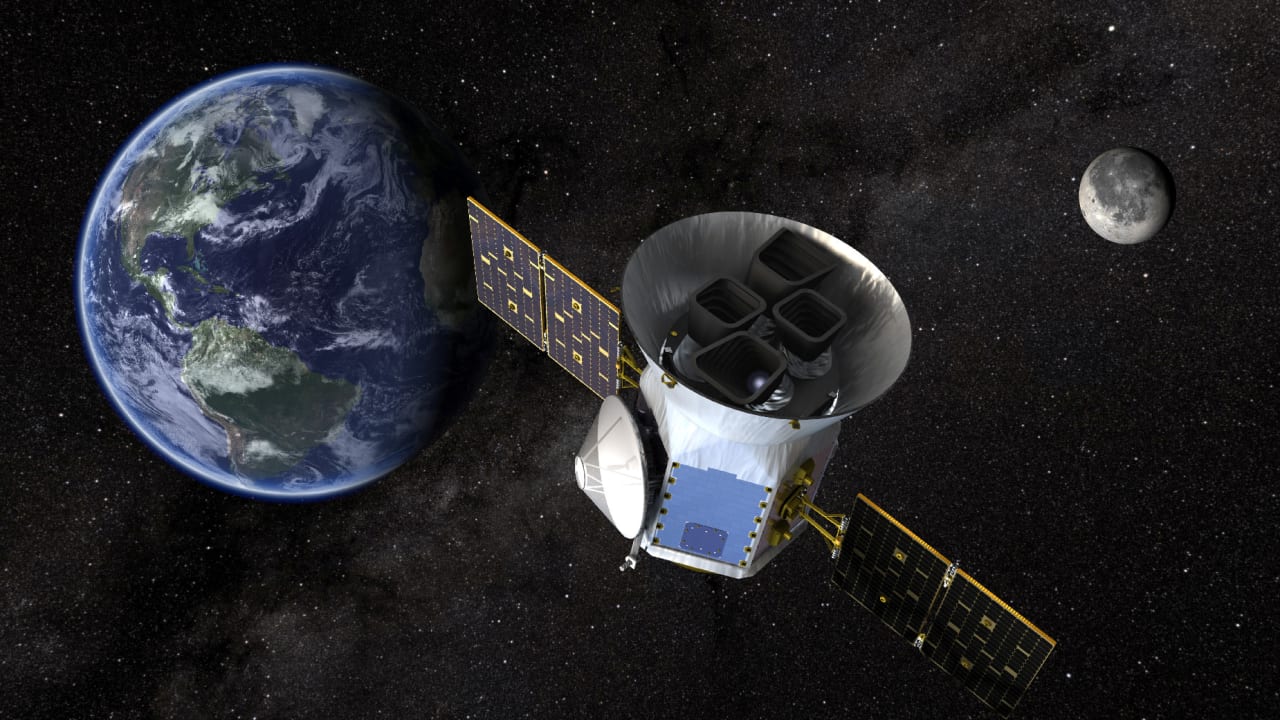
TESS, the Transiting Exoplanet Survey Satellite, is shown in this conceptual illustration obtained by Reuters on March 28, 2018. (photo credit: NASA's Goddard Space Flight Center/Handout via REUTERS)

Extraterrestrial life may be closer than previously thought, on a nearby super-Earth called GJ 3378 b, according to a study published in The Astrophysics Journal last week.

First discovered in 2024, the exoplanet, a planet outside of our solar system, sits just 25 light-years away from Earth in a nearby star system, a small distance compared to the size of the Milky Way galaxy.

The peer-reviewed study, led by researchers at the University of California, Irvine, analyzed GJ 3378 b in depth and found that it may lie within the habitable zone, the region with just the right amount of solar radiation to support liquid water. 

Due to its proximity to Earth, researchers have believed that the super-Earth, a rocky planet with a mass two to ten times Earth’s, was a perfect candidate for further study.

This idea is supported by the exoplanet's temperature being almost 0 °C and the fact that it receives 91% of the energy Earth receives from the Sun.

A concept art of the gas giant planet WD1856 b orbiting a white dwarf star, in this handout image released July 1, 2026. (credit: NASA, ESA, CSA, RALF CRAWFORD (STSCI)/HANDOUT VIA REUTERS)

The exoplanet could have a similar atmosphere to Earth

In the study, scientists also recalculated the mass of GJ 3378 b, finding that it’s only 2.3 times Earth's mass, down from a previous measurement of five times Earth’s mass. This lower mass suggests it could be a rocky planet like Earth and have a similar atmospheric pressure, placing the exoplanet in the habitable zone and increasing the likelihood of extraterrestrial life.

Despite the promising revelations published in the study, it’s important to note that there isn’t any evidence yet that GJ 3378 b actually has an atmosphere or liquid water, and stellar winds may have eroded any atmosphere it once had.

Because so many unknowns remain about this exoplanet, scientists hope to conduct further research to better understand the possibility of extraterrestrial life on GJ 3378 b.

NASA plans to launch the Habitable Worlds Observatory in the 2040s, a mission whose goal is “to image Earth-like planets around other sun-like stars,” according to NASA’s website.

Through this mission, scientists will determine whether GJ 3378 b truly has an atmosphere, and, if it does, they’ll study the planet for signs of biological life.


THIS PAGE WAS POSTED BY SPUTNIK ONE OF THE SPUTNIKS ORBIT BLOGhttps://disqus.com/HOME/FORUM/THESPUTNIKSORBIT-BLOGSPOT-COM

Monday, July 6, 2026

Health & Wellness News: Tel Aviv University study reveals how tumors hijack immune cells to fuel cancer growth and spread

Tel Aviv University study reveals how tumors hijack immune cells to fuel cancer growth and spread


The research focused on macrophages, immune cells responsible for removing damaged and dead cells from the body.

The Media Line Staff, July 4, 2026


                              Radiation therapy for a cancer patient (photo credit: SHUTTERSTOCK)

Researchers at Tel Aviv University's Gray Faculty of Medical and Health Sciences have identified a mechanism by which cancerous tumors can redirect a normal immune system process to support tumor growth, a discovery they say could lead to new treatment strategies that restore the immune system's ability to fight cancer. 

The study was led by Dr. Merav Cohen and doctoral students Roi Balaban and Ori Moskowitz and was published in the journal Science Immunology

The research focused on macrophages, immune cells responsible for removing damaged and dead cells from the body. While this process normally helps maintain healthy tissue and prevent inflammation, the researchers found that within cancerous tumors it can instead change the behavior of the immune cells in ways that promote tumor development. 

To investigate the process, the team developed a new technology called Effero-seq, which tracks changes in immune cells after they engulf dead cells. Using the method, the researchers found that macrophages that consumed dead cancer cells underwent what they described as "reprogramming," activating genes associated with tumor growth.


Cancer cells (credit: SHUTTERSTOCK)

Study finds how tumors hijack immune defenses

The team used a melanoma model to examine the effects of the altered immune cells. They found that macrophages that had consumed dead cancer cells encouraged the formation of new blood vessels inside tumors. The additional blood vessels supplied tumors with oxygen and nutrients, allowing them to grow more rapidly.

The researchers also found that these macrophages became less responsive to signals that normally trigger anti-cancer immune activity.

The researchers expanded the study by analyzing data from patients with uveal melanoma, a form of eye cancer. They found that patients whose tumors showed higher expression of immune cells carrying the genetic signature identified in the study generally had lower survival rates.

According to Dr. Cohen, the findings offer new insight into how tumors influence the immune system to support their own growth. 

“The better we understand these mechanisms, the better equipped we will be to develop treatments that block them and restore the immune system’s ability to fight cancer,” she says.

“This research points to a new and promising therapeutic target, one that focuses not only on the cancer cells themselves, but also on the processes that enable them to thrive.”

Wednesday, July 1, 2026

Defense News: Israel Shipyards launches AREONOUS to hunt FPV drones with autonomous net-launching kits

Israel Shipyards launches AREONOUS to hunt FPV drones with autonomous net-launching kits

The system can operate across several ranges, from 50 km for protecting airports and bases down to 200 meters as a soldier-portable system to protect manoeuvring forces at their staging areas.

By Udi Etzion, Jerusalem Post, June 30,2026


A DJI Mini 3 drone flies above the ground on February 8, 2026 in Radstock, England. (photo credit: Anna Barclay/Getty Images)


Israel Shipyards Ltd, the defense giant known primarily for producing vessels for the Israel Navy, has recently entered the drone interception market by unveiling a subsidiary, AREONOUS.

AREONOUS, established a year ago, operates in what is arguably the defense sector's hottest field, and already employs around 40 people, some of whom are veterans of other defense industries.

The company has already developed a command-and-control system and an interceptor drone. The system can reportedly operate effectively at both close and long ranges. It can, for example, be operated at a range of 50 km to protect airports and bases, or down to 200 meters as a soldier-portable system to protect operating forces.

The use of an interceptor drone allows the system to contend with FPV drones, which cannot be electronically jammed. Last week, the system was demonstrated to the IDF using a radar from the US company Echodyne, as well as a camera from Controp - a combination intended to enable rapid detection of tiny, manoeuvring targets.

The soldier-portable system weighs 13 kg, is equipped with LiDAR (laser radar) sensors from the Israeli company Innoviz, and launches nets from the ground in which the drones become entangled and fall to the earth. Its operation is automatic.


The price: in the range of tens of thousands of dollars.

Meir Ben Shayah, CEO of the company, told Walla that "in the field of drone interception, there is no 'silver bullet.' There is no single technology that is the absolute solution, and integration is mandatory. Our system is open to integrating different sensors and effectors according to customer requirements and the threats they face. We can integrate laser and other interception solutions within just two weeks."

The company has already lined up paying customers and is beginning to implement its solutions to protect the warships manufactured by Israel Shipyards.

Prime Minister Benjamin Netanyahu asserted last week that Israel will be the first country in the world to solve the global issue of explosive drones during a speech at the Federation of Local Authorities in Israel Conference.

THIS PAGE WAS POSTED BY SPUTNIK ONE OF THE SPUTNIKS ORBIT BLOGhttps://disqus.com/HOME/FORUM/THESPUTNIKSORBIT-BLOGSPOT-COM