Tuesday, June 7, 2022

Liquid platinum at room temperature: The 'cool' catalyst for a sustainable revolution in industrial chemistry

JUNE 6, 2022, by ARC Centre of Excellence in Exciton Science

Liquid gallium and platinum beads in close up. 
Credit: Dr Md. Arifur Rahim, UNSW Sydney.

Researchers in Australia have been able to use trace amounts of liquid platinum to create cheap and highly efficient chemical reactions at low temperatures, opening a pathway to dramatic emissions reductions in crucial industries.

When combined with liquid gallium, the amounts of platinum required are small enough to significantly extend the earth's reserves of this valuable metal, while potentially offering more sustainable solutions for CO2 reduction, ammonia synthesis in fertilizer production, and green fuel cell creation, together with many other possible applications in chemical industries.

These findings, which focus on platinum, are just a drop in the liquid metal ocean when it comes to the potential of these catalysis systems. By expanding on this method, there could be more than 1,000 possible combinations of elements for over 1,000 different reactions.

The results will be published in the journal Nature Chemistry on Monday 6 June.

Platinum is very effective as a catalyst (the trigger for chemical reactions) but is not widely used at industrial scale because it's expensive. Most catalysis systems involving platinum also have high ongoing energy costs to operate.

Normally, the melting point for platinum is 1,700°C. And when it's used in a solid state for industrial purposes, there needs to be around 10% platinum in a carbon-based catalytic system.

It's not an affordable ratio when trying to manufacture components and products for commercial sale.

That could be set to change in the future, though, after scientists at UNSW Sydney and RMIT University found a way to use tiny amounts of platinum to create powerful reactions, and without expensive energy costs.


An atomic view of the catalytic system in which silver spheres represent gallium atoms and red spheres represent platinum atoms. The small green spheres are reactants and the blue ones are products – highlighting the catalytic reactions. 
Credit: Dr Md. Arifur Rahim, UNSW Sydney.


The team, including members of the ARC Center of Excellence in Exciton Science and the ARC Center of Excellence in Future Low Energy Technologies, combined the platinum with liquid gallium, which has a melting point of just 29.8°C—that's room temperature on a hot day. When combined with gallium, the platinum becomes soluble. In other words, it melts, and without firing up a hugely powerful industrial furnace.

For this mechanism, processing at an elevated temperature is only required at the initial stage, when platinum is dissolved in gallium to create the catalysis system. And even then, it's only around 300°C for an hour or two, nowhere near the continuous high temperatures often required in industrial-scale chemical engineering.

Contributing author Dr. Jianbo Tang of UNSW likened it to a blacksmith using a hot forge to make equipment that will last for years.

"If you're working with iron and steel, you have to heat it up to make a tool, but you have the tool and you never have to heat it up again," he said.

"Other people have tried this approach but they have to run their catalysis systems at very high temperatures all the time."

To create an effective catalyst, the researchers needed to use a ratio of less than 0.0001 platinum to gallium. And most remarkably of all, the resulting system proved to be over 1,000 times more efficient than its solid-state rival (the one that needed to be around 10% expensive platinum to work)

The advantages don't stop there—because it's a liquid-based system, it's also more reliable. Solid-state catalytic systems eventually clog up and stop working. That's not a problem here. Like a water feature with a built-in fountain, the liquid mechanism constantly refreshes itself, self-regulating its effectiveness over a long period of time and avoiding the catalytic equivalent of pond scum building up on the surface.

Dr. Md. Arifur Rahim, the lead author from UNSW Sydney, said: "From 2011, scientists were able to miniaturize catalyst systems down to the atomic level of the active metals. To keep the single atoms separated from each other, the conventional systems require solid matrices (such as graphene or metal oxide) to stabilize them. I thought, why not using a liquid matrix instead and see what happens.

Liquid gallium and three solid beads of platinum, demonstrating the dissolution process of platinum in gallium described in the research paper. 
Credit: Dr Md. Arifur Rahim, UNSW Sydney.


"The catalytic atoms anchored onto a solid matrix are immobile. We have added mobility to the catalytic atoms at low temperature by using a liquid gallium matrix."

The mechanism is also versatile enough to perform both oxidation and reduction reactions, in which oxygen is provided to or taken away from a substance respectively.

The UNSW experimentalists had to solve some mysteries to understand these impressive results. Using advanced computational chemistry and modeling, their colleagues at RMIT, led by Professor Salvy Russo, were able to identify that the platinum never becomes solid, right down to the level of individual atoms.

Exciton Science Research Fellow Dr. Nastaran Meftahi revealed the significance of her RMIT team's modeling work.

"What we found is the two platinum atoms never came into contact with each other," she said.

"They were always separated by gallium atoms. There is no solid platinum forming in this system. It's always atomically dispersed within the gallium. That's really cool and it's what we found with the modeling, which is very difficult to observe directly through experiments."

Surprisingly, it's actually the gallium that does the work of driving the desired chemical reaction, acting under the influence of platinum atoms in close proximity.

Exciton Science Associate Investigator Dr. Andrew Christofferson of RMIT explained how novel these results are: "The platinum is actually a little bit below the surface and it's activating the gallium atoms around it. So the magic is happening on the gallium under the influence of platinum.

"But without the platinum there, it doesn't happen. This is completely different from any other catalysis anyone has shown, that I'm aware of. And this is something that can only have been shown through the modeling."


Recommend this post and follow
Sputnik's Orbit


posted by liquid Chuckles

Space News: NASA set to explore the mysterious volcanoes on the Moon


NASA set to explore the mysterious volcanoes on the Moon


The Gruithuisen Domes are two lunar domes, a type of volcano, on the Moon thought to be formed with silicic lava. However, it is unknown how this could possibly form on the Moon.


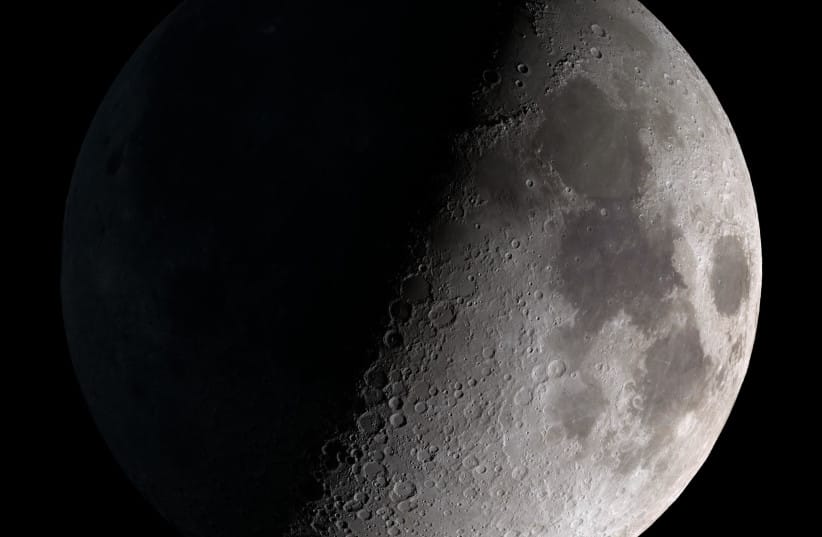
 The Moon. (photo credit: Wikimedia Commons)

The Moon. (photo credit: Wikimedia Commons)

NASA has added a new objective for its Artemis mission to the Moon, exploring the mysterious and enigmatic lunar mounds known as the Gruithuisen Domes.

What are the Gruithuisen Domes?

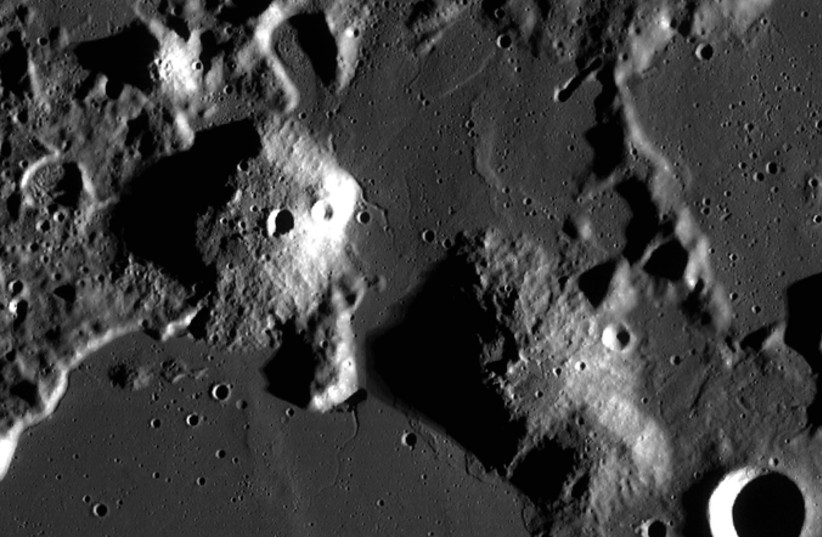
The Gruithuisen Domes are two specific mounds, designated Mons Gruithuisen Gamma and Mons Gruithuisen  Delta, that exist north of the Gruithuisen crater on the Moon.

Current observations of these mounds show they are distinct from the surrounding area. 

As for what they are, they are something scientists have dubbed lunar domes, which are a type of volcano.

 Gruithuisen Domes, two volcanos on the lunar surface (Illustrative). (credit: Wikimedia Commons)

 Gruithuisen Domes, two volcanos on the lunar surface (Illustrative). (credit: Wikimedia Commons)

There are a number of these volcanoes that are known to exist throughout the lunar surface.

These volcanos, especially the Gruithuisen Domes, are thought to be formed by magma rich in silica. This is notable because while the surrounding terrain is covered in the hardened remains of ancient basaltic lava — which are runny and thin – compared to thicker silicic lava, which has a consistency closer to granite.

But that is something that all makes sense, scientifically. What doesn't make sense is how it is even possible for silicic magma to form on the Moon in the first place.

Silicic volcanoes on Earth require two main ingredients to form: Plate tectonics and water. The Moon has neither of them. This means that, based on our current understanding of how volcanoes work, it should not be possible for silicic volcanoes to form on the Moon.

And yet, the Gruithuisen Domes are clearly there. So how did this happen?

Scientists have no idea. But NASA is hoping to fix that.

The Artemis mission

It is impossible to understand how the Gruithuisen Domes formed without going there to look. Now, NASA has selected a new scientific instrument suite to study the domes for the first time in a priority mission.

The instrument suite is the Lunar Vulkan Imaging and Spectroscopy Explorer (Lunar-VISE), which consists of five instruments – two of which are on a lander and three on a mobile rover.

Lunar-VISE's mission is to explore the summit of one of the domes and analyze the top. 

Studying this will help solve the mystery of how these seemingly impossible domes formed. Understanding that can help NASA plan future robotic and human missions to the Moon.

Specifically, as the domes are volcanoes, this means there is likely a large concentration of heat-producing material. If we understand this better, then that heat could be a valuable resource for long-term lunar missions.

The scientists behind the $35 million Lunar-VISE are Kerri Donaldson Hanna and Adrienne Dove of the University of Central Florida (UCF).

"There’s potentially a treasure trove of knowledge waiting to be discovered, which will not only help us inform future robotic and human exploration of the moon, but may also help us better understand the history of our own planet as well as other planets in the solar system," Donaldson Hanna said in a statement.

NASA To Launch ‘Priority’ Mission Exploring Mysterious Domes On Moon’s Surface


This is merely one of several widely-anticipated scientific efforts NASA hopes to achieve on the lunar surface as part of the Artemis mission.

According to NASA, the Lunar-VISE is set to be delivered to the Moon in 2026. 


Please recommend this page & follow the Sputniks Orbit

https://disqus.com/home/forum/thesputniksorbit-blogspot-com

Monday, June 6, 2022

Magnetic Pole Shift, Human Magnetic Sense, Solar Cycle Update

 S0 News,  Jun.4.2022
ytube video below


Daily Sun, Earth and Science News! 

TODAY'S LINKS:

Human Magnetic Sense: https://www.nature.com/articles/s4159...

No Chron Reversal Precursor: https://academic.oup.com/gji/advance-...

Solar Cycle Progression: https://www.swpc.noaa.gov/products/so...

https://youtu.be/uyqxSzWbqKo

(see on ytube for the links and a bunch more CC )


Recommend this post and follow

Sputnik's Orbit


Posted by polar Chuck


Sunday, June 5, 2022

Medical Science News: Woman becomes first to get new 3D printed ear made from her own cells in 'revolutionary' transplant


Woman becomes first to get new 3D printed ear made from her own cells in 'revolutionary' transplant


A doctor removed half a gram of cartilage from the patient's ear remnant and sent it to a laboratory along with a 3D scan of her healthy ear to be made into a 3D printed ear that was implanted under her skin.


https://news.sky.com/story/woman-becomes-first-to-get-new-3d-printed-ear-made-from-her-own-cells-in-revolutionary-transplant-12626025

Pic: Microtia-Congenital Ear Institute and 3DBio Therapeutics.
Image:Alexa's ear before the transplant (left) and the results 30 days after the procedure (right). Pic: Microtia-Congenital Ear Institute and 3DBio Therapeutics


A 20-year-old woman has become the first person to undergo a successful ear transplant with 3D printed technology.

The patient, known only as Alexa from Mexico, was born with microtia, which is a rare birth defect that causes the external part of the ear to be small and misshapen and can also affect hearing.

Dr Arturo Bonilla, a paediatric ear reconstructive surgeon in San Antonio, performed the woman's implant surgery by removing half of a gram of cartilage from her microtia ear remnant and then sending it to 3DBio Therapeutics in Long Island City, Queens, along with a 3D scan of her healthy ear.

At the facility, Alexa's chondrocytes, which are cells responsible for cartilage formation, were isolated from the tissue sample and grown in a proprietary slurry of nutrients, turning them into billions of cells.

These were inserted into a specialised 3D bio-printer with a syringe and turned into a small oblong shape that was a mirror replica of the patient's healthy ear.

The whole printing process took less than 10 minutes.

The printed ear shape was then sent back in cold storage to Dr Bonilla and he then implanted the ear under the skin just above Alexa's jawline.

After the skin tightened around the implant, the shape of an ear was formed.

Alexa said she started to become more self-conscious about her appearance when she became a teenager and would try to cover her ear by wearing her hair long and loose.

However, she said the transplant meant she could start wearing her hair up in a ponytail or bun.

The 20-year-old said: "You care a little more for your image when you're a teenager. Some people said things that were not thoughtful, and it started bothering me.

"I think my self-esteem will go up."

Scientists 3D print ear from human cells and transplant into patient in medical breakthrough


Dr Bonilla said: "This is so exciting, sometimes I have to temper myself a little bit.

"If everything goes as planned, this will revolutionise the way this is done."


Please recommend this page & follow the Sputniks Orbit

https://disqus.com/home/forum/thesputniksorbit-blogspot-com

Saturday, June 4, 2022

Space News: Stars in other galaxies much heavier than our own - study


Stars in other galaxies much heavier than our own - study


The discovery that stars in other galaxies having such greater mass on average upends many previous assumptions about the wider universe.


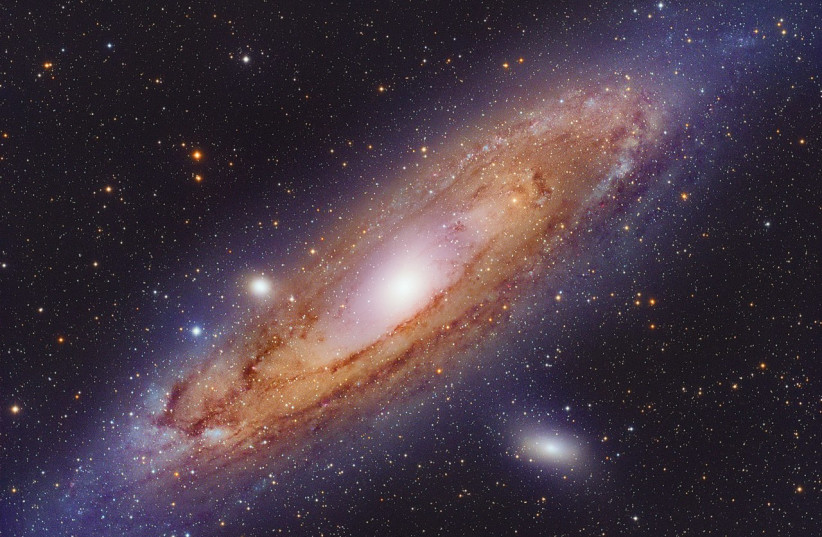
 The Andromeda Galaxy is the nearest large spiral galaxy from the Earth, and contains within itself over a trillion stars.  (photo credit: Wikimedia Commons)

The Andromeda Galaxy is the nearest large spiral galaxy from the Earth, and contains within itself over a trillion stars.  (photo credit: Wikimedia Commons)

The many stars across the universe may be very different than the stars of our own Milky Way galaxy, being much heavier, according to a new study.

The findings, published in the peer-reviewed academic periodical The Astrophysical Journal, is a major shift in our understanding of the greater cosmos and has upended previous assumptions about the wider universe.

Stars, galaxies and us

Humanity has made massive strides in our understanding of space. In our own Milky Way galaxy, populated by a vast number of stars all arranged and distributed in a specific way. 

From here and other advancements, scientists have been able to ascertain mass. And with mass, it is easier to understand the many other phenomena related to stars, such as how their gravitational pull affects everything around them. 


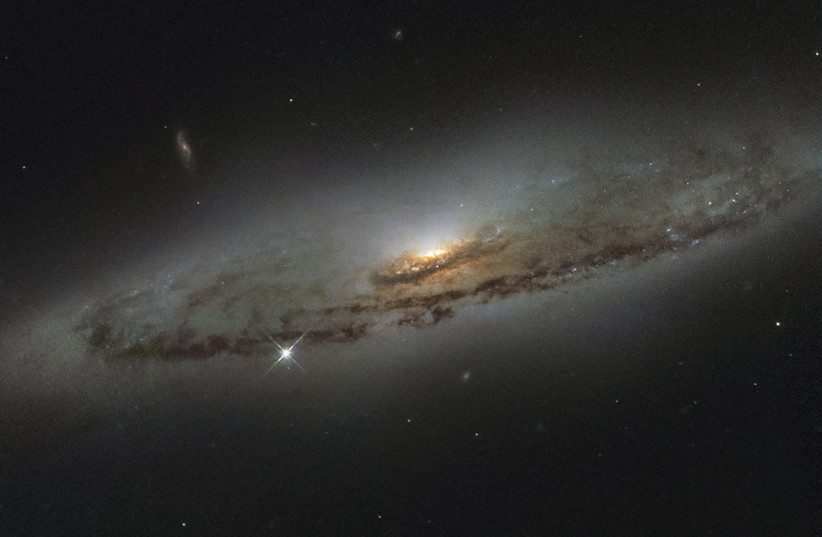
The spiral galaxy NGC 4845, located over 65 million light-years away in the constellation of Virgo in NASA/ESA Hubble Space Telescope image (credit: NASA/HANDOUT VIA REUTERS)

The spiral galaxy NGC 4845, located over 65 million light-years away in the constellation of Virgo in NASA/ESA Hubble Space Telescope image (credit: NASA/HANDOUT VIA REUTERS)


It is also important for understanding the lifespan of stars, as well as about their fates – which, for many massive stars, is to erupt into a supernova and collapse into a black hole.

In other words, nearly everything scientists have deduced about galaxies revolves around our understanding of the mass of stars.

And while much of the galaxy remains mysterious – indeed, our knowledge of interstellar space, meaning outside our solar system, is considerably lacking compared to what we know about the solar system itself – this distribution of stars and their masses is something we have known a lot about.

It was assumed, then, that the stars in other galaxies were similar in that respect.

Despite this, most scientists assumed that the mass of stars would differ in some degree between galaxies. It was simply impossible to actually figure out this variation, so the use of a universal model was done out of necessity.

The study

Scientists at the University of Copenhagen's Niels Bohr Institute were able to observe around 140,000 galaxies throughout the universe. The result: The stars in distant galaxies are much heavier.

The fact that it took this long to find out is understandable.

Distant planets are already difficult to see from Earth, as are even more distant stars throughout the galaxy. But other galaxies are billions of light-years away from Earth. As a result, they are very hard to see – only the light of their brightest stars are usually visible. 

Only one galaxy, our closest galactic neighbor the Andromeda galaxy, is even visible with the naked eye from Earth.

As such, what we knew about these galaxies was minimal.

But the study was able to make use of the Cosmic Evolution Survey (COSMOS) catalog at Caltech, which contains a massive database of light observed from other galaxies throughout the known universe.

The result was the conclusion that the stars in distant galaxies are much more massive than in the Milky Way. 

But far from simply finding out that other galaxies' stars sit at a higher weight class, the implications of these findings are – fittingly enough – astronomical in terms of just how much they shake up our knowledge of space.

For one thing, it might be able to solve the conundrum around galactic lifespans.

Several galaxies essentially die, no longer forming new stars. Why this is has been a mystery, but the idea that it could be related to star size may answer it. 

"Now that we are better able to decode the mass of stars, we can see a new pattern; the least massive galaxies continue to form stars, while the more massive galaxies stop birthing new stars."

Albert Sneppen

"Now that we are better able to decode the mass of stars, we can see a new pattern; the least massive galaxies continue to form stars, while the more massive galaxies stop birthing new stars. This suggests a remarkably universal trend in the death of galaxies," study author Albert Sneppen explained.

And there is further precedence for this, too. It is known that larger stars have shorter lifespans compared to ones like the Sun. 

And because more massive stars have shorter lifespans, it can also impact the frequency of supernovae and black holes.

But more research needs to be done to better understand the sheer scope of what this study has uncovered and what secrets about the universe it can help uncover.


Please recommend this page & follow the Sputniks Orbit

https://disqus.com/home/forum/thesputniksorbit-blogspot-com

NOAA shares flashy first imagery from GOES-18 Lightning Mapper

JUNE 3, 2022, by NOAA Headquarters

Credit: NOAA

The Geostationary Lightning Mapper (GLM) instrument, onboard NOAA's GOES-18 satellite, is now providing striking lightning observations of the Western Hemisphere. GOES-18 launched on March 1, 2022.

Recently, the GOES-18 GLM detected and monitored lightning activity in severe storms across the U.S. A derecho moved through the Northern Plains on May 12, particularly affecting eastern South Dakota and west central Minnesota. Derechos feature unusually widespread wind damage and according to NOAA's National Weather Service, the May 12 event was one of the most extreme examples on record due to the number of significant wind gusts. This derecho produced straight-line winds between 60 and 100+ miles per hour. Several tornadoes were also confirmed in the area as well as significant blowing dust. The storm uprooted trees, damaged property, caused power outages, and resulted in injuries and at least two deaths.

GLM detects and maps total lightning—in-cloud, cloud-to-cloud, and cloud-to-ground—continuously over the Americas and adjacent ocean regions. GLM offers insights beyond the presence of a lightning strike, revealing the extent of lightning flashes and the distance they travel.

Rapid increases in total lightning activity often precede severe and tornadic thunderstorms. Characterizing lightning activity in storms allows forecasters to identify intensifying storms before they produce damaging winds, hail or tornadoes. GLM data enable forecasters to detect electrically active storms, determine the extent of the lightning threat, identify strengthening and weakening storms, monitor storm evolution, and supplement radar data where coverage is poor.


Credit: NOAA Headquarters (screenshot of short vid worth watching CC)

Scientists and forecasters have made great advances in the five years since the first GLM data became available from GOES-16, including the ability to extract three-dimensional information from these natively two-dimensional observations. Flying along with the storms reveals just how well the GLM captures the evolution of the individual storm cells that combine to form massive storm systems. Rapidly updating GLM data gives forecasters the ability to monitor lightning flashes with pinpoint precision over much of the Western Hemisphere.


Widespread weather events pose particular challenges for the aviation industry. Increased lightning flashes as observed by GLM occur in storms with more turbulent updrafts and downdrafts, which are a significant hazard to aircraft. GLM imagery helps pilots and air traffic controllers route flights to maximize safety and minimize economic impacts.

GOES-18 is currently undergoing post-launch testing, validation and calibration of its instruments and systems to prepare it for operations. NOAA plans for GOES-18 to replace GOES-17 as GOES West in early 2023. Imagery and data from GOES-18 during the post-launch testing phase should be considered preliminary and non-operational.


Recommend this post and follow
Sputnik's Orbit


Posted Zapper Chuck

Friday, June 3, 2022

NASA's DAVINCI mission to take the plunge through massive atmosphere of Venus

JUNE 2, 2022, by Nancy Neal Jones, NASA

Credit: NASA

In a paper recently published in The Planetary Science Journal, NASA scientists and engineers give new details about the agency's Deep Atmosphere Venus Investigation of Noble gases, Chemistry, and Imaging (DAVINCI) mission, which will descend through the layered Venus atmosphere to the surface of the planet in mid-2031. DAVINCI is the first mission to study Venus using both spacecraft flybys and a descent probe.

DAVINCI, a flying analytical chemistry laboratory, will measure critical aspects of Venus's massive atmosphere-climate system for the first time, many of which have been measurement goals for Venus since the early 1980s. It will also provide the first descent imaging of the mountainous highlands of Venus while mapping their rock composition and surface relief at scales not possible from orbit. The mission supports measurements of undiscovered gases present in small amounts and the deepest atmosphere, including the key ratio of hydrogen isotopes—components of water that help reveal the history of water, either as liquid water oceans or steam within the early atmosphere.

The mission's carrier, relay and imaging spacecraft (CRIS) has two onboard instruments that will study the planet's clouds and map its highland areas during flybys of Venus and will also drop a small descent probe with five instruments that will provide a medley of new measurements at very high precision during its descent to the hellish Venus surface.

"This ensemble of chemistry, environmental, and descent imaging data will paint a picture of the layered Venus atmosphere and how it interacts with the surface in the mountains of Alpha Regio, which is twice the size of Texas," said Jim Garvin, lead author of the paper in the Planetary Science Journal and DAVINCI principal investigator from NASA's Goddard Space Flight Center in Greenbelt, Maryland. "These measurements will allow us to evaluate historical aspects of the atmosphere as well as detect special rock types at the surface such as granites while also looking for tell-tale landscape features that could tell us about erosion or other formational processes."

DAVINCI will make use of three Venus gravity assists, which save fuel by using the planet's gravity to change the speed and/or direction of the CRIS flight system. The first two gravity assists will set CRIS up for a Venus flyby to perform remote sensing in the ultraviolet and the near infrared light, acquiring over 60 gigabits of new data about the atmosphere and surface. The third Venus gravity assist will set up the spacecraft to release the probe for entry, descent, science, and touchdown, plus follow-on transmission to Earth.

The first flyby of Venus will be six and half months after launch and it will take two years to get the probe into position for entry into the atmosphere over Alpha Regio under ideal lighting at "high noon," with the goal of measuring the landscapes of Venus at scales ranging from 328 feet (100 meters) down to finer than one meter. Such scales enable lander style geologic studies in the mountains of Venus without requiring landing.

Once the CRIS system is about two days away from Venus, the probe flight system will be released along with the titanium three foot (one meter) diameter probe safely encased inside. The probe will begin to interact with the Venus upper atmosphere at about 75 miles (120 kilometers) above the surface. The science probe will commence science observations after jettisoning its heat shield around 42 miles (67 kilometers) above the surface. With the heatshield jettisoned, the probe's inlets will ingest atmospheric gas samples for detailed chemistry measurements of the sort that have been made on Mars with the Curiosity rover. During its hour-long descent to the surface, the probe will also acquire hundreds of images as soon as it emerges under the clouds at around 100,000 feet (30,500 meters) above the local surface.

"The probe will touch-down in the Alpha Regio mountains but is not required to operate once it lands, as all of the required science data will be taken before reaching the surface," said Stephanie Getty, deputy principal investigator from Goddard. "If we survive the touchdown at about 25 miles per hour (12 meters/second), we could have up to 17-18 minutes of operations on the surface under ideal conditions."

DAVINCI is tentatively scheduled to launch June 2029 and enter the Venusian atmosphere in June 2031.

"No previous mission within the Venus atmosphere has measured the chemistry or environments at the detail that DAVINCI's probe can do," said Garvin. "Furthermore, no previous Venus mission has descended over the tesserae highlands of Venus, and none have conducted descent imaging of the Venus surface. DAVINCI will build on what Huygens probe did at Titan and improve on what previous in situ Venus missions have done, but with 21st century capabilities and sensors."


Recommend this post and follow
Sputnik's Orbit


Posted by Lover Chuck


Thursday, June 2, 2022

New method to enrich uranium in seawater

JUNE 1, 2022, by Zhang Nannan, Chinese Academy of Sciences

The GO-Gly membrane 
(a); The ion rejection and enrichment properties of Go-Gly membrane for uranium and the main coexisting ions in single ion solutions 
(b) and simulated seawater (c), respectively. 
Credit: Chu Jian

Researchers at the Institute of Modern Physics (IMP) of the Chinese Academy of Sciences (CAS) have developed an innovative method of pre-enriching uranium in seawater by membrane filtration.

Uranium is the vital source for nuclear power generation. There are about 4.5 billion tons of uranium existing in seawater, which is 1,000 times more than terrestrial reserves. However, the extremely low uranium concentration and huge amounts of coexisting ions, especially K+, Na+, Ca2+ and Mg2+, makes the extraction of uranium from seawater very challenging. Thus, it is of great importance to enrich uranium and reduce the concentration difference between uranium and the main coexisting ions.

In a study published in the Chemical Engineering Journal, based on the prominent hydrated ion diameter differences between UO22+ and the main coexisting ions, the researchers have developed an effective method to pre-enrich uranium in seawater. They fabricated a new type of glycine cross-linked composite graphene oxide (GO-Gly) membrane with good ion sieving properties, which can meet the demands of uranium pre-enrichment in seawater.

According to the researchers, the cross-linking of GO by glycine not only overcomes the swelling defect of GO membrane in solution, but also fulfills the requirement for the channel size of uranium separation from the main coexisting ions. Moreover, the structure of the membrane can keep stable when immersed in water solution for a long time.

Then the researchers investigated the ion rejection and enrichment properties of uranium and the main coexisting ions in single ion solutions and simulated seawater, respectively. It was found that almost 100% of uranium was rejected by the GO-Gly membrane. In addition, only uranium was obviously enriched while the concentrations of the main coexisting ions kept nearly constant in continuously filtrating the simulated seawater with the membrane.

The results confirm that the GO-Gly membrane is an ideal candidate for uranium pre-enrichment in seawater. This new method combined with the traditional methods is expected to greatly improve the uranium recovery efficiency and promote the real application of uranium resources in seawater.

see also:


Recommend this post and follow
Sputnik's Orbit


Posted by Wet Chuck


Wednesday, June 1, 2022

The Massed Bands of the Household Division - Major General's Review Trooping the Colour 2022

Military Bands Everywhere

Highlights from the Major General's Review of The Queen's Birthday Parade Trooping the Colour on Saturday 21st May on Horse Guards Parade, London.
00:00 Les Huguenots
04:05 The Platinum Jubilee March
07:29 British Grenadiers
09:06 Bob's Own (Erin’s Shore and When Irish Eyes Are Smiling)
10:47 Let Erin Remember
11:25 Rhythm of the Line
12:28 St Patrick's Day
12:51 Slatterys Mounted Fut
16:17 Irish Saffron (John Ryan’s Polka, I’ll Tell Me Ma' and If Your Irish)

In this Platinum Jubilee year the 1st Battalion Irish Guards trooped their colour on Horse Guards Parade. The Massed Bands of the Household Division were under the direction of LtCol Simon Haw, Band of the Coldstream Guards.

https://youtu.be/sgivgaZt38Y


Recommend this post 

and follow

Space News: Neptune and Uranus are different colours despite similarities


Scientists discover why Neptune and Uranus are different colours despite similarities


The difference in colour is believed to be caused by a layer of haze on both planets.


https://news.sky.com/story/scientists-discover-why-neptune-and-uranus-are-different-colours-despite-similarities-12624790


A digital illustration of both planets shows that Neptune (right) has much more of a bluer hue to it than Uranus

Scientists have explained why Neptune and Uranus are different colours despite having much in common.

The two furthest planets from the Sun are similar in mass, size and atmospheric composition but Neptune is distinctly bluer than its neighbour.

A new study by Oxford University has suggested the reason for this is because of a layer of haze on both planets.

Their appearances would be identical if it wasn't for this haze, lead author Professor Patrick Irwin said.

Using observations from the Hubble Space Telescope, the NASA infrared telescope facility and the Gemini North Telescope, researchers have developed a model to describe aerosol layers in the atmosphere of both planets.

The model involves three haze layers at different heights.

On Uranus, the middle layer of haze is thicker than on Neptune, which affects the visible colour.

Scientists also said methane ice condenses in the middle layer of both planets, forming a shower of methane snow that pulls the haze particles deeper into the atmosphere.

Neptune has a more active and turbulent atmosphere, suggesting it is more efficient at producing the snow which removes more of the haze and keeps Neptune's middle layer thinner.

Therefore, Neptune appears bluer, while excess haze on Uranus builds up in the sluggish atmosphere and causes a lighter shade.

The model also showed the presence of a second, deeper layer.

When it gets dark, this causes dark spots on Neptune such as the famous Dark Spot GDS-89.

Professor Irwin said: "This is the first model to simultaneously fit observations of reflected sunlight from ultraviolet to near-infrared wavelengths."

Explaining the difference in colour between the planets was an "unexpected bonus" of the model, according to co-researcher Dr Mike Wong from the University of California.


Please recommend this page & follow the Sputniks Orbit

https://disqus.com/home/forum/thesputniksorbit-blogspot-com