Thursday, January 18, 2024

Space News: Origin of intense light in supermassive black holes and tidal disruption events revealed by study


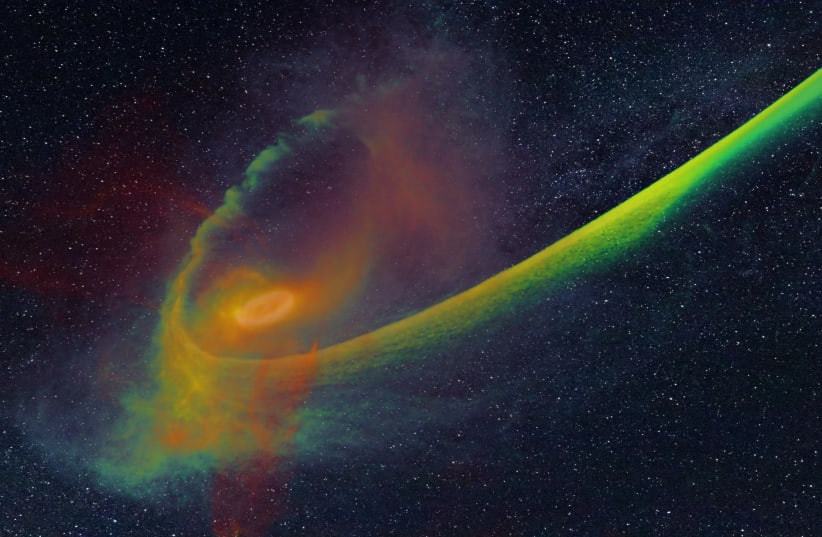
Origin of intense light in supermassive black holes and tidal disruption events revealed by study


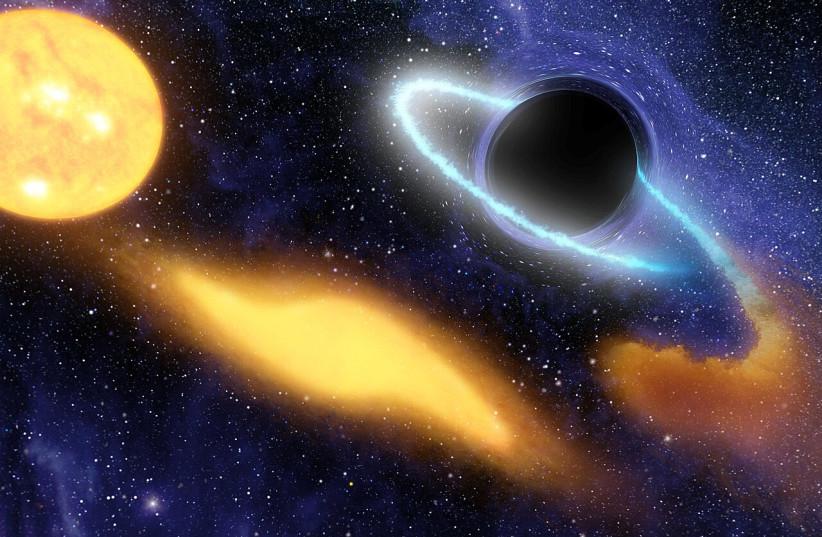
The new study by The Hebrew University of Jerusalem is a significant “breakthrough” for understanding Tidal Disruption Events (TDEs) involving supermassive black holes.

Tuesday, January 16, 2024

Space News: Astronomers produce significant star cluster image - and discover mysterious radio signal


Astronomers produce significant star cluster image - and discover mysterious radio signal


It took more than 450 hours of observations for astronomers in Australia to produce the image and they've identified two possible causes of the radio signal.

By Sky News, Tuesday 16 January 2024

              The image of the dense ball of stars that makes up globular cluster 47 Tucanae


Astronomers have created the most sensitive radio image ever of an ancient star cluster – and discovered a radio signal at the centre of it.

The image, which can be seen above, is of the second brightest globular cluster in the night sky, known as 47 Tucanae.

Astronomers have created the most sensitive radio image ever of an ancient star cluster – and discovered a radio signal at the centre of it.

The image, which can be seen above, is of the second brightest globular cluster in the night sky, known as 47 Tucanae.

Radio waves from celestial objects - such as planets and stars - travel through space as light does, and radio telescopes can intercept them.

Astronomers can then convert these signals into radio images.

The 47 Tucanae cluster was first catalogued in the 1700s and can be seen with the naked eye.

Two possible causes for mysterious radio signal

Seeing it in detail has allowed astronomers to discover the previously undetected faint signal coming from its centre.

There are two possible reasons for the signal, lead author Dr Alessandro Paduano has said.

The first is that the cluster contains a black hole, which would be "be a highly significant discovery" and the second is that there is a pulsar - a rotating neutron star that emits radio waves.

"A pulsar this close to a cluster centre is also a scientifically interesting discovery, as it could be used to search for a central black hole that is yet to be detected," Dr Paduano said.


PLEASE RECOMMEND THIS PAGE & FOLLOW THE SPUTNIKS ORBIT AT HTTPS://DISQUS.COM/HOME/FORUM/THESPUTNIKSORBIT-BLOGSPOT-COM


Monday, January 15, 2024

Space News: Earth-sized exoplanet discovered in ‘our solar backyard’ by international team


Earth-sized exoplanet discovered in ‘our solar backyard’ by international team


“It’s a useful planet because it may be like an early Earth,” says Soares-Furtado.


Friday, January 12, 2024

Defense News: Israel tests SPYDER air defense system amid rising drone threat


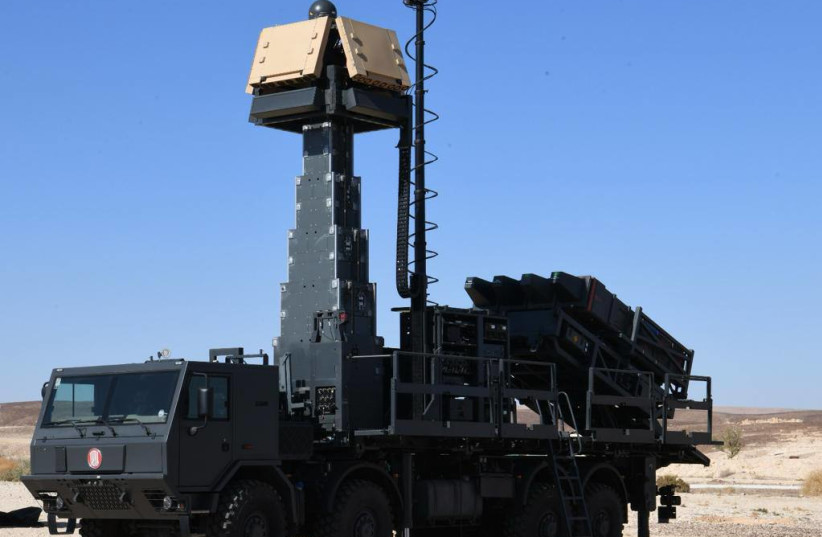
Israel tests SPYDER air defense system amid rising drone threat


The new UAV interception capabilities can be added to another recent addition in SPYDER - an upgrade tailored to defend against ballistic missile attacks. 


Thursday, January 11, 2024

Space News: Supernovae give rise to black holes or neutron stars, finds Israeli-led team


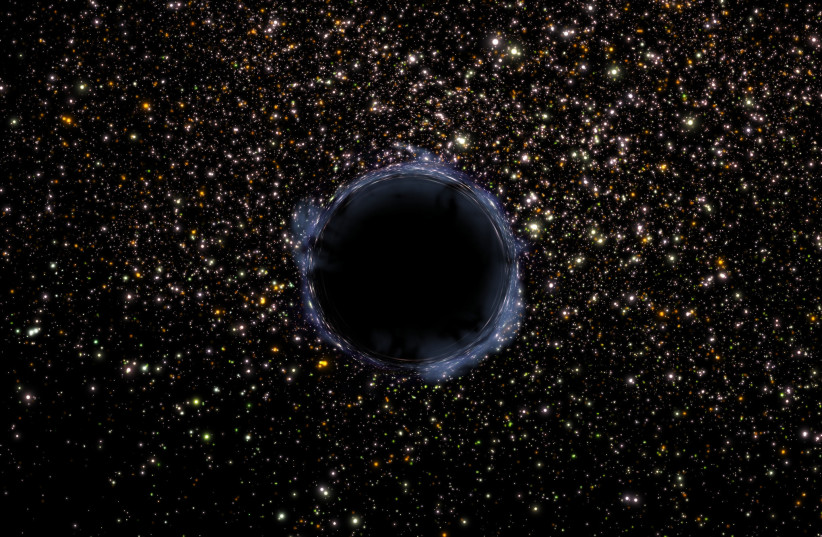
Supernovae give rise to black holes or neutron stars, finds Israeli-led team


The connection was long suspected, but the direct link was elusive until now.


Wednesday, January 10, 2024

Space News: Could life exist on Mercury? Researchers present new evidence


Could life exist on Mercury? Researchers present new evidence


Astronomers speculate that beneath the scorching surface of Mercury, the closest dwarf planet to the sun, there could be signs of life. Recent discoveries have led to this intriguing possibility.


Tuesday, January 9, 2024

Defense News: Sky Dew: The high-stakes game of Israel's advanced spy balloons


Sky Dew: The high-stakes game of Israel's advanced spy balloons

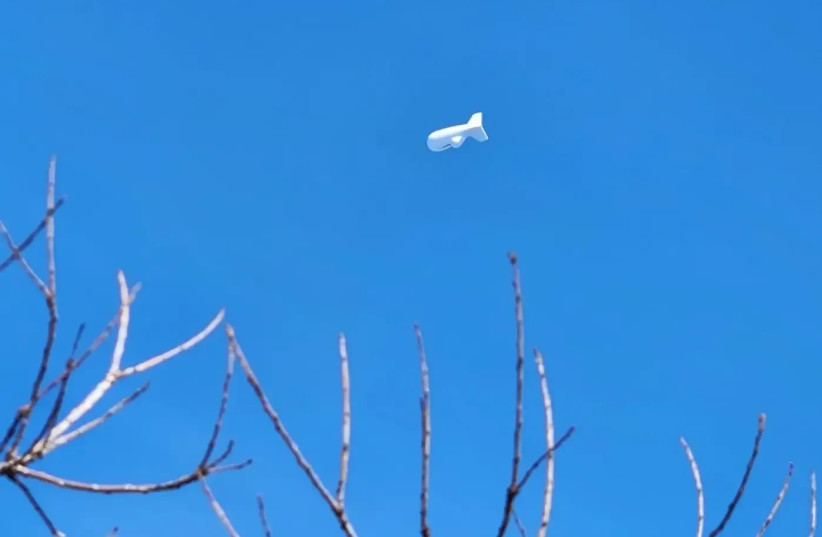
After a year and a half on the ground preparing for operational service Sky Dew finally launched on Sunday morning.


When observing surroundings, one may climb a hill, a roof, or an observation tower. This same principle applies to advanced radars, which can see for hundreds of kilometers, if placed high enough, allowing them to observe downwards.

This is the basis for Sky Dew, the Israeli Air Force’s (IAF) advanced observation balloon, which launched Sunday morning after a year and a half on the ground, preparing for operational service.

Developed by Israel Aerospace Industries (IAI), which provided the radar, and the American balloon manufacturer TCOM, it’s led by the Defense Ministry and funded by the US Department of Defense.

The goal of the spy balloon

Delivered to the Air Force in 2022, its goal is to detect unmanned aircraft and cruise missiles from Iran and Syria, targets that are small and hard to detect.

This system is not new to the IAF. For over 30 years, simpler and smaller balloons have been used in the south, developed after the peace agreement with Egypt, to monitor for surprises from the east. These were developed by IAI and Elta Systems, specializing in radars. According to foreign sources, India has also purchased such balloons.

 Israel's new Sky Dew spy balloon, captured here in flight on January 6, 2024 (credit: ELI ASHKENAZI/WALLA!)
Israel's new Sky Dew spy balloon, captured here in flight on January 6, 2024 (credit: ELI ASHKENAZI/WALLA!)

Observation balloons’ military use dates back to 1794 at the Battle of Fleurus in Belgium. Without radars or cameras, the French used a human observer in a balloon to gather aerial intelligence, helping them win the battle. However, Napoleon later disbanded the French military balloon corps.

Since the 1950s, the US has operated radar-carrying aircraft for aerial target detection, like the AWACS. This aircraft can detect everything flying in the area and has been key in guiding pilots to hostile targets.

Israel couldn’t purchase the expensive AWACS from the US. In the late 1970s, it bought three smaller and cheaper Hawkeye aircraft for the Air Force, still in use today. The Air Force now also owns the Nachshon aircraft, developed by IAI based on the American Gulfstream business jet.

The radar on these aircraft is more advanced than the AWACS, with better detection capabilities and resistance to jamming. The significant difference is the cost of flight hours, easing the defense budget. This technology has been sold to countries like Italy and South Korea, with each aircraft costing over $200 million.

However, the Nachshon’s existence doesn’t negate the need for a radar-carrying observation balloon. Although it can’t rise to extreme heights or accompany fighter jets to targets like Iran, it has one key advantage: it can remain in surveillance for weeks without the need for fuel or crew replacement.

The Defense Ministry hasn’t officially announced it, but the balloon’s radar is believed to be based on the Arrow system radar, capable of observing at 250 km. and tracking multiple targets. Positioned high, it can detect low-altitude targets and those in valleys, crucial for detecting objects like cruise missiles.

The main advantage of a radar balloon over a radar aircraft is the operating costs. An hour of AWACS flight costs about $40,000, compared to a few thousand for the Nachshon, and even less for a balloon. This cost-effectiveness is significant, with one country reporting savings of $27m. a year by using radar balloons instead of aircraft.

The balloon’s downside is its size. The new balloon’s dimensions are undisclosed, but previous Elta radar balloons are 55 meters long. Their height makes them visible to enemies, and they are also expensive and sensitive to basic faults like air leaks.

It took over a year for the defense system to operationalize the balloon, a sign of the IDF’s readiness issues revealed on October 7. Even simpler observation balloons in the south were grounded due to faults during a critical Hamas attack, highlighting the system’s vulnerabilities.

Iron Dome radars and other IDF ground-based radars can detect UAVs, as seen during the Hezbollah conflict. However, there were incidents of soldiers being harmed by enemy UAVs and false alarms sending communities to shelters unnecessarily.

The operational Sky Dew system could alleviate these issues, providing an additional, prestigious target for Hassan Nasrallah. 


PLEASE RECOMMEND THIS PAGE & FOLLOW THE SPUTNIKS ORBIT AT HTTPS://DISQUS.COM/HOME/FORUM/THESPUTNIKSORBIT-BLOGSPOT-COM

Monday, January 8, 2024

Saab receives order from NATO for RBS 70 Bolide missiles

28.12.2023


Saab has received an order for RBS 70 Bolide missiles from the NATO Support and Procurement Agency (NSPA). The order value amounts to SEK 350 million and deliveries will take place during 2027.

“Through the order from the NSPA, we see NATO countries continued interest in our missile systems. This order is proof of their trust in our knowledge and in the RBS 70 system,” says Görgen Johansson, head of Saab’s business area Dynamics.

The RBS 70 system has an installed base in more than 19 countries, with 1,600 RBS 70 systems and more than 18,000 missiles delivered. The Bolide missile is the 3rd generation, all-target, short-range air defence missile from Saab. With the Bolide missile, the RBS 70 system targets a complete threat spectrum: from fixed and rotary wing aircraft, down to small targets such as cruise missiles and UAVs, with a range of more than 9 kilometres and with altitude coverage in excess of 5,000 metres.


Recommend this post and follow
Sputnik's Orbit


Posted by Chucker

Sunday, January 7, 2024

Space News: NASA offering chance to send your name to the moon on robot rover mission to south pole


NASA offering chance to send your name to the moon on robot rover mission to south pole

Stargazers have little more than two months to send their name to NASA and have it attached to the VIPER for its mission to the moon. It is set to launch in late 2024.

By Sky News, Friday 5 January 2024

                     The names will be attached to the VIPER rover. Pic: NASA/Daniel Rutter


NASA is offering members of the public the chance to etch their name in the stars as part of its next mission to the moon.

The VIPER, NASA's first robotic moon rover, will touch down on unexplored parts of the moon's south pole in late 2024 to pick apart the mysteries of its water and understand the environment where NASA plans to land astronauts.

Along with an array of scientific instruments, the rover will carry the names of potentially millions of people - all of whom will also be given a souvenir boarding pass to "be part of that risky journey".

"With VIPER, we are going to study and explore parts of the moon's surface no one has ever been to before," said Nicola Fox, an associate administrator at NASA headquarters in Washington.

"Just think: our names will ride along as VIPER navigates across therugged terrain of the lunar south pole and gathers valuable data that will help us better understand the history of the moon."

To make the list, names must be received by the end of 15 March 2024.

It's not clear how the names will be attached to this rover, but a similar mission to Jupiter's moon Europa will see names stencilled with electron beams onto silicon chips roughly the size of a 5p coin - with each line of text just 1/1000th the width of a human hair.

Daniel Andrews, VIPER's project manager, hailed the rover as a "game-changer".


It's the first mission of its kind, expanding our understanding of where lunar resources could be harvested to support a long-term human presence on the moon," he said.

Once VIPER - short for Volatiles Investigating Polar Exploration Rover - lands on the moon, it will rely on its solar panels and batteries for its roughly 100-day mission.

It will need to tolerate extreme temperatures and challenging lighting conditions, all while powering a suite of instruments to gather data about the lunar ice and other possible resources.

Developed under its Artemis programme, the rover will also scope out the environment for plans to send the first woman and person of colour to the moon.

NASA is allowing people to submit their names for VIPER mission "boarding passes" on its website.


PLEASE RECOMMEND THIS PAGE & FOLLOW THE SPUTNIKS ORBIT AT HTTPS://DISQUS.COM/HOME/FORUM/THESPUTNIKSORBIT-BLOGSPOT-COM