Thursday, May 26, 2022

Defense News: Sig Sauer's MCX Rattler Selected as the Next Personal Defense Rifle of U.S. Army Special Forces Soldiers


Sig Sauer's MCX Rattler Selected as the Next Personal Defense Rifle of U.S. Army Special Forces Soldiers


Sig Sauer has called the rifle its most “discreet platform,” and the 5.5-inch barrel certainly makes it short. The rifle is also designed to quickly switch between the types of ammunition  


By  Eyal Boguslavsky, Israel Defense, 26/05/2022
Photo: Sig Sauer website


U.S. Special Operations Command (SOCOM) has picked the Sig Sauer's MCX "Rattler" rifle as its next personal defense weapon for U.S. special operations forces. The MCX “Rattler,” can be chambered in both .300 Blackout and 5.56mm calibers. A week ago, SOCOM released a notice of intent to award a five-year fixed firm price contract to Sig Sauer, but there is no information about the exact number of rifles and the amount of the order value. It is unclear when the Sig Rattlers will go into the field with SOCOM operators, or if some of the initial orders are already in use.


SOCOM started its hunt for a new personal defense weapon in 2017, hoping to get a new weapon built around the M4 carbine’s receiver, giving SOCOM operators more firepower while still being compact and portable. The command procured 10 Rattlers in 2018 for testing and evaluation, but kept its search going, issuing another search for weapon system designs in 2019.


The goal was to find a new PDW with “a highly concealable .300 Blackout upper receiver group (URG) and buttstock kit solution for the M4A1 platform.” Turns out that, after all of that searching, it was back to the MCX Rattler. SOCOM noted that requirements meant no prototypes or weapons were in limited development, and Sig Sauer’s new weapon fit the bill for rapid fielding.

Sig Sauer Rattler Review - The Ultimate PDW


Sig Sauer has called the MCX Rattler its most “discreet platform,” and the 5.5-inch barrel certainly makes it short. The MCX Rattler is also designed to quickly switch between the types of ammunition.

Wednesday, May 25, 2022

Giant Magnetic Waves Have Been Discovered Oscillating Around Earth's Core

MICHELLE STARR 25 MAY 2022

Wave-like flow at the surface of the Earth’s outer core and background magnetic field lines. 
(Felix Gerick.)

Earth's interior is a far from quiet place. Deep below our surface activities, the planet rumbles with activity, from plate tectonics to convection currents that circulate through the hot magmatic fluids far underneath the crust.

Now scientists studying satellite data of Earth have identified something inside Earth we've never seen before: a new type of magnetic wave that sweeps around the surface of our planet's core, every seven years.

This discovery could offer insight into how Earth's magnetic field is generated, and provide clues of our planet's thermal history and evolution – that is, the gradual cooling of the planetary interior.

Visualization of the waves at the core-mantle boundary. 
(Université Grenoble Alpes)

"Geophysicists have long theorized over the existence of such waves, but they were thought to take place over much longer time scales than our research has shown," says geophysicist Nicolas Gillet of the Université Grenoble Alpes in France.

"Measurements of the magnetic field from instruments based on the surface of Earth suggested that there was some kind of wave action, but we needed the global coverage offered by measurements from space to reveal what is actually going on.

"We combined satellite measurements from Swarm, and also from the earlier German Champ mission and Danish Ørsted mission, with a computer model of the geodynamo to explain what the ground-based data had thrown up – and this led to our discovery."

Earth's magnetic field is the subject of much fascination for scientists. Research to date suggests that the invisible structure forms a protective 'bubble' around our planet, keeping harmful radiation out and the atmosphere in, thus allowing life to thrive.

But the magnetic field isn't static. It fluctuates in strength, size, and shape, has features we don't understand, and is gradually weakening over time.

The reason that activity inside our planet is important is because that's where the magnetic field comes from. It's generated by a dynamo – a rotating, convecting, and electrically conducting fluid that converts kinetic energy into magnetic energy, spinning a magnetic field out into space around the planet.

That fluid is (mostly) the molten iron inside Earth's outer core.

https://youtu.be/tQYUXRO2hYI

The European Space Agency's Swarm satellites are a trio of identical probes, launched in 2013 and hanging out in Earth orbit to study the activity inside Earth – with a specific eye on the magnetic and dynamic activity coming out of the core. It was in this data that Gillet and his team discovered the fascinating new waves.

They then studied data from other ground- and space-based observatories, collected between 1999 and 2021, and found a pattern.

These waves, known as magneto-Coriolis waves, are huge magnetic columns aligned along Earth's rotational axis, strongest at the equator.

They sweep around the boundary between the core and the mantle with an amplitude of around 3 kilometers (1.86 miles) per year, and move westward at a rate of up to 1,500 kilometers (932 miles) per year.

Their existence suggests that other magneto-Coriolis waves might exist with different oscillation periods, which we are unable to detect to date, due to a lack of data.

"Magnetic waves are likely to be triggered by disturbances deep within the Earth's fluid core, possibly related to buoyancy plumes," Gillet says.

"Our research suggests that other such waves are likely to exist, probably with longer periods – but their discovery relies on more research."

For now, because waves carry information about the medium through which they travel, new discovery could be used to probe the interior of our planet in new ways – including the core, which is difficult to study, as well as the core-mantle boundary.


Recommend this post and follow
Sputnik's Orbit


Posted by Coriolis Chuck

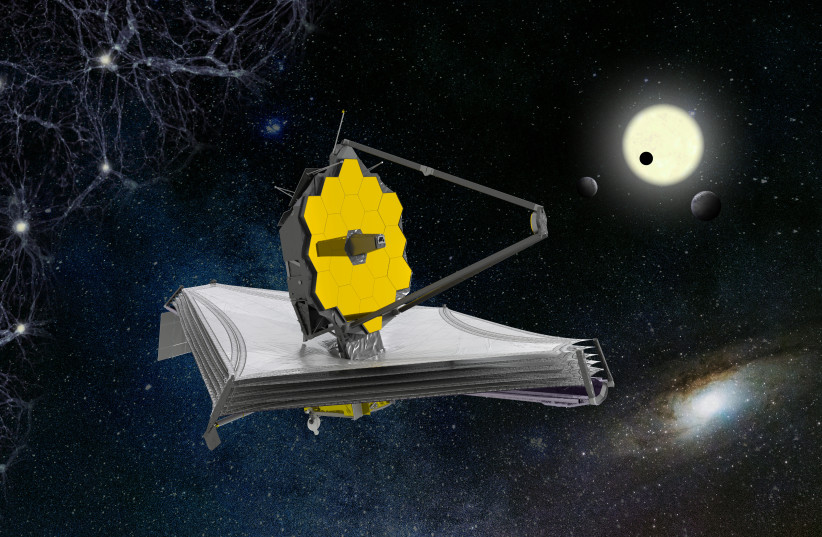
Space Exploration News: Moving asteroid tracked by NASA's James Webb Space Telescope

 Moving asteroid tracked by NASA's James Webb Space Telescope


Other tests will be done in the future on objects that move at a variety of speeds in order to make sure that the James Webb telescope can be used to study them.


Tuesday, May 24, 2022

World's fastest passenger jet goes supersonic in tests

Tamara Hardingham-Gill, CNN Digital, Published May 23, 2022

The Canadian company said the in-development Global 8000 will be "the world's fastest and longest-range purpose-built business jet." (Bombardier Aviation)

The race to resume supersonic passenger flights nearly two decades after the retirement of Concorde was offered a glimmer of excitement on Monday when plane manufacturer Bombardier revealed high speed achievements while confirming the launch of its new business jet.

The Canadian company said the in-development Global 8000 will be "the world's fastest and longest-range purpose-built business jet."

With a capacity for up to 19 passengers, a range of 8,000 nautical miles (14,800 kilometers) and a top speed of Mach 0.94, the upcoming plane is expected to enter service in 2025, according to a statement from Bombardier.

The news comes after a Global 7500 test vehicle broke the sound barrier during a demonstration flight last May, achieving speeds of more than Mach 1.015.

Supersonic breakthrough

The aircraft, accompanied by a NASA F/A-18 chase plane, also became the first Transport Category airplane to fly supersonic with sustainable aviation fuel (SAF) as a result of the flight, says Bombardier.

"The Global 8000 aircraft leverages the outstanding attributes of the Global 7500 aircraft, providing our customers with a flagship aircraft of a new era," Éric Martel, president and CEO for Bombardier, said in a statement released on Monday.

Flight testing for the Global 8000 has already begun on Global 7500 flight-test vehicles. Bombardier says the upcoming aircraft will also have a cabin altitude equivalent to 2,900 feet.

New era

Global 8000 is just one of many developments in the numerous efforts to raise the speed of passenger aircraft more than two decades after Concorde retired.

Last year, United Airlines announced it could be offering supersonic routes as early as 2029 after striking a deal to buy 15 supersonic jets.

Meanwhile, Colorado-based Boom Supersonic has been completing ground testing on X-B1, the prototype aircraft for its Overture jet, designed to seat between 65 and 88 people, which aims to fly on over 500 mainly transoceanic routes that will benefit from the aircraft's Mach-2.2 speeds.

Sadly, Florida-based aviation startup Aerion collapsed months after revealing plans for a Mach 4+ commercial airliner named Aerion AS3 last year.


Recommend this post and follow
Sputnik's Orbit


Posted by tortois Chuck

Space Exploration News: Space exploration and the future exploitation of asteroids


Space exploration and the future exploitation of asteroids


Scientists have been speculating that mankind could unravel the mysteries of interstellar space travel much sooner than previously thought – via wormholes. Analysis

By Giancarlo Elia Valori, Israel Defense,  24/05/2022


A United Launch Alliance Atlas V rocket with Boeing’s CST-100 Starliner spacecraft aboard launches from Space Launch Complex 41, Thursday, May 19, 2022, at Cape Canaveral Space Force Station in Florida.  Photo by Joel Kowsky/NASA via CNP/ABACAPRESS.COM

The discoveries of exoplanets in recent years have been absolutely extraordinary, and they could relatively soon be reached by our technology. At Cape Canaveral in Florida, on April 18, 2018 at 6:51pm, the Falcon Nine rocket was launched to send NASA's Transiting Exoplanet Survey Satellite or TESS space telescope into orbit. It is a probe that scans the sky for planets about 100 light years away orbiting stars similar to our Sun.

Over the next decade, scientists expect TESS to fulfil its primary mission, which is to discover thousands of exoplanets. Exoplanets are planets that lie beyond the solar system. This is a golden age as far as discoveries are concerned. Only some 20 years ago we did not know that there were Earth-like planets in the Universe and it is hard to believe how many more things will come to light at such a pace. It is difficult to keep up with today's discoveries: as of May 1 this year, there were 5,017 exoplanets.

Only recently, thanks to the development of satellites and high-power, high-definition telescopes, has it been possible to study neighbouring planets more accurately, particularly those capable of harbouring life. In the past, the idea that Earth-like planets could exist in the galaxy was not only inconceivable, but was also considered heretical blasphemy (Giordano Bruno’s execution was a case in point).

In the early 1990s astronomers, although with high-powered telescopes, were unable to detect distant planets. It is not easy to see an exoplanet: just imagine looking at a firefly next to a reflector. The process is extremely difficult because stars shine with their own light and planets reflect their light: generally speaking, a star is about 10 billion times brighter than a planet but, thanks to remarkable technological advances, two astronomers - Polish scientist Aleksander Wolszczan and Canadian scientist Dale Frail - detected two planets - Poltergeist and Phobetor - through a terrestrial telescope, near the newly discovered pulsar star B1257+12.

The case of 51 Pegasi b (Bellerophon-Dimidium), which was spectroscopically detected by the Swiss Michel Mayor and Didier Queloz in 1995, is different. It orbits a Sun-like star (51 Pegasi) and is therefore considered to be the first exoplanet in all respects. On October 8, 2019, the two Swiss scientists received the Nobel Prize in Physics.

The search had already intensified ten years earlier, in 2009, with the launch of Kepler, the first space telescope designed to detect exoplanets. In 2018 Kepler was replaced by the aforementioned even more powerful TESS. The most interesting aspect of TESS is that it was designed for the specific purpose of detecting exoplanets using the transit method, which detects the decrease in brightness of a star's light due to the transit of a planet. The decrease in brightness signals the transiting body and the orbit is determined, based on the frequency. It is an excellent method for finding new planets.

Although the search for exoplanets was initially aimed at establishing how many planets in the galaxy orbit the stars, the results are staggering: our galaxy has about 400 billion stars and, according to recent discoveries, on average each star hosts at least one planet: this means that there are at least 400 billion planets in our galaxy, the Milky Way.

The discovery of such a large number of exoplanets is a radical change in our knowledge of the Universe, but the idea that millions of planets might not only be able to host other life forms, but also to generate them, is even more extreme. To this end, astronomers and astrophysicists are searching for planets in a region they call the habitable zone. The habitable zone is the area around the star that enables the planet to maintain water in a liquid state. Scientists are looking for a planet in an optimal location, not too close or far from the parent star, that has enough oxygen and water to make the atmosphere, and probably even life, possible.

Scientists are astounded at the amount of planets discovered in the habitable zone that could harbour life forms: as mentioned above, there are at least 400 billion planets in our galaxy - hence even just one per cent equates to four billion planets that could potentially be habitable. The discovery of exoplanets has radically changed the way we think about the entire Universe: almost all scientists believe that other forms of life may exist. Despite the large number of habitable exoplanets, many scientists argue that only microbial or bacterial life forms could exist outside the Earth.

They are wary of what they call far-fetched theories that planets could harbour more sophisticated and evolved intelligent life forms, probably equipped with more advanced technologies than ours. Japanese-born astrophysicist Michio Kaku - a summa cum laude graduate of Harvard University - said: 'Think about it. The Universe is about 13.8 billion years old, while the Earth is only 4.6 billion years old. How many civilisations could have arisen and fallen in this time span before the formation of the Earth?"

The theory, coupled with the practical discovery that the galaxy teems with Earth-like planets, has triggered a revolution in the scientific community. It is believed that most of the planets in the habitable zone are home to life forms very similar to ours. In the Atacama Desert, Chile, in August 2016 astronomers announced the discovery of a planet orbiting the closest star to our solar system, namely Proxima Centauri. The planet in question, Proxima B, is Earth-like and close enough to its star to harbour life. Proxima B is one of the most interesting and recently discovered exoplanets: it is about 1.3 times larger than Earth. Scientists believe it is rocky and may be similar to our planet. Proxima B may be habitable and is being studied with telescopes in more detail; images will be available over the next ten years.

Despite the immense distance, an ambitious programme to study it by spacecraft is underway. The Breakthrough Starshot project is the brainchild of Israeli citizen Russian philanthropist Jurij Milner and the late, famous cosmologist, Stephen Hawking (1942-2018). Milner said: “For the first time in the history of mankind, we will not only be observing the stars, but we will also be able to reach them”. The goal of Breakthrough Starshot is to send small probes a few centimetres in size to the nearby planet.

The microchip will be fitted with a sort of parachute propelled by laser beams that will inflate the sails and deposit the probe on the nearest star. The device will travel at cruising speed, but can accelerate up to 20% of the speed of light so that it will easily reach the nearest stars. Although travelling at very high speeds, the probes will take twenty years to complete the journey.

Light travels at a finite speed: the sun rays take about eight minutes to reach the Earth. Many bodies are thousands or millions or billions of light years away.

In recent years, an increasing number of astrophysicists have speculated that mankind could unravel the mysteries of interstellar space travel much sooner than previously thought. They believe the key is to use a theoretically possible structure known as wormhole: a space-time curve theorised by Albert Einstein that could make interstellar travel times not only shorter but almost instantaneous. Wormholes are capable of curving space and would play a key role in space travel. They are studied in the current theory of gravity and general relativity.

A wormhole is a tunnel that connects two separate ends that are folded on themselves: they are commonly called stargates, because they enable travel over considerable distances in less time than light would take, but without exceeding the speed of light. In theory, spacecraft capable of creating wormholes could travel to distant exoplanets in a few hours or a matter of seconds, respecting Einstein’s laws.

Mount Palomar, California, October 6, 2013: a red supergiant star in the constellation Pegasus. ten times larger than the Sun, exploded in a colossal supernova. For the first time, scientists could witness the death of a supergiant star in real time but, as the dying star was 160 million light years from the Earth, astronomers witnessed an event that had happened 160 million years ago.

One of the basic concepts of astronomy is that almost everything we see happened in the past because light does not travel instantaneously. A supernova is a stellar explosion that wipes out all the planets around it, including any civilisations or life forms, but the whole process occurred in the distant past. The violent death of the star in the constellation Pegasus provides dramatic confirmation that the Universe is an ancient and dynamic unit.

Billions of years from now, our star, the Sun, will turn into a supernova and the day is inexorably approaching when we should migrate to another habitable planet. It is not reassuring that the event will occur in the very distant future, as thinking about it today will save us tomorrow.

At La Silla Observatory in Chile, in August 2011 astronomers announced the discovery of a large Earth-like planet in the constellation Orion: the planet is in the habitable zone and the star around which it orbits is very similar to ours, thus making it suitable for hosting life. Hence the goal for us earthlings is to discover a stable solar system, like the one Earth is in.

However, specific resources are needed before practice can be developed from theory. In Los Angeles, in June 2019 TransAstra Corporation announced a partnership with NASA to launch a new project into space, namely asteroid mining. TransAstra Corporation was established in 2015, at the time when entrepreneur Elon Musk with SpaceX, Amazon founder Jeff Bezos with Blue Origin, and others were devising cheap and effective ways to travel to space. By having rockets capable of going into orbit cheaply, a business could be created in space like that of mining asteroids for precious metals of great value on Earth.

They are called precious metals because they are becoming scarce on Earth. Hence where can we find asteroids?

Metals such as rare earth elements, gold, copper, zinc and platinum have been mined on Earth for thousands of years and are vital to civilisation, but their supply is limited partly because they do not come from our planet. The Earth originally was a mass in a molten state: many precious metals were drawn inwards. As a result of that process, the heavy elements sank to the centre of the Earth; as they cooled down, a crust of light materials was formed.

It is widely known that without the use of metals, technology and civilisation would not have existed. Luckily for us, it is estimated that about 3.8 billion years ago trillions of asteroids crashed into the Earth, depositing a layer of heavy metals on the Earth's crust. Those materials did not come from the Earth: they were deposited on our planet by comets and asteroids that crashed into the Earth a long time ago. All the precious metals we mine on Earth come from celestial bodies. The bombardment of asteroids deposited metals that made the Bronze Age, the Iron Age and today's technological civilisation possible, but many metals - including the rare earth elements needed for technology - are increasingly unavailable.

This is the reason why many scientists and experts believe that the asteroid belt could come in handy. An asteroid, even a small one, has more rare earth elements than have been mined on Earth in the history of mankind: it is estimated that if extractions were made from even ten of the over six thousand asteroids - whose existence is recorded in the NASA database - they would produce resources equivalent to 1.5 trillion dollars. The asteroid belt could meet our civilisation's needs for thousands of years and centuries to come.

The most sensible choice is to build spacecraft to find asteroids, extract material and take all the advantages and benefits.

Mountain View, California, April 2013: scientists at NASA's Ames Research Centre discovered two new potentially habitable exoplanets, Kepler 62E and 62F, thanks to the Kepler Space Telescope. Planets 62E and 62F are called water worlds because they are covered by a global, all-encompassing ocean and are promising because they are located in the habitable zone and are covered by the ocean.

This means that in a phase of expansion and space migration, not only raw materials are needed, but also water which, once broken down and split into hydrogen and oxygen, could be used as fuel with the processes that are at the forefront, which I have analysed in some of my previous contributions.  

It is firmly believed that the search for life forms will further undergo a revolution very soon. On December 25, 2021, NASA launched the James Webb telescope, a space telescope for infrared astronomy, capable of analyses considered impossible until a few years ago, i.e. taking detailed, full-colour images of an exoplanet. The James Webb telescope is completely different from those in space. It gives the possibility to observe the reflected light of exoplanets and the electromagnetic spectrum in order to detect potential biological traces.

The future lies in research, the past in war. The certainty is many graves if we stand still.

Professor Giancarlo Elia Valori is a world-renowned Italian economist and international relations expert, who serves as the President of the International World Group. In 1995, the Hebrew University of Jerusalem dedicated the Giancarlo Elia Valori chair of Peace and Regional Cooperation. Prof. Valori also holds chairs for Peace Studies at Yeshiva University in New York and at Peking University in China. Among his many honors from countries and institutions around the world, Prof. Valori is an Honorable of the Academy of Science at the Institute of France, as well as Knight Grand Cross and Knight of Labor of the Italian Republic.

Monday, May 23, 2022

Method used to track ants underground could revolutionize how we measure snow depth from space

MAY 18, 2022, by Frontiers

Credit: Pixabay/CC0 Public Domain

Ants may be the unlikely heroes when it comes to better understanding the health of our planet in the midst of a climate crisis. In a paper published to Frontiers in Remote Sensing, a team of scientists, including those from NASA, have found a way to estimate the depth of snow from orbit using ants deep underground.

One member of the team is Yongxiang Hu from NASA's Langley Research Center who drew inspiration from physics and biology to create a unique snow depth model. A previously developed model found that the average time an ant walks around inside the colony before coming back is roughly four times the volume of the colony divided by its surface area.

Photon moves like ants in colonies

"I studied properties of clouds and learned light bounces among cloud particles randomly, similar to the ants' movement inside its colony. So, I thought that the ants theory might apply to snow too since snow comes from clouds," Hu explained.

In the same way that an ant goes inside the colony and moves about randomly before coming back out, a photon of light from a lidar instrument enters the snow and is scattered as it meets the snow particles until it exits and is detected by the telescope on ICESat-2 (Ice, Cloud and land Elevation Satellite-2).

By applying a special model simulation to verify an equation similar to one used to estimate how far an ant may travel in a colony, the researchers found that it was possible to measure the average distance a photon traveled in the snow. This showed snow depth was approximately half the average distance that the photon traveled inside the snow.

Ice and snow: the indissoluble bond

Launched in 2018, ICESat-2 aimed to determine the depth of Earth's snow-covered ice sheets and sea ice. Historically, measuring snow depth has proved challenging because it required consolidating lidar with microwave measurements.

With this new innovation used to measure how deep is the layer of snow covering sea ice surfaces and mountains, scientists can get a clearer picture of how the climate crisis is affecting sea ice thickness as well as thickness of glaciers over land.

"Snowpack provides water resources over many regions, including the western US, and parts of Europe, Africa, and Asia. Snow depth, along with estimated snow density is important for water resource management," Hu added.

How much will snowfalls decline?

Snow plays an important role in regulating climate because it reflects the Sun's energy back out into space and helps keep the planet cool. Less snow on the ground equals less reflectivity and more global warming.

While forecasting rainfalls is relatively easy and climate models consistently predict an increase in global rainfall of anywhere between 3% and 7%, estimating how snowfalls may decline in mid-latitude regions as a result of global warming is much more complex. This is where this new technique will make a difference.

Hu worked with other scientists at NASA, the University of Arizona, Stevens Institute of Technology, and Ball Aerospace and hopes climate scientists will increasingly adopt snow properties derived from this robust physics-based technique to make their forecasts.

"I am confident this technique will revolutionize how we forecast snow evolution in the future and model sea ice changes, and we are already working on the design of the next generation of satellites specifically for snow depth," said Hu.


Recommend this post and follow
Sputnik's Orbit


Posted by random Chuck

Saturday, May 21, 2022

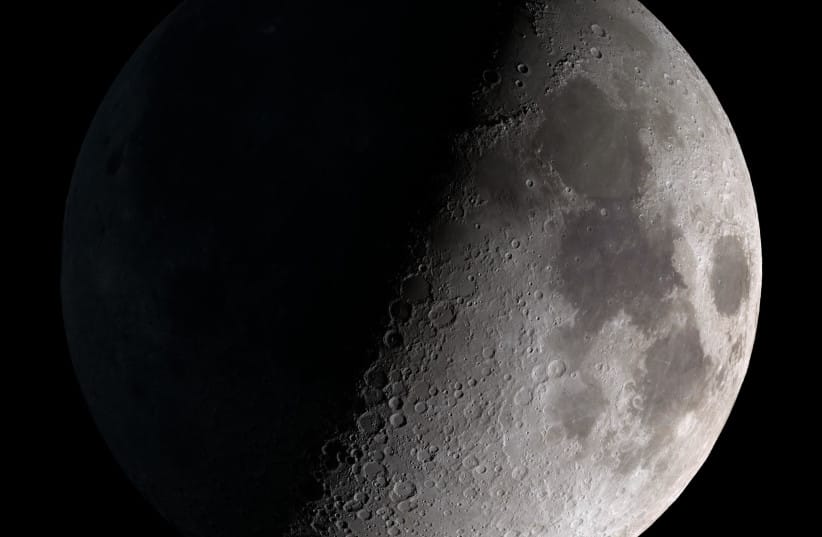
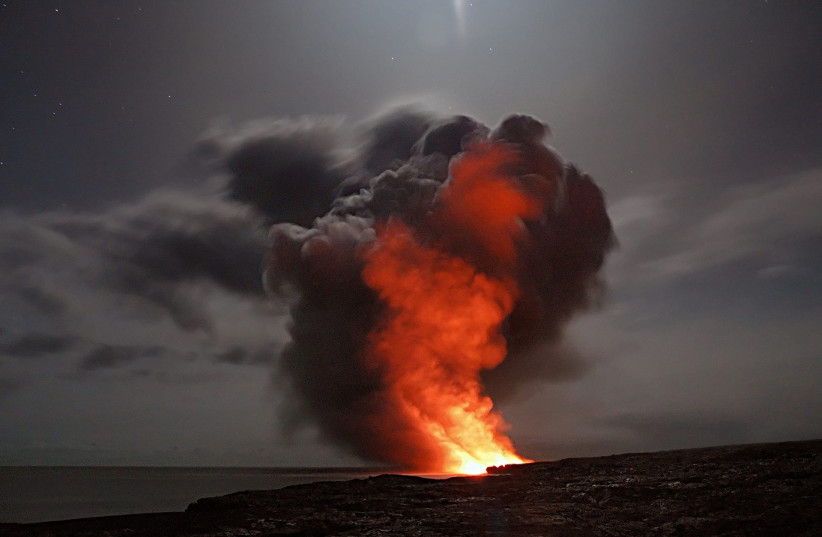
Space News: Astronauts may be able to drink water from volcanoes on the moon - study


Astronauts may be able to drink water from volcanoes on the moon - study


Volcanoes may have deposited sheets of ice on the lunar surface, according to new research.


New Research Shows Exposure to High-Powered Microwave Frequencies Can Cause Brain Injuries

By LAURA SIMMONS, TEXAS A&M UNIVERSITY MAY 21, 2022


Microwave ovens are safe and don’t cause cancer, but exposure to certain extremely high-powered microwave and radio frequencies may result in high stresses within the brain.

Texas A&M research findings could change the way we view directed energy and traumatic brain injuries.

Contrary to what was once popular belief, microwave ovens don’t cause cancer. It’s a decades-old concern that may evoke an image of a child standing in front of a microwave, peering through the dimly-lit door, only to be told to take a few steps back or they could be sickened by an inexplicable illness or worse — radiation poisoning.

Microwaves are now known to be safe, effective, and efficient thanks to advancements in science, engineering, and technology. However, recent research from Texas A&M University reveals that exposure to certain extremely high-powered microwave and radio frequencies may result in high stresses within the brain.

Justin Wilkerson, assistant professor in the J. Mike Walker ’66 Department of Mechanical Engineering, in collaboration with researchers at the U.S. Army Research Laboratory and the Air Force Research Laboratory, began investigating the effects of high-powered pulsed microwaves on the human body. Most commonly used for rapid cooking, microwaves are a type of electromagnetic radiation that fall between radio and infrared light on the electromagnetic spectrum.

Using computational modeling, the team’s two-simulation approach first calculates the specific absorption rate (SAR) of planar electromagnetic waves on a 3D model of a human body. The SAR values are then used to calculate changes in temperature throughout the head and brain. Those temperature changes are then used to determine how the brain tissue physically alters in response to the high-intensity microwaves.

“The microwave heating causes spatially varying, rapid thermal expansion, which then induces mechanical waves that propagate through the brain, like ripples in a pond,” Wilkerson said. “We found that if those waves interact in just the right way at the center of the brain, the conditions are ideal to induce a traumatic brain injury.”

Experts Believe US Embassies Were Hit With High-Power Microwaves – Here’s How the Weapons Work
Directed Energy Weapons Shoot Painful but Non-Lethal Beams – Is Similar Technology Behind the Havana Syndrome?

Published in the journal Science Advances, Wilkerson’s research revealed that when applying a small temperature increase over a very short amount of time (microseconds), potentially injurious stress waves are created. Imagine all of the microwave energy needed to pop a bag of popcorn condensed into one-millionth of a second and then directed at the brain.

However, there’s no need to worry about everyday exposure to microwaves or radiofrequency levels. Wilkerson’s study included magnitudes of power far greater than anything the average human will be exposed to.

“Although the required power densities at work here are orders of magnitude larger than most real-world exposure conditions, they can be achieved with devices meant to emit high-power electromagnetic pulses in military and research applications,” Wilkerson said.

Wilkerson and the team used finite element simulations as part of their computational modeling — the same models that have been used to predict traumatic brain injury in car crashes, football impacts, and even explosive blasts on the battlefield. By applying it to a new energy deposition, the microwave, Wilkerson has opened the door for more research to be conducted on the interactions between the biological body and electromagnetic fields and its applications.


Recommend this post and follow
Sputnik's Orbit


Posted by oscilating Chuck

Friday, May 20, 2022

Space News: Over 1,000 new asteroids found using Hubble archival data - study


Over 1,000 new asteroids found using Hubble archival data - study


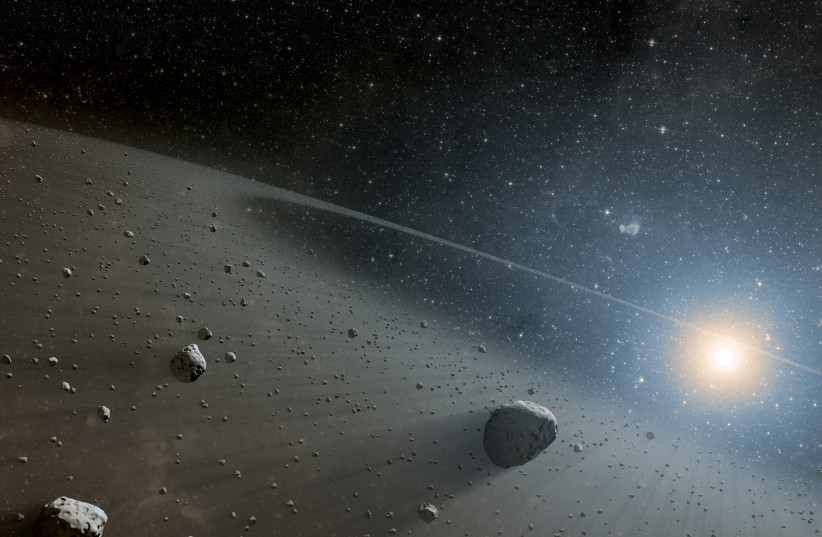
It is estimated that there are well over 1.1 million asteroids in the solar system. However, there are issues with detecting many of them.


 THE ASTEROID belt between Mars and Jupiter is home to millions of asteroids, but their combined mass is still less than that of the moon. (photo credit: Wikimedia Commons)

THE ASTEROID belt between Mars and Jupiter is home to millions of asteroids, but their combined mass is still less than that of the moon. (photo credit: Wikimedia Commons)

The number of documented asteroids in our solar system has jumped after scientists managed to find over 1,000 of these celestial objects that had gone unnoticed until now. 

The asteroids were discovered through a citizen science project known as the Hubble Asteroid Hunter and sought to use archival data to visually identify asteroids that had hitherto gone unnoticed.

“One astronomer’s trash can be another astronomer’s treasure,” noted Max Planck Institute for Extraterrestrial Physics researcher Sandor Kruk, who led the study published in the peer-reviewed academic journal Astronomy and Astrophysics

Many astronomers archive data and the number increases exponentially as the amount of data continues to grow. Furthermore, the amount of asteroids known to scientists has also grown exponentially over the years thanks to advancements in telescope technology.

Currently, it is estimated that there are well over 1.1 million asteroids in the solar system – but there are issues with detecting many of them.

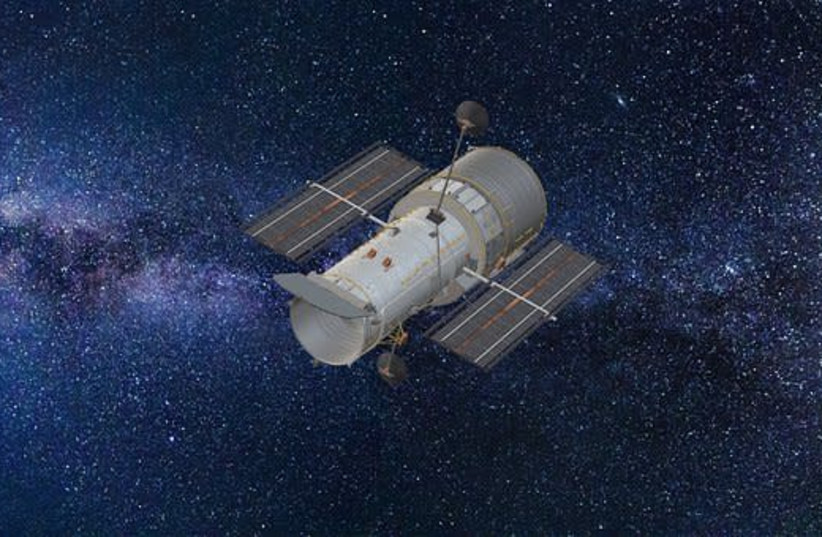
NASA's Hubble Space Telescope (credit: Wikimedia Commons)

NASA's Hubble Space Telescope (credit: Wikimedia Commons)

Using archival data, however, particularly from studies that weren't focusing on asteroids, it could be possible to find other asteroids that had gone unnoticed. This is because a significant amount of data that indicated the presence of an asteroid might have simply been written off as "noise" and thus discarded.

So that is exactly what this study did, going over more than 37,000 images from NASA's Hubble Space Telescope taken between 2002 and 2021.

What especially stood out here was that the images are 30-minute exposures where asteroid trails would seem as just curved streaks, something that computers don't always notice.

How can the asteroid detection problem be solved?

The answer Kruk and the rest of the over 11,000 scientists involved in the process came up with was artificial intelligence.

The scientists trained a machine-learning algorithm that could go over the data gathered from Hubble. 

Overall, 1,701 trails were noticed in the images. Of them, 1,031 were unidentified  as asteroid trails.

What does this mean for asteroid research?

Overall, more research will need to be done. In fact, it is highly likely that some of the asteroids will never be definitively identified. However, knowing more about the many asteroids in the solar system is important for astronomers to better understand them.

We do know some things, however. For instance, it is highly likely that these new asteroids are rather small, and not large objects with the potential to cause massive calamities should they impact the Earth. Indeed, it is likely that it is their small size that helped them evade detection for so long. 

And even though these asteroids may be small and seemingly inconsequential, they are still very important.

As Kruk explained: “The asteroids are remnants from the formation of our solar system, which means that we can learn more about the conditions when our planets were born.”

Indeed, many scientists feel they may contain information that can solve the mysteries of the early days of the solar system.

But only time, and further research, will be able to tell what else we can find. 


Please recommend this page & follow the Sputniks Orbit

https://disqus.com/home/forum/thesputniksorbit-blogspot-com

New spin on galaxy rotation saves controversial gravity theory

MAY 20, 2022, by University of St Andrews

Radio image of the neutral hydrogen gas in the galaxy AGC 114905. Its inclination is estimated from the black ellipse, which fits the data better. Assuming the galaxy is circular when viewed face-on, this implies a moderate inclination of 32°. 
However, the new study suggests that the blue ellipse for a very low inclination could actually be correct – thus saving the MOND theory – if the galaxy is intrinsically somewhat non-circular. The authors show that this is possible using a dedicated MOND simulation. Credit: Mancera Pina et al.

An international group of astronomers, led by a physicist at the University of St Andrews, has revived an alternative gravity theory.

Headed by Dr. Indranil Banik of the School of Physics and Astronomy at St Andrews, the study revealed a high predicted rotation speed of gas in a dwarf galaxy consistent with the previously debunked theory known as Milgromian Dynamics (MOND).

An earlier study of the rotation speed of gas in the dwarf galaxy AGC 114905 (Mancera Pina et al, 2022) found that the gas rotated very slowly and claimed the MOND theory was dead.

Such theories are essential in understanding our universe because, according to known physics, galaxies rotate so quickly they should fly apart. MOND, a controversial alternative to General Relativity, the prevailing Einstein-inspired understanding of the phenomenon of gravity that requires dark matter to hold galaxies together; does not require dark matter. As dark matter has never been detected despite decades of very sensitive searches, various theories have been put forward to explain what holds galaxies together, and debate rages over which is right. The very low rotation speed reported in the Mancera Pina et al study is inconsistent with predictions in a universe governed by General Relativity with large amounts of dark matter.

Dr. Banik's group argues that the high predicted rotation speed in the MOND gravity theory is consistent with observations if the inclination of the galaxy is overestimated.

The rotation of stars and gas in distant galaxies cannot be measured directly. Only the component along the line of sight is known from precise spectroscopic measurements. If the galaxy is viewed almost face-on, then it would mostly rotate within the plane of the sky. This could mislead observers into thinking that the galaxy is actually rotating very slowly, which would require them to overestimate the inclination between disk and sky planes. This inclination was estimated from how elliptical the galaxy appears (see image).

The new study explored this crucial issue using detailed MOND simulations of a disk galaxy similar to AGC 114905 made at the University of Bonn by Srikanth Nagesh and instigated by Pavel Kroupa, Professor at the University of Bonn and Charles University in Prague. The simulations show that it can appear somewhat elliptical even when viewed face-on. This is because stars and gas in the galaxy have gravity and can pull themselves into a somewhat non-circular shape. A similar process causes the spiral arms in disk galaxies, features which are so common that these are often called spiral galaxies.

As a result, the galaxy could be a lot closer to face-on than the observers thought. This could mean the galaxy is rotating much faster than reported, removing the tension with MOND.

Dr. Banik, lead author on the new study, said: "Our simulations show that the inclination of AGC 114905 might be significantly less than reported, which would mean the galaxy is actually rotating much faster than people think, in line with MOND expectations."

Dr. Hongsheng Zhao, of the School of Physics and Astronomy at the University of St Andrews, said: "The very low reported rotation speed of this galaxy is inconsistent with both MOND and the standard approach with dark matter. But only MOND is able to get around this apparent contradiction."

The new study also argues that a similar "fake inclination" effect is unlikely to arise in the standard dark matter approach because the galaxy is dominated by the smooth dark matter halo. The stars and gas contribute little to the gravity, so the disk is not "self-gravitating."

This means it is likely to look very circular if viewed face-on, as confirmed by simulations carried out by another group (Sellwood & Sanders, 2022). As a result, the observed ellipticity must be due to a significant inclination between the disk and sky planes. The rotation velocity would then be very small, implying that the galaxy has very little dark matter. It is not possible in this framework that an isolated dwarf galaxy would have such a small amount of dark matter given how much mass it has in stars and gas.

Pavel Kroupa, Professor at the University of Bonn and Charles University in Prague, said of the broader context of these results: "While MOND works well in the tests conducted so far, the standard approach causes very severe problems on all scales ranging from dwarf galaxies like AGC 114905 all the way up to cosmological scales, as found by many independent teams."


Recommend this post 

and follow

Sputnik's Orbit


Posted by spinning Chuck
oh,  now I'm dizzy