Saturday, May 27, 2023

Bombardier and GDMS-C are Collaborating on CMMA

18.05.2023
https://www.canadiandefencereview.com/news/bombardier-and-gdms-c-are-collaborating-on-cmaa-

Image: Jean-Christophe Gallagher (left), Executive Vice-President, Aircraft Sales and Bombardier Defense, and Joel Houde, Vice President and General Manager, General Dynamics Mission Systems–International, signing a Memorandum of Understanding

Bombardier Defense and General Dynamics Mission Systems-Canada are collaborating to deliver the next-generation Multi-Mission and Anti-Submarine Warfare (ASW) aircraft that will meet the requirements set by the Government of Canada for the Canadian Multi-Mission Aircraft (CMMA) program. Both long-standing Canadian-based companies are leveraging their extensive networks to prepare for success in a competitive, open, and transparent procurement process, and are joining forces as Canada’s Multi-Mission Aircraft Team.

With a long and highly successful track record delivering multiple specialized aircraft across the globe, Bombardier Defense stands out among special mission aircraft providers. Bombardier’s products have proven themselves as reliable and fully interoperable platforms through versatile projects for some of the world’s biggest defense contractors and for governments across the world, including the United States, Germany, and more.

The foundation for the Canadian Multi-Mission Aircraft Team’s solution is the highly efficient and agile Global 6500 aircraft, the right-sized jet for the CMMA with next-generation engines, long range, high endurance, and coupled with proven reliability and better fuel efficiency as documented in the jet’s recently published Environmental Product Declaration. The Global family of aircraft is the platform of choice for over 10 different mission types across the globe, given its ability to deploy in all weather conditions with full mission payload, its ultimate combination of speed, range and endurance, and its 24/7 worldwide support infrastructure.

The aircraft will host General Dynamics’ best-in-class integrated mission systems, drawing directly from Canada’s investment in the newly modernized CP-140 Block IV and CH-148 Cyclone. This operationally proven Canadian design forms the basis for the iterative and low risk integration of modernized sensors and systems enabling Canada to leap even further ahead of peers and adversaries alike. This future-proof foundation will also ensure continued operational relevance, responding to Canada’s emergent needs through the middle of this century.

“Canadians deserve a leading-edge fleet for their Canadian Multi-Mission Aircraft program. Bombardier is eager to take on this opportunity to deliver a state-of-the-art platform. This is a generational opportunity for a Canadian company to leverage its Made-In-Canada Global 6500 aircraft, renowned for their outstanding performance and customized mission enhancers for each client. Having Bombardier work on CMMA is the right choice from an aircraft performance standpoint, and also, an opportunity for Canada to foster innovation, bolster its capabilities and support talent across Canada’s aerospace industry from coast to coast to coast,” said Jean-Christophe Gallagher, Executive Vice-President, Aircraft Sales and Bombardier Defense.

“For decades, General Dynamics has been proud to provide solutions to Canada’s defense requirements. This new partnership unlocks a generational opportunity to couple our leading edge, trusted mission systems to ultimately provide a made-in-Canada solution that supports Canada’s multi[1]mission airborne needs into the future, while creating a readily exportable capability that will benefit Canada in so many other ways.” said Joel Houde, Vice President and General Manager, General Dynamics Mission Systems–International.

Bringing together the unparalleled expertise offered by both organizations, this platform provides the very latest in airborne mission management technology while ensuring Canada’s continued leadership in the ASW and ISR domains.

With Canada’s largest business jet manufacturer and one of Canada’s largest defence contractor joining forces to deliver a Canadian Multi-Mission aircraft, considerable benefits to the Pan-Canadian aerospace ecosystem will result, including the creation of high caliber jobs, numerous opportunities for small and medium-sized enterprises (SMEs), scientific communities, and educational institutions in various regions of the country. With competitive acquisition and significantly lower operating costs, cross decking of existing mission system capabilities onto a high-performance, modern Global 6500 aircraft, which represents a low-risk, evolutionary approach to achieving Canada’s multi-mission aircraft needs.

General Dynamics Mission Systems–Canada supports the Government of Canada (GoC) across many projects including delivering the CP-140 Aurora Incremental Modernization Project (AIMP). This modernization, along with the previous Aurora Structural Life Extension Project (ASLEP), will keep the CP-140 at the leading edge of ASW capabilities and extend the operational life of the CP140 Aurora into the 2030s. The published CMMA procurement timeframe was prudently designed by the Department of National Defence to permit the Government of Canada to fully engage with industry to explore options to meet Canada’s multi-mission aircraft needs and to have sufficient time to evaluate options. The Canadian-based platform brought forward by Bombardier Defense and General Dynamics Mission Systems-Canada, providing world leading capabilities in ASW, ISR and operational efficiencies leveraging the Global 6500 aircraft is a prime example.


Recommend this post and follow
Sputnik's Orbit


Posted by Chuck

Wednesday, May 24, 2023

James Webb's 'too massive' galaxies may be even more massive

MAY 17, 2023, by Niels Bohr Institute

This image of galaxy cluster SMACS 0723 and its surroundings was the first image released from the James Webb Space Telescope in July 2022. The five zoom-ins are each roughly 19,000 lightyears across, and show galaxies seen some 13 billion years back in time. Careful analysis of these galaxies reveals that if we cannot resolve a galaxy, we may severely underestimate the total mass of its stars. 
Credit: NASA, ESA, CSA, STScI / Giménez-Arteaga et al. (2023), Peter Laursen (Cosmic Dawn Center)

The first results from the James Webb Space Telescope have hinted at galaxies so early and so massive that they are in tension with our understanding of the formation of structure in the universe. Various explanations have been proposed that may alleviate this tension. But now a new study from the Cosmic Dawn Center suggests an effect which has never before been studied at such early epochs, indicating that the galaxies may be even more massive.

If you have been following the first results from the James Webb Space Telescope, you have probably heard about the paramount issue with the observations of the earliest galaxies: They are too big.

From a few days after the release of the first images, and repeatedly through the coming months, new reports of ever-more distant galaxies appeared. Disturbingly, several of the galaxies seemed to be "too massive."

From our currently accepted concordance model of the structure and evolution of the universe, the so-called ΛCDM model, they simply shouldn't have had the time to form so many stars.

Although ΛCDM is not a holy indestructible grail, there are many reasons to wait claiming a paradigm shift: The measured epochs at which we see the galaxies could be underestimated.

Their stellar masses could be overestimated. Or we could just have been lucky and somehow have discovered the most massive of the galaxies at that time.
A closer look

But now Clara Giménez Arteaga, Ph.D. student at the Cosmic Dawn Center, proposes an effect that could further increase the tension.

In essence, a galaxy's stellar mass is estimated by measuring the amount of light emitted by the galaxy, and calculating how many stars are needed to emit this amount. The usual approach is to consider the combined light from the whole galaxy.

However, taking a closer look at a sample of five galaxies, observed with James Webb, Giménez Arteaga found that if the galaxy is regarded not as one big blob of stars, but as an entity build up of multiple clumps, a different picture emerges.

"We used the standard procedure to calculate stellar masses from the images that James Webb has taken, but on a pixel-by-pixel basis rather than looking at the whole galaxy," says Giménez Arteaga.

"In principle, one might expect the results to be the same: Adding the light from all pixels and finding the total stellar mass, versus calculating the mass of each pixel and adding all individual stellar masses. But they're not."

In fact the inferred stellar masses now turned out to be up to ten times larger.

The figure below shows the five galaxies with their stellar masses determined by both ways. If the two different approaches agreed, all galaxies would lie along the slanted line named "The same." But they all lie above this line.

The five galaxies placed in a diagram that shows both the stellar mass inferred in the “usual” way (blue numbers) and Clara Giménez-Arteaga’s pixel-by-pixel method (red numbers). In all cases, the masses found using the pixel-by-pixel method are larger.
 Credit: Giménez-Arteaga et al. (2023), Peter Laursen (Cosmic Dawn Center)

Outshined

So what is the reason that the stellar masses turn out to be so much larger?

Giménez Arteaga explains, "Stellar populations are a mixture of small and faint stars on one hand, and bright, massive stars on the other hand. If we just look at the combined light, the bright stars will tend to completely outshine the faint stars, leaving them unnoticed. Our analysis shows that bright, star-forming clumps may dominate the total light, but the bulk of the mass is found in smaller stars."

Stellar mass is one of the main properties used to characterize a galaxy, and Giménez-Arteaga's result highlights the importance of being able to resolve the galaxies.

But for the most distant and faint ones, this is not always possible. The effect has been studied before, but only at much later epochs in the history of the universe.

The next step is therefore to look for signatures that does not require the high resolution, and which correlate with the "true" stellar mass.

"Other studies at much later epochs have also found this discrepancy. If we can determine how common and severe the effect is at earlier epochs, and quantify it, we will be closer to inferring robust stellar masses of distant galaxies, which is one of the main current challenges of studying galaxies in the early universe," concludes Clara Giménez Arteaga.


Recommend this post and follow
Sputnik's Orbit


Monday, May 22, 2023

Defense News: Moroccan Army unveils Israeli artillery systems in new video


Moroccan Army unveils Israeli artillery systems in new video


Morocco appears to have selected Tatra Trucks, a Czech vehicle manufacturer, to carry the rocket launchers

By Ami Rojkes Dombe, Israel Defense, 22/05/2023


                                           Photo: screen grab, https://lecollimateur.ma/119789

Moroccan defense website FAR-Maroc has published images of Elbit System’s PULS (Precise & Universal Launching Systems) artillery rocket systems, purchased by Morocco.

Apparently, the Moroccan Army selected Tatra Trucks, a Czech vehicle manufacturer, to carry the rocket launchers – which are capable of launching multiple ammunition types to distances of up to 300 km.


 According to the publication, Morocco ordered the PULS launchers with Elbit’s Combat NG system, a fully-integrated modular artillery solution.

In November 2021, Israel and Morocco signed a defense MoU.


PLEASE RECOMMEND THIS PAGE & FOLLOW THE SPUTNIKS ORBIT AT HTTPS://DISQUS.COM/HOME/FORUM/THESPUTNIKSORBIT-BLOGSPOT-COM

Sunday, May 21, 2023

Radiation Belt Identified Outside The Solar System For First Time Ever

20 May 2023, By MICHELLE STARR

Artist's impression of radiation belts around tiny star LSR J1835+3259. 
(Chuck Carter, Melodie Kao, Heising-Simons Foundation)

All the planets in our Solar System with global magnetic fields have radiation belts, donut-shaped regions confined by magnetic fields where particles are trapped and accelerated, glowing in radio light. This all suggests that there should also be radiation belts wherever there is a stable, global magnetic field.

Detecting the faint emission from an extrasolar radiation belt is challenging, however, since that dim glow of a radiation belt is difficult to resolve. But challenging does not mean impossible: For the first time, astronomers have imaged a radiation belt wrapped around an extrasolar object.

That object is a very low-mass red dwarf star named LSR J1835+3259 that's just over the diameter of Jupiter, has about 77 times the mass of Jupiter, and sits some 20 light-years away.

"We are actually imaging the magnetosphere of our target by observing the radio-emitting plasma – its radiation belt – in the magnetosphere," says astronomer Melodie Kao of the University of California, Santa Cruz. "That has never been done before for something the size of a gas giant planet outside of our Solar System."


Artist's impression of the star and its radiation belts.
 (Chuck Carter, Melodie Kao, Heising-Simons Foundation)


Earth has its Van Allen belts, filled with particles from the solar wind. Uranus, Neptune, Mercury, and Saturn all have radiation belts.

Jupiter's enormous radiation belts are predominantly supplied by volcanic moon Io as it coughs out great gouts of volcanic material. Even Jupiter's moon Ganymede – the only Solar System moon with its own magnetic field – has a sort of radiation belt.

And although the radiation belts and magnetic fields confining them had not been detected in extrasolar objects, we have seen clues of their presence.

Low-mass stars and brown dwarfs have exhibited activity similar to the auroras in the Solar System. Auroras – seen on multiple planets – are generated when accelerated charged particles are channeled along magnetic field lines to fall into a planet's atmosphere and interact with particles therein.

Having shown signs of this auroral activity (thus suggesting the presence of a global magnetic field), LSR J1835+3259 represented the perfect place to look closely for radiation belts.

Using a network of 39 radio telescopes across the globe to effectively create an Earth-sized radio telescope, Kao and her colleagues took observations of the star, looking carefully at the space around it, where a radiation belt, viewed from the side, would appear like two radio-emitting lobes.


The image of the star's radiation belt and auroral emissions. 
(Kao et al., Nature, 2023)


Sure enough, images revealed a double-lobed structure around the star, emitting faint radio waves, similar to the lobes of Jupiter's radiation belt. However, because the star is much farther away than Jupiter, its radio lobes are much, much more intrinsically bright, around 10 million times brighter than Jupiter's.

And the radiation observed is a type that has been seen before in low-mass stars and brown dwarfs, but it had been attributed to flares in the stellar corona.

These findings not only confirm that objects such as stars can have radiation belts, but they also mean that we may have already seen radiation belts in other such objects and didn't know what we were looking at.

"Now that we've established that this particular kind of steady-state, low-level radio emission traces radiation belts in the large-scale magnetic fields of these objects, when we see that kind of emission from brown dwarfs – and eventually from gas giant exoplanets – we can more confidently say they probably have a big magnetic field, even if our telescope isn't big enough to see the shape of it," Kao says.

It's a result that astronomers hope will help search for potentially habitable worlds in the future as techniques and instruments are refined. That's because Earth's magnetic field is thought to be essential for life to flourish. It deflects harmful solar radiation from reaching the surface, protecting the atmosphere and the vulnerable organisms that inhabit the surface.

Tools that allow us to find magnetic fields around other worlds will help us find similarly protected planets.

That's still a bit of a way off, but this discovery puts us on the right path.

"This is a critical first step in finding many more such objects and honing our skills to search for smaller and smaller magnetospheres," says astronomer Evgenya Shkolnik of Arizona State University, "eventually enabling us to study those of potentially habitable, Earth-size planets."


Recommend this post and follow 
Sputnik's Orbit


Posted by Chuck

Wreck of German U-Boat Found off Argentina: Could Have Helped Nazis Escape AFter WW2?

Furious row breaks out as suspected German U-boat which could have helped Nazis flee to Argentina after the Second World War is found off the coast of South America

  • The 262ft-long wreck was found off the coast of Quequen, in central Argentina
  • Opposition leaders accuse president Alberto Fernandez of 'stalling' probe into it

A furious political row has broken out in Argentina over the wreck of a suspected German U-boat which may have been used by Nazi leaders to flee at the end of the Second World War.

The 262ft-long wreck was discovered off the coast of Quequen, a port in central Argentina, last October. 

The cliffs there are ideal for signalling small boats of the sort that might have brought people ashore.

Local legend says that policeman Luis Mariotti went to investigate reports of submarines landing there in 1945.

He followed truck tracks from the beach to a Nazi owned ranch, where men with machine guns prevented him from entering.

When he asked for further instructions from his superiors, Mariotti was told to forget the whole matter.

Abel Basti, 66, leader of the Missing Link research group, which discovered the submarine, has suggested that it may have been scuttled with explosives after helping prominent Nazis escape to Argentina.

The Mail on Sunday was this week shown a confidential 24-page document sent by opposition leaders to Argentine president Alberto Fernandez accusing him of 'stalling' the official probe. 

Opponents claim his Justicialist Party – which supports the politics of former president Juan Peron – is attempting to cover up the potential embarrassment. 

The 262ft-long wreck was discovered off the coast of Quequen, a port in central Argentina, last October

The 262ft-long wreck was discovered off the coast of Quequen, a port in central Argentina, last October

'When this comes out, and if it is a Nazi sub as everyone, including the president, suspects, then it will be a story of huge global consequence,' a source said.

Peron was president from 1946 to 1955 and from 1973 until 1974. He and wife Eva (known as Evita) were known Nazi sympathisers who welcomed hundreds of Nazis and collaborators into Argentina to escape the Nuremberg war trials.

Any formal identification of the wreck as a Nazi U-boat could be extremely embarrassing to the ruling government.

The government spent £250,000 on remotely operated vehicles capturing images at the wreck site last year.

Mr Basti hired two independent experts to examine the wreck, and they both concluded that it appears to be a submarine. Experts identified what seems to be an 'attack periscope' and SS-style lettering. 

Mr Basti claimed: 'The presumption is that it arrived stealthily in the winter of 1945'.

Steven Woodbridge, history professor at Kingston University, called the discovery 'intriguing and historically significant. There is good evidence that key Nazi criminals did make their way to South America.' 

Thousands of Nazis are believed to have fled to South America after the collapse of the Third Reich, including Josef Mengele, Auschwitz’s Angel of Death, and Adolf Eichmann, the architect of the Holocaust.

The routes they took became known as 'ratlines', which generally led to either Spain or Italy, where fascist sympathizers were able to smuggle them to South America.

Paraguay, Colombia, Brazil, Uruguay, Mexico, Guatemala, Chile, Ecuador and Bolivia are known to have housed former members of Hitler's regime.

However, Argentina is the best-known destination for former Nazis, as President Juan Perón was a known sympathizer of Hitler and actively sought to rescue members of his regime from Europe. 

Ten of thousands of Nazis escaped after the war, including the notorious Adolf Eichmann and Josef Mengele.

Once in South America the Nazis were provided with blank identity documents that allowed them to assume new lives, often in barbed-wire ringed settlements away from prying eyes.

Eichmann and Mengele both lived openly in Bariloche, though the former was discovered by the Israeli secret service in 1960 - subsequently kidnapped, put on trial, and executed.

Mengele managed to flee, however, and lived out the rest of his life in Brazil where he died of a stroke in 1979, aged 67.

Although Argentina is better known as a refuge for exiled Nazis after World War II, many also lived there in the 1930s while a pro-Nazi military regime was in power. 

Researchers discovered a list of 12,000 Nazis who lived in Argentina in the 1930s, including many who hid stolen money in Swiss bank accounts. 

The long-forgotten list was found in a store room at a former Nazi headquarters in Buenos Aires, and given to the Nazi-hunting Simon Wiesenthal Centre.  

Many of the Nazis on the list held funds that were sent to a bank called Schweizerische Kreditanstalt, now known as Credit Suisse. 


Friday, May 19, 2023

Space News: NASA finds Earth-sized exoplanet that may be covered in volcanoes


NASA finds Earth-sized exoplanet that may be covered in volcanoes


LP 791-18 d's volcanic processes not only have the potential to generate an atmosphere but also stir up life-sustaining elements that might otherwise remain trapped.


New exoplanet piques NASA scientists' interest

Situated approximately 90 light-years away in the southern constellation Crater, LP 791-18 orbits a small red dwarf star. The exoplanet is only slightly larger and more massive than Earth, positioning it within the range of habitable worlds that astronomers find particularly intriguing.

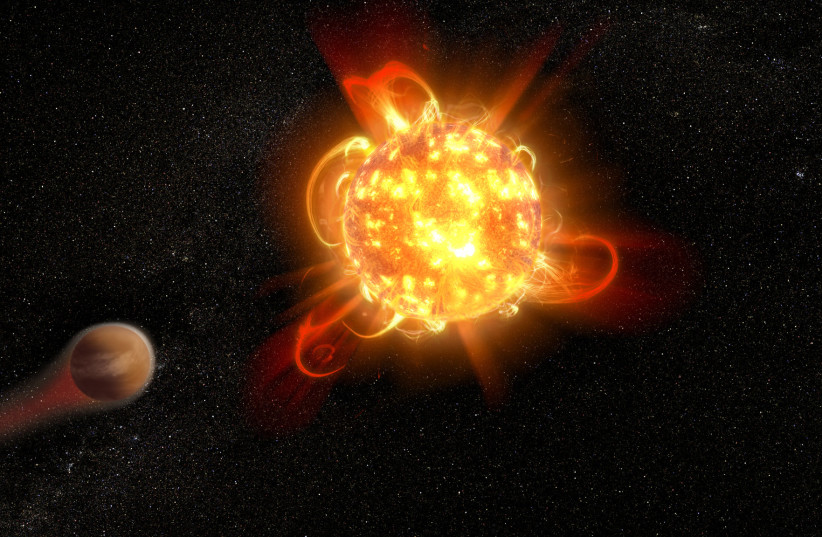
 A young red dwarf star is seen stripping the atmosphere from a nearby planet in this artistic illustration. (credit: NASA Goddard Space Flight Center/Flickr)

 A young red dwarf star is seen stripping the atmosphere from a nearby planet in this artistic illustration. (credit: NASA Goddard Space Flight Center/Flickr)


LP 791-18 d's most striking characteristic is its tidal locking, a phenomenon in which one side of the planet always faces its star. 

As a result, the side facing the star experiences extreme heat, rendering it inhospitable for liquid water.

However, the research team suggests that the planet's abundant volcanic activity could play a vital role in sustaining an atmosphere. This, in turn, might allow water vapor to condense on the planet's cooler night side, creating favorable conditions for potential liquid water.

The intricate orbital dynamics between LP 791-18 d and its neighboring planet, LP 791-18 c, contribute to the exoplanet's volcanic activity.

As LP 791-18 d completes its orbit, frequently passes in close proximity ot the larger planet c. The gravitational interaction between the two bodies causes gravitational tugs, deforming planet d's trajectory and resulting in an elliptical orbit.

These repeated deformations generate internal friction, significantly heating the planet's interior. The volcanic activity observed on LP 791-18 d draws a parallel to the influential gravitational effects of Jupiter and its volcanic moon, lo.

LP 791-18 d's position near the inner edge of the habitable zone - a range of distances from a star where liquid water could potentially exist on a planet's surface - adds to its significance.

The research team speculates that the volcanic processes on the exoplanet could help maintain an atmosphere, increasing the likelihood of water condensation on the cooler night side.

These findings have garnered attention, leading to the approval of observing time on the upcoming James Webb Space Telescope to study planet c and researchers believe that LP 791-18 d is also an excellent candidate for future atmospheric studies.

Co-author Jessie Christiansen, a research scientist at NASA's Exoplanet Science Institute at Caltech, emphasizes the astrobiological implications of the discovery. Exploring the role of tectonic and volcanic activity in the emergence and sustenance of life remains a crucial question in astrobiology.

LP 791-18 d's volcanic processes not only have the potential to generate an atmosphere but also stir up materials that might otherwise remain trapped in the crust, including life-sustaining elements like carbon.

The groundbreaking observations made by NASA's Spitzer Space Telescope, which captured data on the LP 791-18 system before its decommissioning in January 2020, have paved the way for a deeper understanding of exoplanets and their diverse characteristics.             


PLEASE RECOMMEND THIS PAGE & FOLLOW THE SPUTNIKS ORBIT AT HTTPS://DISQUS.COM/HOME/FORUM/THESPUTNIKSORBIT-BLOGSPOT-COM

Wednesday, May 17, 2023

High efficiency, salt resistance and high strength desalination achieved with new hydrogel solar evaporator

MAY 16, 2023, by KeAi Communications Co.

Schematic diagram of the desalination and salt resistance mechanism of this janus sponge-like hydrogel solar evaporator. 
Credit: Aqiang Chu

In the face of increasing global scarcity of freshwater resources, desalination is considered one of the most effective ways to alleviate this problem. However, it does come with a catch—efficient and low-cost evaporation materials are key to achieving large-scale applications.

Hydrogels present a promising opportunity, yet conventional uses of these in interfacial solar evaporators still lack the ability to satisfy the trade-off for high evaporation rate, salt resistance and durable mechanical properties.

Therefore, most traditional hydrogel materials are only suitable for low-salinity brine, far from the requirements of long-term evaporation and treatment of industrial high-salinity wastewater. It has been demonstrated that the salt resistance of hydrogels can be enhanced by constructing interpenetrating 3D macropore structure.

Nonetheless, rapid water transport and high water content can lead to increased conductive heat loss. This problem can be solved by further designing the Janus structure. Furthermore, although various methods for creating such structures exist, they are often complex and lack surface stability.

To that end, a team of researchers from the School of Chemical Engineering and Technology at Hebei University of Technology in Tianjin, China, introduced hydrophobic fumed nano-silica aerogel (SA) into the hydrogel production process. The ultra-lightweight and super-hydrophobic properties of SA enable it to spontaneously migrate and aggregate to the upper region of the hydrogel during the gelation process, forming a Janus structure.

"We know that the regulation of pore structure can also balance the problem of increased heat loss caused by the high salt resistance of the sponge-like hydrogel," explained Aqiang Chu, lead author of the study published in Green Energy & Environment. "Consequently, we incorporated agar (AG) to enhance the comprehensive performance of hydrogel evaporators."

Notably, AG has a thickening function, which in this case stabilizes the bubble structure formed during the foaming process, and thus help regulate the pore structure of the hydrogel.

"The large number of hydroxyl groups on the AG chain can at once reduce the enthalpy of water evaporation by interacting with water and forming ether bonds with polyvinyl alcohol to form a robust cross-linked network, contributing to improved mechanical properties," Chu explained further.

"Coupled with the low cost and environmental friendliness of these preparation materials, our Janus dual-network sponge-like hydrogel solar evaporator shows great potential for practical applications in the field of interfacial solar evaporation," added corresponding author Hao Li.


Recommend this post and follow
Sputnik's Orbit


Posted by Chuck

Tuesday, May 16, 2023

New Water Treatment Zaps “Forever Chemicals” for Good

By U. OF BRITISH COLUMBIA MAY 15, 2023


PFAS (Per- and Polyfluoroalkyl Substances) are a group of synthetic chemicals that have been widely used in various industrial and consumer products due to their unique properties, such as resistance to heat, water, and oil. However, PFAS have been found to be persistent in the environment and can bioaccumulate in the human body, leading to potential health risks such as thyroid dysfunction, reproductive and developmental toxicity, and increased risk of certain cancers.

The engineers at the University of British Columbia have created a revolutionary water treatment system that efficiently and safely eliminates “forever chemicals” from drinking water once and for all.

“Think Brita filter, but a thousand times better,” says UBC chemical and biological engineering professor Dr. Madjid Mohseni, who developed the technology.

Forever chemicals, formally known as PFAS (per-and polyfluoroalkyl substances) are a vast group of substances that give certain products their non-stick and stain-resistant qualities. With over 4,700 different types of PFAS in use, these chemicals are commonly found in rain gear, non-stick cookware, stain repellents, and firefighting foam. Studies have connected PFAS to various health issues, including hormonal imbalance, cardiovascular disease, developmental issues, and even cancer.

To remove PFAS from drinking water, Dr. Mohseni and his team devised a unique adsorbing material that is capable of trapping and holding all the PFAS present in the water supply.


UBC researchers devised a unique adsorbing material that is capable of capturing all the PFAS present in the water supply. 


The PFAS are then destroyed using specialelectrochemicaland photochemical techniques, also developed at the Mohseni
lab and described in part in a new paper published recently in Chemosphere.


UBC researcher, professor Madjid Mohseni. Credit: University of British Columbia


While there are treatments currently on the market, like activated carbon and ion-exchange systems which are widely used in homes and industry, they do not effectively capture all the different PFAS, or they require longer treatment time, Dr. Mohseni explained.

“Our adsorbing media captures up to 99 percent of PFAS particles and can also be regenerated and potentially reused. This means that when we scrub off the PFAS from these materials, we do not end up with more highly toxic solid waste that will be another major environmental challenge.”


He explained that while PFAS are no longer manufactured in Canada, they are still incorporated in many consumer products and can then leach into the environment. For example, when we apply stain-resistant or repellent sprays/materials, wash PFAS-treated raingear, or use certain foams to put down fires, the chemicals end up in our waterways. Or when we use PFAS-containing cosmetics and sunscreens, the chemicals could find their way into the body.

For most people, exposure is through food and consumer products, but they can also be exposed from drinking water – particularly if they live in areas with contaminated water sources.

Dr. Mohseni, whose research group also focuses on developing water solutions for rural, remote, and Indigenous communities, noted: “Our adsorbing media are particularly beneficial for people living in smaller communities who lack resources to implement the most advanced and expensive solutions that could capture PFAS. These can also be used in the form of decentralized and in-home water treatments.”

The UBC team is preparing to pilot the new technology at a number of locations in B.C. starting this month.


“The results we obtain from these real-world field studies will allow us to further optimize the technology and have it ready as products that municipalities, industry, and individuals can use to eliminate PFAS in their water,” said Dr. Mohseni.


Recommend this post and follow
Sputnik's Orbit


Posted by Chuck

Sunday, May 14, 2023

Forget Fusion: We have Thorium for Unlimited Energy

Atomic Blender
15 Jan 2023 

The father of the hydrogen bomb said thorium was the nuclear fuel of the future; yet it was abandoned for the uranium nuclear power plants we see today. 

Did we make a mistake by ignoring a cleaner, potentially unlimited source of nuclear energy with thorium? Or were its challenges too difficult to overcome? 

Several companies are betting big on thorium coming to take uranium’s crown in nuclear power. Why cost isn't everything? 

Explained in Small Modular Reactors (SMRs) video: https://youtu.be/56iE2DbuaT0

https://youtu.be/AqYdPhv-T30


Recommend this post and follow
Sputnik's Orbit


Saturday, May 13, 2023

New study puts a definitive age on Saturn's rings: They're really young

MAY 12, 2023, by U. of Colorado at Boulder

Credit: Pixabay/CC0 Public Domain

A new study led by physicist Sascha Kempf at the University of Colorado Boulder has delivered the strongest evidence yet that Saturn's rings are remarkably young—potentially answering a question that has boggled scientists for well over a century.

The research, published May 12 in the journal Science Advances, pegs the age of Saturn's rings at no more than 400 million years old. That makes the rings much younger than Saturn itself, which is about 4.5 billion years old.

"In a way, we've gotten closure on a question that started with James Clerk Maxwell," said Kempf, associate professor in the Laboratory for Atmospheric and Space Physics (LASP) at CU Boulder.

The researchers arrived at that closure by studying what might seem like an unusual subject: dust.

Kempf explained that tiny grains of rocky material wash through Earth's solar system on an almost constant basis. In some cases, this flux can leave behind a thin layer of dust on planetary bodies, including on the ice that makes up Saturn's rings.

In the new study, he and his colleagues set out to put a date on Saturn's rings by studying how rapidly this layer of dust builds up—a bit like telling how old a house is by running your finger along its surfaces.

"Think about the rings like the carpet in your house," Kempf said. "If you have a clean carpet laid out, you just have to wait. Dust will settle on your carpet. The same is true for the rings."

It was an arduous process: From 2004 to 2017, the team used an instrument called the Cosmic Dust Analyzer aboard NASA's late Cassini spacecraft to analyze specks of dust flying around Saturn. Over those 13 years, the researchers collected just 163 grains that had originated from beyond the planet's close neighborhood. But it was enough. Based on their calculations, Saturn's rings have likely been gathering dust for only a few hundred million years.

The planet's rings, in other words, are new phenomena, arising (and potentially even disappearing) in what amounts to a blink of an eye in cosmic terms.

"We know approximately how old the rings are, but it doesn't solve any of our other problems," Kempf said. "We still don't know how these rings formed in the first place."

From Galileo to Cassini

Researchers have been captivated by these seemingly-translucent rings for more than 400 years. In 1610, Italian astronomer Galileo Galilei first observed the features through a telescope, although he didn't know what they were. (Galileo's original drawings make the rings look a bit like the handles on a water jug). In the 1800s, Maxwell, a scientist from Scotland, concluded that Saturn's rings couldn't be solid but were, instead, made up of many individual pieces.

Today, scientists know that Saturn hosts seven rings comprised of countless chunks of ice, most no bigger than a boulder on Earth. Altogether, this ice weighs about half as much as Saturn's moon Mimas and stretches nearly 175,000 miles from the planet's surface.

Kempf added that for most of the 20th century, scientists assumed that the rings likely formed at the same time as Saturn.

But that idea raised a few issues—namely, Saturn's rings are sparkling clean. Observations suggest that these features are made up of roughly 98% pure water ice by volume, with only a tiny amount of rocky matter.

"It's almost impossible to end up with something so clean," Kempf said.

Cassini offered an opportunity to put a definitive age on Saturn's rings. The spacecraft first arrived at Saturn in 2004 and collected data until it purposefully crashed into the planet's atmosphere in 2017. The Cosmic Dust Analyzer, which was shaped a bit like a bucket, scooped up small particles as they whizzed by.

Engineers and scientists at LASP designed and built a much more sophisticated dust analyzer for NASA's upcoming Europa Clipper mission, which is scheduled to launch in 2024.

The team estimated that this interplanetary grime would contribute far less than a gram of dust to each square foot of Saturn's rings every year—a light sprinkle, but enough to add up over time. Previous studies had also suggested that the rings could be young but didn't include definitive measures of dust accumulation.

Stroke of luck

The rings might already be vanishing. In a previous study, NASA scientists reported that the ice is slowly raining down onto the planet and could disappear entirely in another 100 million years.

That these ephemeral features existed at a time when Galileo and the Cassini spacecraft could observe them seems almost too good to be true, Kempf said—and it begs an explanation for how the rings formed in the first place. Some scientists, for example, have posited that Saturn's rings may have formed when the planet's gravity tore apart one of its moons.

"If the rings are short lived and dynamical, why are we seeing them now?" he said. "It's too much luck."


Recommend this post and follow
Sputnik's Orbit


Posted by Chuck

Friday, May 12, 2023

Space News: Scientists discover most powerful explosion ever witnessed in space


Scientists discover most powerful explosion ever witnessed in space - study


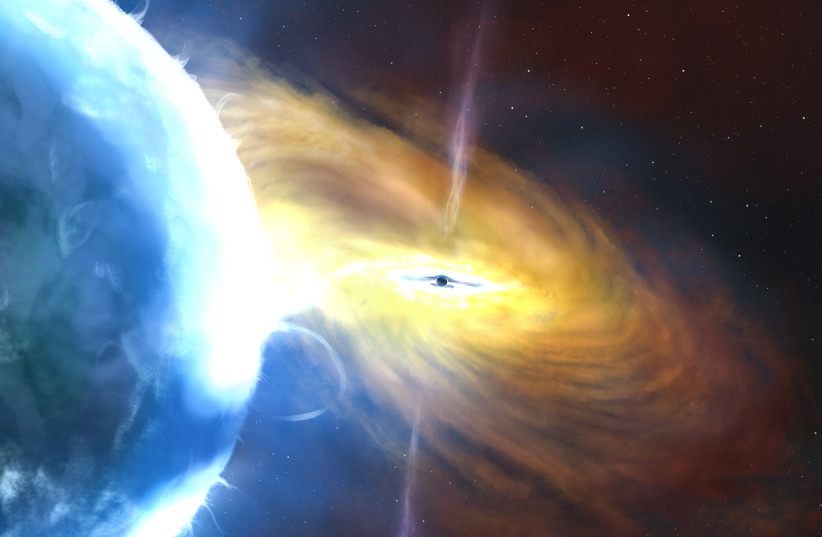
An explosion in space, dubbed AT2021lwx, is 10 times more powerful than a supernova and 3 times more than a star being devoured by a black hole – and it's been going on for 3 years.