Wednesday, September 6, 2023

Defense News: SpearUAV Unveils the MCL Viper, Aimed at Revolutionizing SWARM and Strike Capabilities for Maneuvering Forces


SpearUAV Unveils the MCL Viper, Aimed at Revolutionizing SWARM and Strike Capabilities for Maneuvering Forces


The compact Multi Canister Launcher enables swift deployment of VIPER 300 family of UAS from any military platform

By Israel Defense, 5/09/23

The SpeaUAV Viper 300 system cannister mounted on the rear of the turret a wheeled armoured vehicle


SpearUAV Ltd., an Israeli developer of autonomous, AI-based technology for encapsulated Unmanned Aerial Systems (UAS), unveiled the MCL Viper (Multi Canister Launcher), which enables the immediate launch of VIPER 300 System while in motion, from any military manned or unmanned platform.

The MCL Viper system features a customizable configuration with four or more canisters, adaptable to a wide array of military platforms and vehicles. This game-changing launcher enhances the maneuverability and operational pace of forces while minimizing operator exposure and safeguarding crew members within the vehicle.

Capable of launching multiple VIPER systems simultaneously or sequentially, the MCL Viper empowers tactical units with real-time Intelligence, Surveillance, Target Acquisition, and Reconnaissance (ISTAR) capabilities, as well as precision attack capabilities complemented by Electronic Warfare (EW) measures. Additionally, the system guarantees operator safety, situational awareness, and mission success, enabling both Swarm and unitary modes of operation.

Operable from within the vehicle and demanding minimal storage space, the MCL Viper system offers an immediate response even while in motion. Its intuitive, autonomous operation and resilience in challenging environmental conditions make it an indispensable asset for modern battlefield scenarios.

"At Spear, we have recognized the complicated challenges associated with SWAP (Size, Weight, and Power) allocation within military platforms, coupled with the crucial need to enhance tactical forces with advanced capabilities,” explained Yiftach Kleinman, EVP Commercial at Spear UAV.

“This solution is poised to empower the entire VIPER 300 family of capabilities, catering to units ranging from squads and platoons to companies and battalions. Military forces can now leverage the advantages of unitary or SWARM capabilities, encompassing hovering, speed, compactness, and cost-effectiveness, with the ability to engage and eliminate pinpoint targets either kinetically or electronically.”

The VIPER 300 family signifies a paradigm shift in tactical warfare. Consisting of three distinct capabilities: ISR, Loitering Munition, and EW, the state-of-the-art encapsulated precision strike hovering munition is optimized for engaging both stationary and moving targets within Line of Sight (LOS) and Beyond Line of Sight (BLOS) scenarios, with a tactical distance.

Tailored for maneuvering force (dismounted soldiers and platforms), the VIPER 300 ensures a seamless user experience, facilitating real-time and on-demand launch by a single user. Its compact and lightweight design ensures user ease and agility.

AI-based features, including autonomous target classification and tracking (ATR) and About/Wave-off capability, elevate its precision and battlefield effectiveness. With unparalleled versatility and precision, the VIPER 300 redefines tactical engagements and amplifies operational efficiency for military personnel.

SpearUAV VIPER


PLEASE RECOMMEND THIS PAGE & FOLLOW THE SPUTNIKS ORBIT AT HTTPS://DISQUS.COM/HOME/FORUM/THESPUTNIKSORBIT-BLOGSPOT-COM 

Fourth AOPS, HMCS William Hall, Delivered to The Royal Canadian Navy

31.08.2023

Image: HMCS William Hall 
Credit: Twitter/@IrvingShipbuild

The Royal Canadian Navy’s (RCN) fourth Arctic and Offshore Patrol Ship (AOPS), His Majesty’s Canadian Ship (HMCS) William Hall, was delivered to the fleet.

Designed to assert and uphold Arctic sovereignty, the Harry DeWolf-class Arctic and Offshore Patrol Vessel significantly enhances the Canadian Armed Forces’ (CAF) capabilities and presence in the Arctic. With its considerable space to transport cargo, small vehicles, and deployable boats, the AOPV brings versatility and support to a wide range of domestic CAF operations with the ability to support global peace and security in coordination with our allies and partners.

As the RCN takes delivery of HMCS William Hall, the next steps will include sea trials, warm and cold weather trials, and other post-delivery evaluation tasks. The full commissioning ceremony for HMCS William Hall is expected to take place sometime next year, after the conclusion of the trials.

Since the inaugural deployment of first in class, HMCS Harry DeWolf in 2021, these ships have seen multiple deployments to Canada’s Arctic regions, the South-Eastern Pacific Ocean, the Caribbean Sea, and have contributed to the Hurricane Fiona response in Newfoundland. HMCS William Hall will remain at His Majesty’s Canadian Dockyard Halifax while post-acceptance work, sea trials and final ship preparations are completed, and subsequently will officially be commissioned into the RCN fleet.

In support of Canada’s defence policy, Strong, Secure, Engaged, the Government of Canada continues to deliver the modern, functional, and effective ships that the RCN needs to support operations, while also rebuilding Canada’s marine industry with the creation of hundreds of new jobs under Canada’s National Shipbuilding Strategy.

“We celebrate the next important milestone for the National Shipbuilding Strategy and the Royal Canadian Navy with the arrival of our fourth new Arctic and Offshore Patrol Vessel, HMCS William Hall. This new asset to Canada’s fleet has been made possible by the vital work of our shipbuilders and the thousands of Canadians that have contributed to the construction of this new ship. We will continue to provide the Royal Canadian Navy with the ships needed to protect our country, while creating good jobs for Canadians.” The Honourable Bill Blair, Minister of National Defence

“The delivery of our fourth Arctic and Offshore Patrol Vessel, HMCS William Hall, brings the Royal Canadian Navy ever closer to achieving our full fleet of six modern, ice-capable ships. Each of the AOPV represents an advanced capability and skillset for the Navy, and our allies, and we are proud that this ship will soon be officially welcomed into the RCN Fleet.” Vice-Admiral Angus Topshee, Commander of the Royal Canadian Navy

ADDITIONAL INFO

• The Harry DeWolf-class ships are highly versatile vessels that can be used on a variety of missions at home and abroad, such as coastal surveillance, search and rescue, drug interdiction, support to international partners, humanitarian aid, and disaster relief.

• The ships of the Harry DeWolf-class will be affiliated with regions of the Inuit Nunangat. The first affiliation between HMCS Harry DeWolf and the Qikiqtani Inuit of Nunavut was formalized in May 2019 and HMCS Margaret Brooke was affiliated with Nunatsiavut in 2022. Affiliation between an HMC Ship, its sailors and civilian communities is a long-standing and honoured naval tradition, with relationships lasting throughout the service-life of the ship.

• AOPV’s are known as the Harry DeWolf-class, named in honour of Vice-Admiral Harry DeWolf, a Canadian wartime naval hero. First in class, HMCS Harry DeWolf, was delivered to Canada on July 30, 2020, and was officially commissioned into RCN service on June 26, 2021.

• The second AOPV, HMCS Margaret Brooke, was named in honour of the Royal Canadian Navy Nursing Sister Lieutenant-Commander Margaret Martha Brooke, who was decorated for gallantry during the Second World War. HMCS Margaret Brooke was officially commissioned into RCN service on October 28, 2022.

• The third AOPV, HMCS Max Bernays, was named in honour of Chief Petty Officer Max Bernays, a Canadian naval hero who served as the Coxswain of HMCS Assiniboine during the Second World War’s Battle of the Atlantic, and was officially delivered to the RCN on September 2, 2022.

• The fourth AOPV, the HMCS William Hall, is named in honour of William Hall, the first person of African descent, the first Nova Scotian, and the first Canadian naval recipient of the Victoria Cross.

• AOPV’s five and six, HMCS Frédérick Rolette, and HMCS Robert Hampton Gray, are currently in various stages of production, with the planned delivery of one new ship every year until 2025.


Recommend this post and follow
Sputnik's Orbit


Posted by Chuck

Tuesday, September 5, 2023

Space News: Jupiter-like planet observed spiraling off 950 light years from Earth


Jupiter-like planet observed spiraling off 950 light years from Earth


The planet hurtles around its star at close proximity as its atmosphere leaches out and trails around it, forming the largest known planetary structure anywhere in space.


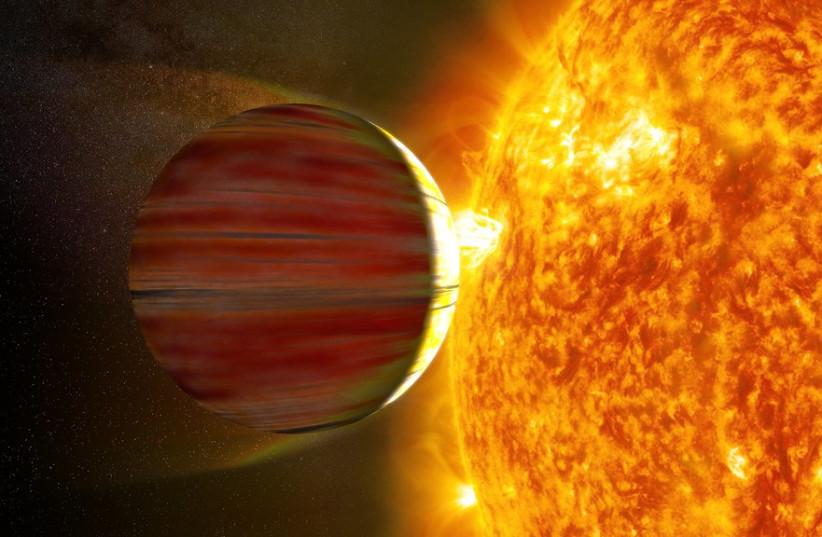
A large, Jupiter-like alien world far off in space is losing so much atmospheric helium. It is spiraling off, leaving massive gas trails in its wake.

The process is creating what is essentially the largest known planetary structure anywhere in space, according to a recent study.

The exoplanet in question has been designated HAT-P-32b, located around 950 light years from Earth, and was imaged using a 3D simulation from the Stampede2 supercomputer based on data from the Hobby-Eberly Telescope.

The findings of this study were published in the peer-reviewed academic journal Science Advances.

A planet blows its top: What happens when the atmosphere starts to vanish?

HAT-P-32b is an exoplanet whose existence was first verified in 2011. A gas giant, the planet is considered to be a "hot Jupiter," a planetary designation referring to its physical similarity to Jupiter. These planets also rotate around their stars very quickly.

The fact that their orbital rotation is so short is indicative of them being very close to their host star, which would mean their surface temperature was very hot. 

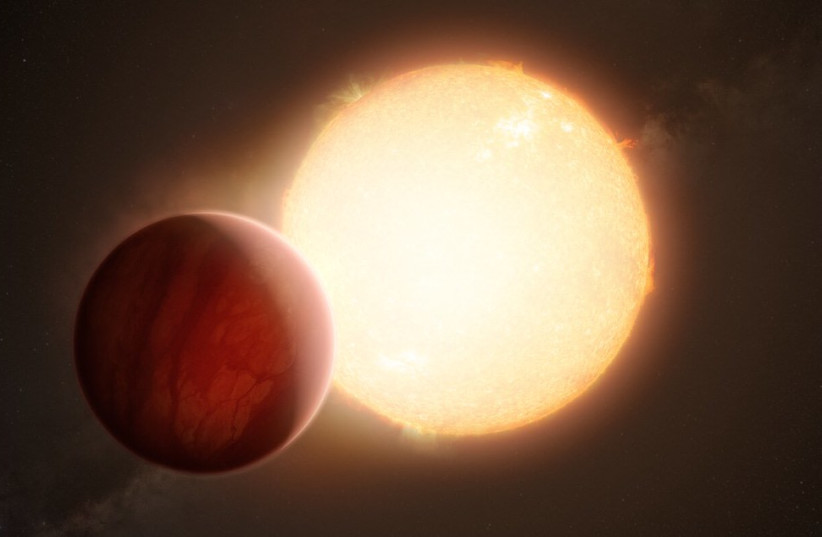
 Artist’s impression of an ultra-hot Jupiter transiting its star. (credit: FLICKR)

 Artist’s impression of an ultra-hot Jupiter transiting its star. (credit: FLICKR)

Being a hot Jupiter, HAT-P-32b is naturally huge but more complex. For one thing, in terms of its mass, this exoplanet is significantly less massive than Jupiter. But despite this, this exoplanet is still massive in terms of sheer distance, boasting one of the largest known radii of all exoplanets.

Specifically, NASA notes that HAT-P-32b has a mass of approximately 0.68 Jupiter. Furthermore, the orbit of this planet around its star is so close and fast that one complete orbit occurs roughly every 53 hours. 

For context regarding how close HAT-P-32b's orbit is to its star, Earth is one astronomical unit or about 93 million miles from the sun. The distance between HAT-P-32b and its star is approximately 30 times shorter, a space just shy of 3.2 million miles.

The planet, however, is losing its atmospheric helium, leading to dramatic effects. The study's authors write that the escaping helium is creating "extended leading and trailing tails spanning a projected length over 53 times the planet's radius. These tails are among the largest known structures associated with an exoplanet."

Scientists observing this hot Jupiter planet hope to use their observations to gain insights into an astronomical phenomenon wherein scientists have noticed a marked lack in the number of observed short-period Neptune-mass planets.

The researchers posit that this phenomenon is primarily driven by atmospheric escape, such as with HAT-P-32b.

PLEASE RECOMMEND THIS PAGE & FOLLOW THE SPUTNIKS ORBIT AT HTTPS://DISQUS.COM/HOME/FORUM/THESPUTNIKSORBIT-BLOGSPOT-COM   

Monday, September 4, 2023

Cellula Robotics Initiates Sea Trials of its Solus-XR System

30.08.2023 by Canadian Defense Review.


Cellula Robotics has commenced sea trials of the Solus-XR system, showcasing the company's dedication to advancing Extra Large Unmanned Underwater Vehicles (XLUUVs). The Solus-XR XLUUV has officially embarked on its highly anticipated sea trials, signifying a crucial stride in the company's development of its long range hydrogen fuel cell powered autonomous underwater systems.

"This momentous achievement is a testament to Cellula's enduring commitment to innovation and excellence." Said Adrian Woodroffe, Director of Business Development at Cellula. "Through strategic partnerships and tireless dedication, the company has transformed a vision into reality with the development of the Solus-XR XLUUV, a cutting-edge testament to the future of maritime security."

Building upon the foundation of Cellula's preceding innovation, Solus-LR, the remarkable Solus-XR XLUUV has been meticulously crafted to attain unparalleled operational ranges, reaching an impressive 5,000 kilometers. Through its port-to-port mission capability, Solus-XR removes the necessity for auxiliary support vessels, thus facilitating access to challenging and remote locations frequently encountered in Arctic sub-ice missions. Beyond the elimination of environmentally taxing high-emission support vessels, the cutting-edge hydrogen fuel cell technology developed by Cellula empowers the system to engage in sustainable operations, ensuring minimal ecological footprint.

READ: TECHNOLOGY PROFILE – CELLULA ROBOTICS’ SUBSEA INNOVATION

The initial sea trials are designed to evaluate surface performance and autonomy, offering a valuable opportunity to assess the vehicle's capabilities in the dynamic context of real-world maritime conditions.

Looking ahead, Cellula Robotics Ltd has planned demonstration missions for 2024, a pivotal step in showcasing the full spectrum of the Solus-XR XLUUV's capabilities in real-world scenarios. These missions will underscore the vehicle's potential to redefine underwater security and operations, solidifying its place as a game-changing technology.

Further bolstering its achievements, the Solus-XR XLUUV proudly claims the title of the largest UUV ever developed in Canada. This accomplishment underscores the nation's capacity to drive innovation and lead in the development of cutting-edge underwater technology.

As Cellula Robotics Ltd pushes the boundaries of innovation, the sea trials of the Solus-XR XLUUV mark a defining moment in the company's journey, demonstrating its commitment to excellence and setting the stage for a new era of XLUUVs.


Recommend this post and follow
Sputnik's Orbit


Posted by submersible Chuck

Space News: An Earth-like planet may be hanging out in the outer solar system - study


An Earth-like planet may be hanging out in the outer solar system - study


A planet about 1.5-3 times as massive as Earth could help explain peculiar properties of the outer solar system.

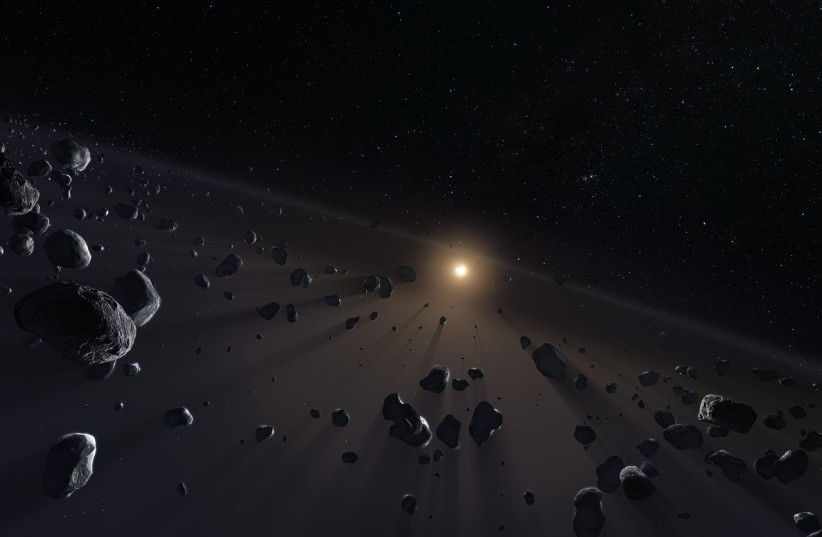
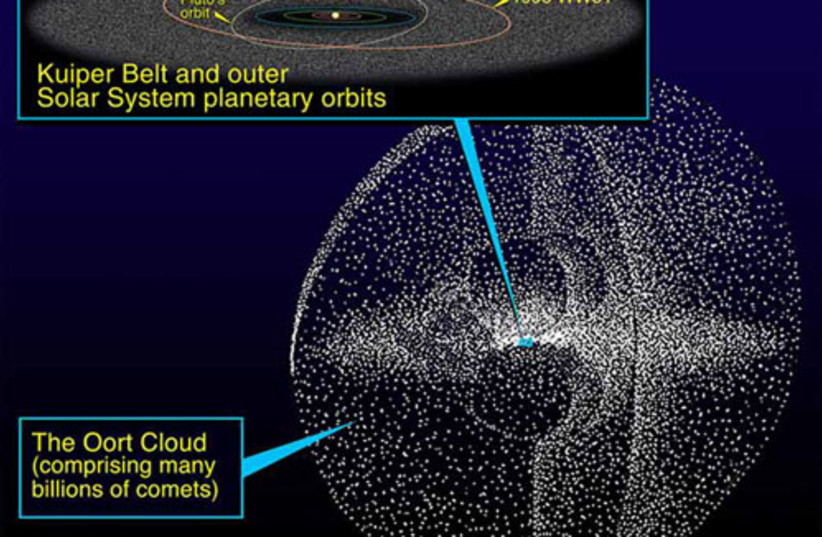
An Earth-like planet may be hiding in the outer solar system and could help explain some properties of the Kuiper Belt, the ring of icy bodies circling the solar system in the region past Neptune's orbit, Japanese scientists said in a study published last week.

The peer-reviewed study, published in The Astronomical Journal of the American Astronomical Society, examined patterns noticed in "trans-Neptunian objects" (TNOs) - rock and ice bodies remaining from the period of planet formation in our solar system. The study was conducted by scientists from the Kindai University, National Astronomical Observatory of Japan, and Chiba Institute of Technology.

Astronomers estimate that there are millions of small, icy objects in the Kuiper Belt, according to NASA. Hundreds of thousands of the objects are over 60 miles wide and some, like Pluto which sits in the Belt, are over 600 miles wide. (Earth, in comparison, is nearly 8,000 miles wide.)

The mysteries of the Kuiper Belt

Over 1,000 specific objects have been identified in the Kuiper Belt, although the region of space still holds many mysteries. NASA's New Horizons spacecraft is so far the only spacecraft exploring the Kuiper Belt, although the mission is facing the possibility of having its budget cut in the coming year.

 Kuiper Belt and Oort Cloud. (credit: NASA/JPL)

                                              Kuiper Belt and Oort Cloud. (credit: NASA/JPL)

The objects in the Belt have a number of odd properties: there appears to be a large number of objects that are not affected by Neptune's gravitational pull, there are many objects that are inclined at an over 45-degree angle compared to the plane of the Solar System, and there are a number of objects with peculiar orbits.

The scientists explained that a planet about 1.5-3 times as massive as Earth, located between 250-500 astronomical units (an astronomical unit is about the distance from the Earth to the Sun, 93 million miles), and inclined 30 degrees compared to the plane of the Solar System.

Such a planet would also help explain the properties of objects that are affected or occasionally affected by Neptune's gravity.

The scientists noted that their theory could be tested by looking for groups of trans-Neptunian objects in areas located over 150 astronomical units away, as the planet they're proposing would create such groupings of objects. The likelihood of detecting or observing the planet would be affected, however, by how big it is and how far away it is.

The scientists added that more detailed knowledge about the orbital structure of the Kuiper Belt will help reveal or rule out the existence of the planet they're hypothesizing. The discovery of such a planet may also affect how we understand planet formation in the area past Jupiter.

The newly proposed planet vs Planet 9

Scientists have repeatedly examined the possibility of a ninth planet (commonly referred to as Planet 9 or Planet X) lurking in the outer solar system, although many studies have assumed that such a planet would be much bigger than Earth.

A preprint study published earlier this year proposed that such a massive planet could be detected by looking for moons that may be circling it, as the moons could be heated by the gravitational pull between the planet and the moons.

The planet has been proposed as a way to explain the behavior of trans-Neptunian objects located very far out in the outer solar system, near the edges or outside of the Kuiper Belt.

The new study published last week noted that while Planet 9 does explain the properties of some much more distant objects in the outer solar system, it does not address the structure of the Kuiper Belt.


PLEASE RECOMMEND THIS PAGE & FOLLOW THE SPUTNIKS ORBIT AT HTTPS://DISQUS.COM/HOME/FORUM/THESPUTNIKSORBIT-BLOGSPOT-COM   

Sunday, September 3, 2023

What Happened to All the Supermassive Black Holes? Astronomers Surprised by Webb Data

By U. OF KANSAS Sept. 2, 2023


A research study using the James Webb Space Telescope has found that active galactic nuclei, supermassive black holes that grow rapidly, are less common than previously thought. This discovery suggests a more stable universe and provides insights into faint galaxies and challenges in identifying these nuclei.

James Webb Space Telescope survey reveals fewer supermassive black holes than presumed.

A University of Kansas survey of a swath of the cosmos using the James Webb Space Telescope has revealed active galactic nuclei — supermassive black holes that are rapidly increasing in size — are rarer than many astronomers had assumed previously.

The findings, made with the JWST’s Mid-Infrared Instrument (MIRI), suggest our universe may be a bit more stable than was supposed. The work also gives insights into observations of faint galaxies, their properties, and challenges in identifying AGN.

Details of the Study

A new paper detailing the JWST research, conducted under the auspices of the Cosmic Evolution Early Release Science (CEERS) program, was made available recently on arXiv in advance of formal peer-review publication in The Astrophysical Journal.

The work, headed by Allison Kirkpatrick, assistant professor of physics & astronomy at KU, focused on a long-studied zone of the cosmos dubbed the Extended Groth Strip, located between the Ursa Major and Boötes constellations. However, previous examinations of the area relied on a less powerful generation of space telescopes.

“Our observations were taken in last June and December, and we were aiming to characterize how galaxies looked during the heyday of star formation in the universe,” Kirkpatrick said. “This is a look back in time of 7 to 10 billion years in the past. We used the mid-infrared instrument on the James Webb Space Telescope to look at dust in galaxies that are existing 10 billion years in the past, and that dust can hide ongoing star formation, and it can hide growing supermassive black holes. So I carried out the first survey to search for these lurking, supermassive black holes at the centers of these galaxies.”

We show MIRI pointing 1 (right panel) alongside the Spitzer/IRAC (middle) and MIPS (left) observations of the
same region. The apertures show the location of detected sources in each image (MIRI region only). For the MIPS (IRAC)
image, the apertures are 6” (2”), corresponding to the instrument beam size. In the IRAC image, blue corresponds to channel
1 (3.6 μm), green corresponds to channel 2 (4.5 μm), and red corresponds to channel 3 (5.8 μm). In the MIRI image, the 770W filter is blue, F1000W is green, and F1280W is red. 
Credit: Kirkpatrick, et al., arXiv:2308.09750

Findings and Implications

While every galaxy features a supermassive black hole at the middle, AGN are more spectacular upheavals actively drawing in gases and showing a luminosity absent from typical black holes.

Kirkpatrick and many fellow astrophysicists anticipated that the higher-resolution JWST survey would locate many more AGN than a previous survey, conducted with the Spitzer Space Telescope. However, even with MIRI’s boost in power and sensitivity, few additional AGN were found in the new survey.

“The results looked completely different from what I had anticipated, leading to my first major surprise,” Kirkpatrick said. “One significant revelation was the scarcity of rapidly growing supermassive black holes. This finding prompted questions about the whereabouts of these objects. As it turns out, these black holes are likely growing at a slower pace than previously believed, which is intriguing, considering the galaxies I examined resemble our Milky Way from the past. Earlier observations using Spitzer only allowed us to study the brightest and most massive galaxies with rapidly growing supermassive black holes, making them easy to detect.”

Kirkpatrick said an important mystery in astronomy lies in understanding how typical supermassive black holes, such as those found in galaxies like the Milky Way, grow and influence their host galaxy.

“The study’s findings suggest that these black holes are not growing rapidly, absorbing limited material, and perhaps not significantly impacting their host galaxies,” she said. “This discovery opens up a whole new perspective on black-hole growth since our current understanding is largely based on the most massive black holes in the biggest galaxies, which have significant effects on their hosts, but the smaller black holes in these galaxies likely do not.”

Engineers worked meticulously to implant the James Webb Space Telescope’s Mid-Infrared Instrument into the ISIM, or Integrated Science Instrument Module, in the cleanroom at NASA’s Goddard Space Flight Center in Greenbelt, Md. on April 29, 2013. As the successor to NASA’s Hubble Space Telescope, the Webb telescope will be the most powerful space telescope ever built. It will observe the most distant objects in the universe, provide images of the first galaxies formed and see unexplored planets around distant stars.

Another surprising outcome was the lack of dust in these galaxies, said the KU astronomer.

“By using JWST, we can identify much smaller galaxies than ever before, including those the size of the Milky Way or even smaller, which was previously impossible at these redshifts (cosmic distances),” Kirkpatrick said. “Typically, the most massive galaxies have abundant dust due to their rapid star formation rates. I had assumed that lower mass galaxies would also contain substantial amounts of dust, but they did not, defying my expectations and offering another intriguing discovery.”

According to Kirkpatrick, the work changes understanding of how galaxies grow, particularly concerning the Milky Way.

“Our black hole seems quite uneventful, not displaying much activity,” she said. “One significant question regarding the Milky Way is whether it was ever active or went through an AGN phase. If most galaxies, like ours, lack detectable AGN, it could imply that our black hole was never more active in the past. Ultimately, this knowledge will help constrain and measure black hole masses, shedding light on the origins of black holes growing, which remain an unanswered question.”


Recommend this post and follow
Sputnik's Orbit


Posted by wholy Chuck

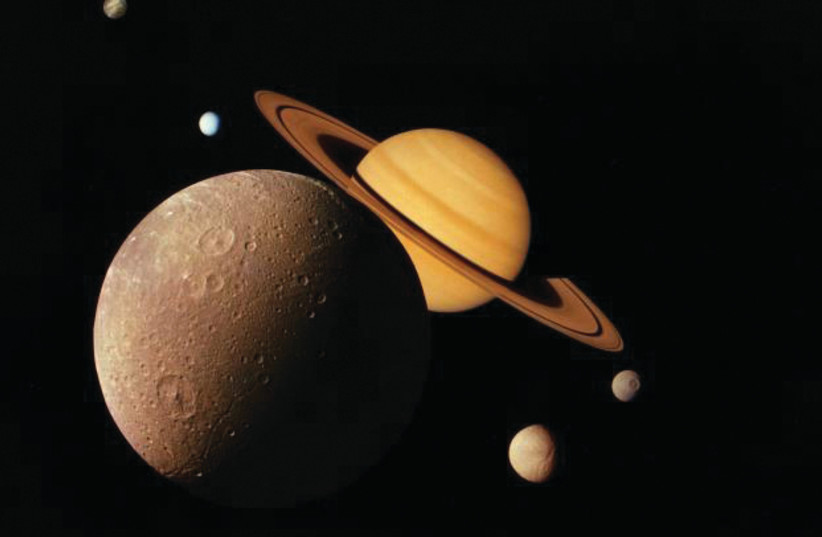
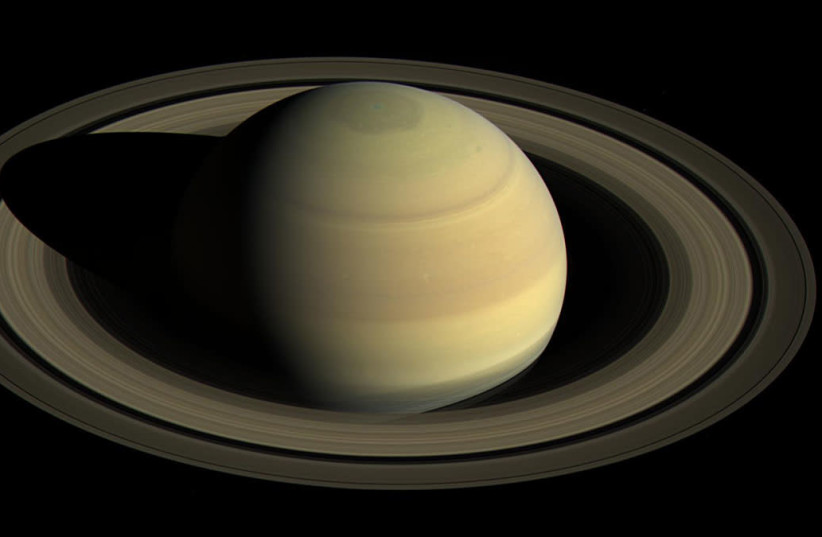
Space News: Here's why you should not expect a Saturn exploration anytime soon


Here's why you should not expect a Saturn exploration anytime soon


Internet users have raised questions about why we're unable to explore planets like Saturn, Venus, and Jupiter.


Saturday, September 2, 2023

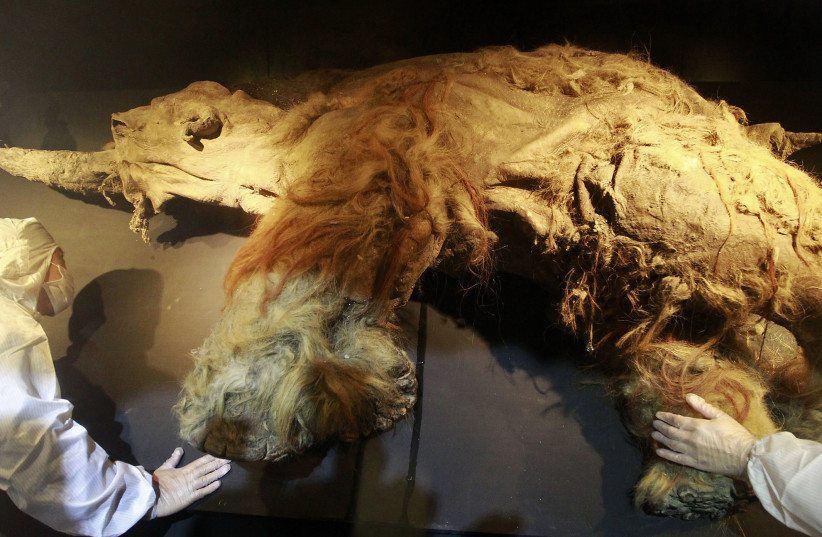
Biotechnology News: Biotech company aims to resurrect Woolley Mammoths in three years


Biotech company aims to resurrect Woolley Mammoths in three years

Colossal lays out a ten-step process for how they will resurrect the Woolley Mammoth.  

Friday, September 1, 2023

New evidence suggests McDermitt Caldera may be among the largest known lithium reserves in the world

Aug. 31, 2023 **REPORT** by Bob Yirka , Phys.org

Lithium mineralization in McDermitt caldera. 
(A) Simplified map of McDermitt Caldera, locations of active and historic mining projects, locations of drillholes colored according to maximum downhole Li assay value, and locations of drillhole samples used in this study. 
(B) Representative drillhole WLC-043 from the Thacker Pass project. Downhole whole-rock Li values (ppm) are shown in black circles and indicated on upper x axis. 
Clay (001) d-spacing values (angstroms) are shown in red squares and indicated on lower x-axis. Li concentrations increase with decreasing clay (001) d-spacing, demonstrating that the higher grades are associated with the illite clays. 
Credit: Science Advances (2023). DOI: 10.1126/sciadv.adh8183

A trio of volcanologists and geologists from Lithium Americas Corporation, GNS Science, and Oregon State University reports evidence that the McDermitt Caldera, on the Nevada/Oregon, border, may host some of the largest known deposits of lithium on Earth. In their project, reported in the journal Science Advances, Thomas Benson, Matthew Coble and John Dilles studied parts of the caldera and developed a theory to explain how so much lithium was formed in the area.

Over the past few decades, lithium has become a highly valued soft metal, due primarily to its use in a wide variety of battery types. Because its value has continued to increase, scientists working for mining companies such as Lithium Americas Corporation have been looking for sources.

The McDermitt Caldera is approximately 45 kilometers long and 35 kilometers wide. Prior research has suggested it formed as part of the Yellowstone hotspot, which led to the formation of a sequence of calderas. Its origin dates to approximately 19 million years ago.

In 2017, another team of researchers found evidence that one part of the caldera called Thacker Pass could be among the largest sources of lithium ever found. Lithium Americas obtained a stake at the site and began testing mining operations. Soon thereafter, they ran into opposition from locals and Native American groups, but eventually won the right to mine at the site.

Since that time, the research team has been collecting and analyzing samples, looking for the best place to begin major mining operations. But to find it, they and many other experts in the field believe they must find an explanation for how the lithium got there in the first place. In their paper, the researchers suggest a theory—one Lithium Americas plans to use to begin its mining operations.

Their theory posits that after a volcano erupted (creating among other things, lithium), a hydrothermal enrichment occurred—magma deep unground pushed its way to the center of what is now the caldera, leading to the formation of the Montana Mountains. As that happened, faults, fissures and fractures were created, allowing lithium to seep up toward the surface. This process also transformed much of the smectite into illite (different forms of lithium), which wound up along the southern rim of the basin. That, they conclude, explains why lithium is so abundant there.


Recommend this post

 and follow

Sputnik's Orbit


Posted by triple Chuck

Space News: Crashed Russian spacecraft likely cause of new crater on the moon - as NASA releases images


Crashed Russian spacecraft likely cause of new crater on the moon - as NASA releases images

Russia's Luna-25 spacecraft was looking to become the first to land on the moon's south pole, but it crashed to the surface and was beaten to the milestone by India's Chandrayaan-3 just days later.


By Tom Acres, Sky News technology reporter, Friday 1 September 2023 

https://news.sky.com/story/crashed-russian-spacecraft-likely-caused-new-crater-on-the-moon-as-nasa-releases-images-12952042


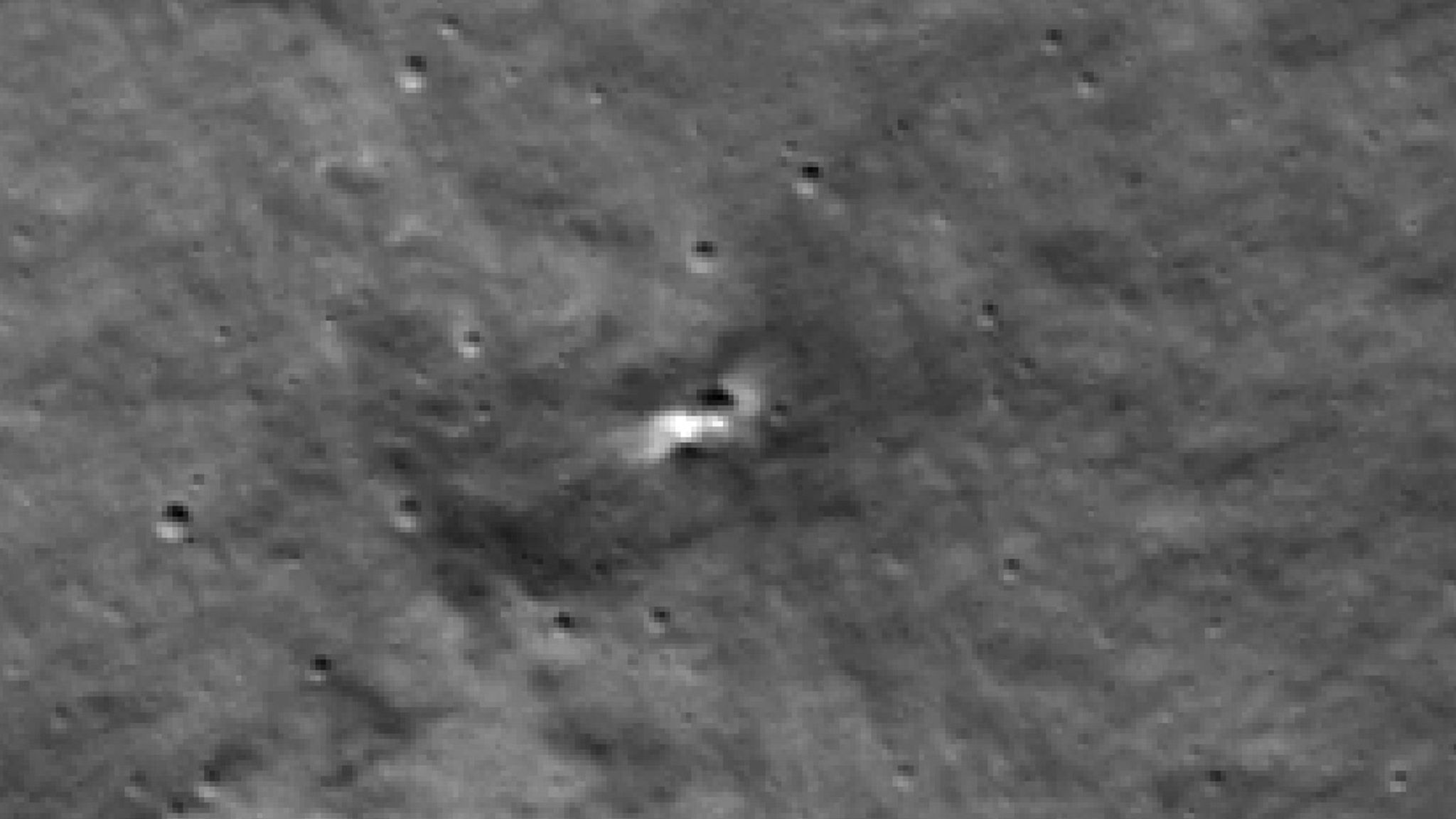
The new crater on the lunar surface, magnified by four. Pic: NASA's Goddard Space Flight Center/Arizona State University


NASA has found a new crater on the moon likely caused by the impact of a Russian spacecraft that crashed last month.

Luna-25, a robot lander, met its untimely end as it looked to touch down on the lunar surface's south pole.

Russia had hoped it would spend a year collecting samples of rock and dust from an area of the moon thought to contain water ice - a potential source of fuel and a way to sustain a human base.

Just a few days after the crash, which Moscow's Roscosmos space agency blamed on its decades-long pause in lunar exploration, India's Chandrayaan-3 craft became the first ever to land there.

NASA said it had spotted the likely impact of Luna-25's accident using its Lunar Reconnaissance Orbiter.

It released images of the site after Roscosmos published its own estimate of the impact point.

Russian experts said the craft, which crashed on 19 August, suffered an anomaly ahead of its attempted descent.

According to NASA's images, the new crater is about 10 metres in diameter and located on the steep inner rim of Pontecoulant G, an existing crater 250 miles short of Luna-25's intended landing point.

The US space agency compared the picture to one taken of the same area in June 2022, and concluded the fresh crater was likely from the crashed craft.

PLEASE RECOMMEND THIS PAGE & FOLLOW THE SPUTNIKS ORBIT AT HTTPS://DISQUS.COM/HOME/FORUM/THESPUTNIKSORBIT-BLOGSPOT-COM