Lend a hand: New 'dressing robot' may mimic assistance provided by caregivers
This technology could be significant in the social-care system to allow caregivers to spend less time on practical tasks and more time on the health and mental well-being of individuals.
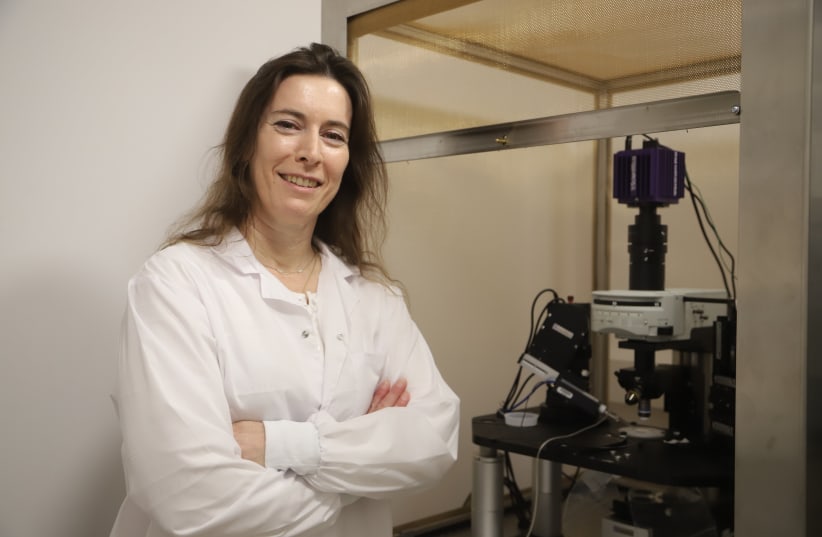
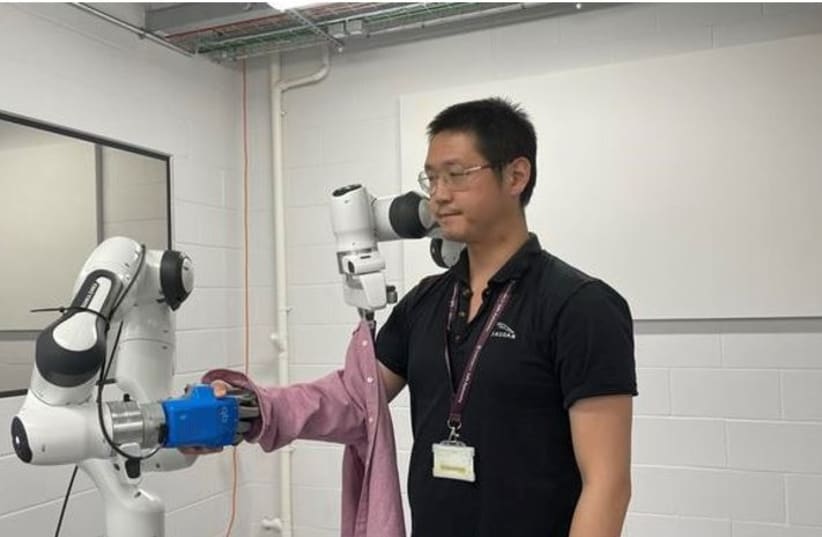
By JUDY SIEGEL-ITZKOVICH, Jerusalem Post, MARCH 5, 2024 A demonstration of the dressing robot in the laboratory (photo credit: UNIVERSITY OF YORK)
The shortage of caregivers for the seriously disabled is a major problem
in Israel and around the world. Robots have been suggested for helping
them, but until now, only one-armed machines have been created as
assistive-dressing robots in the lab, and research has shown that this
can be uncomfortable or impractical for the person in care.
The
shortage of caregivers is a pressing challenge worldwide because of a
decrease in birth rates combined with an increase in life expectancy.
According to the World Health Organization, by 2030, one in six people
in the world will be aged 60 years or over, and two decades later, those aged 60 years and older will double.
Scientists in the UK have developed a scheme that can mimic the
two-handed movements of caregivers as they dress an individual. Prof.
Jihong Zhu, a robotics researcher at the University of York’s Institute
for Safe Autonomy, has designed a two-armed assistive dressing model
that has not been attempted in previous research. He said that specific
actions are required to reduce discomfort and distress to the individual
in their care.
It is thought that this technology could be significant in the social-care system to allow caregivers to spend less time on practical tasks and more time on the health and mental well-being of individuals.
Zhu
gathered important information on how caregivers moved during a
dressing exercise, allowing a robot to observe and learn from human
movements and then, through artificial intelligence, generate a model
that mimics how human helpers do their task. This allowed him and his
team to gather enough data to illustrate that two hands were needed for
dressing and not one, as well as information on the angles that the arms
make and the need for a human to intervene and stop or alter certain
movements.
The team members published their findings in the journal IEEE
Transactions on Robotics under the title “Do You Need a Hand? – a
Bimanual Robotic Dressing Assistance Scheme.”
“We
know that practical tasks, such as getting dressed, can be done by a
robot, freeing up a care worker to concentrate more on providing
companionship and observing the general well-being of the individual in
their care,” said Zhu. “It has been tested in the lab, but for this to
work outside of the lab we really needed to understand how caregivers
did this task in real time.”
They used a method called learning from demonstration, which means
that you don’t need an expert to program a robot; someone just needs to
demonstrate the motion that is required of the robot, and it learns that
action. It was clear that for caregivers’ two arms were needed to
properly attend to the needs of individuals with different abilities.
They
identified a key feature – the angle of the elbow that affects the
dressing action – and proposed an optimal strategy for the interactive
robot using the feature.
“One hand holds the individual’s hand to guide them comfortably
through the arm of a shirt, for example, while at the same time, the
other hand moves the garment up and around or over. With the current
one-armed machine model, a patient is required to do too much work for a
robot to help them, moving their arm up in the air or bending it in
ways that they might not be able to do.”
The
team was also able to build algorithms that made the robotic arm
flexible enough in its movements for it to perform the pulling and
lifting actions but also be prevented from making an action by the
gentle touch of a human hand or guided out of an action by a human hand
moving the hand left or right, up or down, without the robot resisting.
Zhu said: “Human modeling can really help with efficient and safe
human and robot interactions, but it important not only to ensure it
performs the task, but that it can be halted or changed mid-action
should that be needed. Trust is a significant part of this process, and
the next step in this research is testing the robot’s safety limitations
and whether it will be accepted by those who need it most.”
THIS PAGE WAS POSTED BY SPUTNIK ONE OF THE SPUTNIKS ORBIT BLOG








:quality(70)/cloudfront-us-east-1.images.arcpublishing.com/archetype/2JBHNEIC25CE3DMCNTPKX5Z7TI.jpg)