Friday, May 17, 2024

Space News: WASP-193b: 'Super fluffy' candy floss planet bigger than Jupiter discovered by astronomers


WASP-193b: 'Super fluffy' candy floss planet bigger than Jupiter discovered by astronomers

The new cosmic discovery has puzzled some experts due to its low density despite appearing to be larger than gas giant Jupiter.


Sky News, Wednesday May 15, 2024

https://news.sky.com/story/wasp-193b-super-fluffy-candy-floss-planet-bigger-than-jupiter-discovered-by-astronomers-13136270


An artist's illustration showing the formation of a planet beyond our solar system. File pic: Reuters/NASA


Astronomers have identified a planet as light and fluffy as candy floss - despite being far bigger than our solar system's gas giant Jupiter.

Scientists said WASP-193b is "basically super fluffy" because it has remarkably low density for its size.

It's thought to consist mostly of hydrogen and helium, according to a study published in Nature Astronomy.

WASP-193b is the second least dense planet discovered by astronomers - but is proving a mystery to experts due to its size, which is around 50 per cent bigger than Jupiter.

"The planet is basically super fluffy" because it's made mostly of light gases rather than solids, according to lead author Khalid Barkaoui of the Massachusetts Institute Of Technology (MIT).

More observational work will need to be carried out before astronomers can answer all the questions posed by its "fluffy" existence.

Scientists said WASP-193b, which some experts believe is so light it could float on water, is ideal for studying the formation and evolution of planets.

The existence of the exoplanet - those beyond our solar system - was confirmed last year, but it took extra time and work to determine its consistency based on observations from ground telescopes.

The planet is located outside of our solar system some 1,200 light years away - one light year is equal to 5.8 trillion miles - and orbits a star which is similar to the sun.

It is thought the heat from its nearby sun, which it orbits a little over every six days, could be making its atmosphere inflate.

The fluffy planet's emergence comes days after researchers revealed there is a "super-Earth" located in our Milky Way galaxy.

The rocky world, called 55 Cancri e or Janssen, is situated around 41 light years from Earth and has a diameter of around twice that of our planet.

Renyu Hu, of NASA's Jet Propulsion Laboratory and the lead author of the study published in the journal Nature, said: "The atmosphere is likely rich in carbon dioxide or carbon monoxide, but can also have other gases such as water vapour and sulphur dioxide.

"The current observations cannot pinpoint the exact atmospheric composition."

The planet "cannot be habitable" because it is too hot to have liquid water, scientists added.

THIS PAGE WAS POSTED BY SPUTNIK ONE OF THE SPUTNIKS ORBIT BLOG   HTTPS://DISQUS.COM/HOME/FORUM/THESPUTNIKSORBIT-BLOGSPOT-COM/


Thursday, May 16, 2024

Surprising Study Finds Men With Low Testosterone More Likely to Die Early

15 May 2024, By D. KELLY, THE CONVERSATION

(Silke Woweries/Getty Images)


It has long been thought that testosterone shortens men's lives. Studies on neutered animals and Korean eunuchs seem to confirm this. However, a new study, published in the Annals of Internal Medicine, draws these findings into question.

In this study, led by a team at the University of Western Australia, the researchers combined the results of 11 high-quality studies (known as a meta-analysis) investigating the effect of testosterone levels on lifespan.

The studies followed men for at least five years and found that participants with the lowest testosterone levels were more likely to die.

Death in this study was from any cause, but digging deeper into the analysis reveals that this is mostly due to heart disease – still the leading cause of death in men globally.

What is interesting is that the same process underlying heart disease might also contribute to erectile dysfunction — the inability to get and keep an erection firm enough for sex.

Erectile dysfunction often occurs much earlier than symptoms of heart disease and can act as an early warning sign of existing or future heart problems. Testosterone is known to have a large effect on erectile function, again linking levels of this hormone to heart disease.


Testosterone naturally declines with age. 
(kali9/Canva Pro)


Testosterone levels typically decline as men age, dropping by about 1% per year from the age of 30. This is sometimes referred to as the male menopause or andropause.

This decrease over time is at least partly due to a slow waning of the ability of the testicles to produce testosterone and a reduction in the signals that tell them to. However, other factors can accelerate this decline, including chronic disease.

Chicken or egg?

So is low testosterone causing disease or is it caused by it?

A limitation of the new study is that it is not able to figure out if low testosterone directly causes an increased risk of death.

Testosterone is lowered by illness, so it could be a marker for an underlying disease that results in an increased chance of dying. This is especially true for diseases that have long-term inflammation, of which obesity is one.

Helping unravel this relationship is the situation found in prostate cancer patients. When the cancer spreads, the patient is given drugs that drastically lower testosterone levels. Despite improving prostate cancer, this treatment increases the risk of heart attack and stroke in the patients.

So while low testosterone may be a marker of disease, to some extent it is clearly also a contributing factor in the development of future disease and possibly death.

Figuring out what a "low" level of testosterone is, is complicated. Measuring testosterone on its own might not give the full picture of what's the right level for someone. What is low for one man may not be low for another.

Researchers use average levels of testosterone from lots of people from different populations to establish normal ranges to help identify people outside of this range with a related disease. This helps doctors to identify and treat patients who might need help.

However, making these generalisations across populations is tricky and often requires larger effects to show these trends. The new meta-analysis suggests that the increased risk of death in men is apparent mostly when testosterone levels are very low.

What is important to note from this is that regardless of the levels defining what is considered normal for any individual, lowered levels for that person seem to increase the risk of dying.

Keeping healthy T levels

Given the risks associated with low testosterone, you might wonder if there is any way to prevent them.

First, men should certainly try to avoid things that reduce it by adopting a healthy lifestyle and avoiding putting on weight. But when levels are low, treatment to replace the missing testosterone could be an option.

There is growing evidence that testosterone replacement therapy may help reduce some of those risks, including death from any cause and from heart attack, in some men. Yet controversy still exists as long-standing – and largely outdated – concerns regarding testosterone therapy causing heart attacks endure.

While most evidence now suggests there is at least no risk of heart disease associated with testosterone replacement therapy, more research is needed to determine if it can improve heart health in men.

While there may be hope on the horizon in the form of testosterone for reducing the risk of men dying from heart attack, it looks as though it will be a long road until treatment becomes a common option. In the meantime, it would be wise to maintain your testosterone levels through a healthy lifestyle.

Daniel Kelly, Senior Lecturer in Biochemistry, Sheffield Hallam University


Recommend this


post and follow


Sputnik's Orbit

Science News: Breakthrough research on fruit flies may pave way for ALS cure


Breakthrough research on fruit flies may pave way for ALS cure


The work on fruit flies in the lab shows how protein interactions can preserve or prevent the nerve cell death that is a hallmark of ALS.


“As a doctor, it’s been so important for me to be able to sit down with a patient or their family and say to them, ‘we’re trying to stop this disease,’” said Strong, a clinician-scientist who has devoted his career to finding a cure for ALS. He and his colleagues have just published their findings in the journal Brain under the title “Mitigation of TDP-43 toxic phenotype by an RGNEF fragment in amyotrophic lateral sclerosis models.”

“It’s been 30 years of work to get here; three decades of looking after families and patients and their loved ones when all we had was hope. This gives us reason to believe we’ve discovered a path to treatment,” Strong said with enthusiasm.

                                        DNA 370 (credit: Thinkstock/Imagebank)


Halting or reversing the progression of the disease

ALS is a debilitating neurodegenerative condition that progressively impairs nerve cells responsible for muscle control, leading to muscle wastage, paralysis, and ultimately, death. The average life expectancy of an ALS patient post-diagnosis is a mere two to five years (although, unusually, Hawking – diagnosed at 21 – managed to survive with severe disability until the age of 76).

Strong and colleagues found that targeting an interaction between two proteins present in ALS-impacted nerve cells can halt or reverse the disease’s progression. The team also identified a mechanism to make this possible.

“Importantly, this interaction could be key to unlocking a treatment not just for ALS but also for other related neurological conditions, like frontotemporal dementia,” said Strong, who holds the Arthur J. Hudson Chair in ALS Research at Western’s Schulich School of Medicine & Dentistry. “It is a game changer.”

In virtually all ALS patients, a protein called TDP-43 is responsible for forming abnormal clumps within cells, which causes cell death. In recent years, Strong’s team discovered a second protein, called RGNEF, with functions that are opposite to TDP-43.

The team’s latest breakthrough identifies a specific fragment of that RGNEF protein, named NF242, that can mitigate the toxic effects of the ALS-causing protein. The researchers discovered that when the two proteins interact with each other, the toxicity of the ALS-causing protein is removed, significantly reducing damage to the nerve cell and preventing its death.

In fruit flies, the approach notably extended lifespan, improved motor functions, and protected nerve cells from degeneration. Similarly, in mouse models, the approach led to enhanced lifespan and mobility, along with a reduction in neuroinflammation markers.

The team’s path to discovery was paved by the Temerty family’s long-standing investment in ALS research at Western – support that Strong calls “truly transformational.” The foundation, established by James Temerty, founder of Northland Power Inc., and Louise Arcand Temerty, is investing $10 million over five years to power the next steps to bring this treatment to ALS patients.

“Finding an effective treatment for ALS would mean so much to people living with this terrible disease and to their loved ones,” said James Temerty and his wife Louise, who are devoted to to advancing human health and healthcare in Canada. Their total investment in it brings the neurodegenerative disease research at Western to $18 million.      


THIS PAGE WAS POSTED BY SPUTNIK ONE OF THE SPUTNIKS ORBIT BLOG   HTTPS://DISQUS.COM/HOME/FORUM/THESPUTNIKSORBIT-BLOGSPOT-COM/

Wednesday, May 15, 2024

Three stars circling the Milky Way's halo formed 12 to 13 billion years ago

MAY 14, 2024, by J. Chu, Massachusetts Int. of Tech.

MIT astronomers discovered three of the oldest stars in the universe, and they live in our own galactic neighborhood. The stars are in the Milky Way's "halo"—the cloud of stars that envelopes the main galactic disk—and they appear to have formed between 12 and 13 billion years ago, when the very first galaxies were taking shape. 
Credit: Serge Brunier; NASA

MIT researchers, including several undergraduate students, have discovered three of the oldest stars in the universe, and they happen to live in our own galactic neighborhood.

The team spotted the stars in the Milky Way's "halo"—the cloud of stars that envelopes the entire main galactic disk. Based on the team's analysis, the three stars formed between 12 and 13 billion years ago, the time when the very first galaxies were taking shape.

The researchers have coined the stars "SASS," for small accreted stellar system stars, as they believe each star once belonged to its own small, primitive galaxy that was later absorbed by the larger but still growing Milky Way. Today, the three stars are all that are left of their respective galaxies. They circle the outskirts of the Milky Way, where the team suspects there may be more such ancient stellar survivors.

"These oldest stars should definitely be there, given what we know of galaxy formation," says MIT professor of physics Anna Frebel. "They are part of our cosmic family tree. And we now have a new way to find them."

As they uncover similar SASS stars, the researchers hope to use them as analogs of ultrafaint dwarf galaxies, which are thought to be some of the universe's surviving first galaxies. Such galaxies are still intact today but are too distant and faint for astronomers to study in depth.

As SASS stars may have once belonged to similarly primitive dwarf galaxies but are in the Milky Way and as such much closer, they could be an accessible key to understanding the evolution of ultrafaint dwarf galaxies.

"Now, we can look for more analogs in the Milky Way, that are much brighter, and study their chemical evolution without having to chase these extremely faint stars," Frebel says.

She and her colleagues have published their findings today (May 14) in the Monthly Notices of the Royal Astronomical Society. The study's co-authors are Mohammad Mardini, at Zarqa University, in Jordan; Hillary Andales '23; and current MIT undergraduates Ananda Santos and Casey Fienberg.

Stellar frontier

The team's discoveries grew out of a classroom concept. During the 2022 fall semester, Frebel launched a new course, 8.S30 (Observational Stellar Archaeology), in which students learned techniques for analyzing ancient stars and then applied those tools to stars that had never been studied before, to determine their origins.

"While most of our classes are taught from the ground up, this class immediately put us at the frontier of research in astrophysics," Andales says.

The students worked from star data collected by Frebel over the years from the 6.5-meter Magellan-Clay telescope at the Las Campanas Observatory. She keeps hard copies of the data in a large binder in her office, which the students combed through to look for stars of interest.

In particular, they were searching ancient stars that formed soon after the Big Bang, which occurred 13.8 billion years ago. At this time, the universe was made mostly of hydrogen and helium and very low abundances of other chemical elements, such as strontium and barium. So, the students looked through Frebel's binder for stars with spectra, or measurements of starlight, that indicated low abundances of strontium and barium.

Their search narrowed in on three stars that were originally observed by the Magellan telescope between 2013 and 2014. Astronomers never followed up on these particular stars to interpret their spectra and deduce their origins. They were, then, perfect candidates for the students in Frebel's class.

The students learned how to characterize a star in order to prepare for the analysis of the spectra for each of the three stars. They were able to determine the chemical composition of each one with various stellar models. The intensity of a particular feature in the stellar spectrum, corresponding to a specific wavelength of light, corresponds to a particular abundance of a specific element.

After finalizing their analysis, the students were able to confidently conclude that the three stars did hold very low abundances of strontium, barium, and other elements such as iron, compared to their reference star—our own sun. In fact, one star contained less than 1/10,000 the amount of iron to helium compared to the sun today.

"It took a lot of hours staring at a computer, and a lot of debugging, frantically texting and emailing each other to figure this out," Santos recalls. "It was a big learning curve, and a special experience."

'On the run'

The stars' low chemical abundance did hint that they originally formed 12 to 13 billion years ago. In fact, their low chemical signatures were similar to what astronomers had previously measured for some ancient, ultrafaint dwarf galaxies. Did the team's stars originate in similar galaxies? And how did they come to be in the Milky Way?

On a hunch, the scientists checked out the stars' orbital patterns and how they move across the sky. The three stars are in different locations throughout the Milky Way's halo and are estimated to be about 30,000 light years from Earth. (For reference, the disk of the Milky Way spans 100,000 light years across.)

As they retraced each star's motion about the galactic center using observations from the Gaia astrometric satellite, the team noticed a curious thing: Relative to most of the stars in the main disk, which move like cars on a racetrack, all three stars seemed to be going the wrong way. In astronomy, this is known as "retrograde motion" and is a tipoff that an object was once "accreted," or drawn in from elsewhere.

"The only way you can have stars going the wrong way from the rest of the gang is if you threw them in the wrong way," Frebel says.

The fact that these three stars were orbiting in completely different ways from the rest of the galactic disk and even the halo, combined with the fact that they held low chemical abundances, made a strong case that the stars were indeed ancient and once belonged to older, smaller dwarf galaxies that fell into the Milky Way at random angles and continued their stubborn trajectories billions of years later.

Frebel, curious as to whether retrograde motion was a feature of other ancient stars in the halo that astronomers previously analyzed, looked through the scientific literature and found 65 other stars, also with low strontium and barium abundances, that appeared to also be going against the galactic flow.

"Interestingly they're all quite fast—hundreds of kilometers per second, going the wrong way," Frebel says. "They're on the run! We don't know why that's the case, but it was the piece to the puzzle that we needed, and that I didn't quite anticipate when we started."

The team is eager to search out other ancient SASS stars, and they now have a relatively simple recipe to do so: First, look for stars with low chemical abundances, and then track their orbital patterns for signs of retrograde motion. Of the more than 400 billion stars in the Milky Way, they anticipate that the method will turn up a small but significant number of the universe's oldest stars.

Frebel plans to relaunch the class this fall, and looks back at that first course, and the three students who took their results through to publication, with admiration and gratitude.

"It's been awesome to work with three women undergrads. That's a first for me," she says. "It's really an example of the MIT way. We do. And whoever says, 'I want to participate,' they can do that, and good things happen."


Recommend this post and follow
Sputnik's Orbit

Science News: Forget chopped liver: South Korean scientists convert chicken fat into energy storage devices


Forget chopped liver: South Korean scientists convert chicken fat into energy storage devices


Recent efforts to design high-performance storage devices have taken advantage of carbon materials.


Monday, May 13, 2024

Defense News: Elbit Secures to Provide Crossbow Mortars to Austrian Army: Assessment


Elbit Secures to Provide Crossbow Mortars to Austrian Army: Assessment

According to media reports, these mortars will be installed on part of the Pandur armored vehicles that Austria recently purchased for €1.8 billion

By Eyal Boguslavsky, Israel Defense, 13/05/2024

https://www.israeldefense.co.il/en/node/61990

                                                                  Photo: Elbit Systems

The Spanish-language website Defensa.com estimates that the 120 mm unmanned Crossbow mortars manufactured by Israeli company Elbit Systems, which the company reported a few days ago it will supply to an unknown European customer, are intended for the Austrian army. 

The basis for this assessment is the report from last February that General Dynamics European Land Systems - Steyr will provide the Austrian armed forces with an additional 225 Pandur 6x6 EVO wheeled armored vehicles worth €1.8 billion. 


THIS PAGE WAS POSTED BY SPUTNIK ONE OF THE SPUTNIKS ORBIT BLOG   HTTPS://DISQUS.COM/HOME/FORUM/THESPUTNIKSORBIT-BLOGSPOT-COM/

Sunday, May 12, 2024

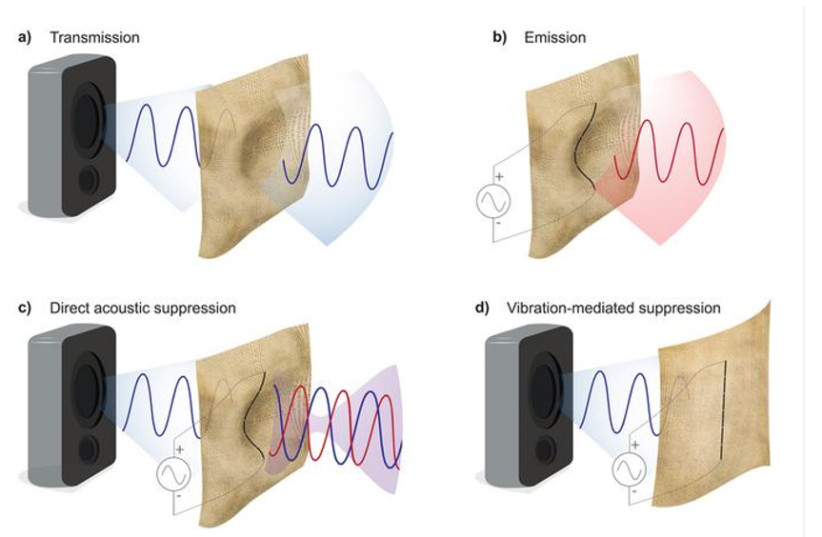
Science News: From Silk to silence: MIT unveils lightweight fabric that can tackle noise pollution


From Silk to silence: MIT unveils lightweight fabric that can tackle noise pollution


US researchers engineered a fabric as thin as a human hair to create a lightweight, compact, and efficient way to reduce noise transmission.


Saturday, May 11, 2024

Space News: Ozone has a key role in influencing the climate of habitable exoplanets


Ozone has a key role in influencing the climate of habitable exoplanets


The findings of a team led by Hebrew University researchers reveal a relationship between ozone levels and atmospheric stability.


Ozone, the highly reactive gas composed of three oxygen atoms that is both a natural and a man-made product that occurs in the Earth’s upper atmosphere (the stratosphere) and lower atmosphere (the troposphere), can be good or bad for the Earth.

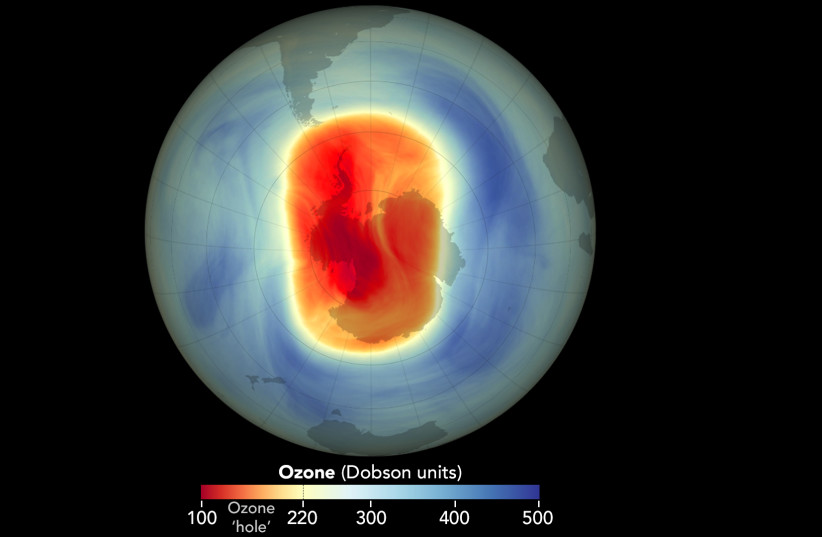
In the upper atmosphere, it is created naturally when ultraviolet radiation and oxygen mix. There, the ozone layer about 9.6 to 48 kilometers above the Earth’s surface, cuts the amount of harmful UV radiation reaching the Earth's surface; over parts of Australia, New Zealand, South Africa, Argentina, and Chile, there are ozone holes that expose residents to a lot of radiation.

In the lower atmosphere – what we breathe – ozone is formed mostly from photochemical reactions between two major classes of air pollutants – volatile organic compounds (VOC) and nitrogen oxides (NOx). Significant sources of VOC are chemical plants, petrol stations, oil-based paints, car garages, and print shops, power plants, industrial furnaces and boilers, cars and trucks. Ozone contributes to what we recognize as smog or haze.

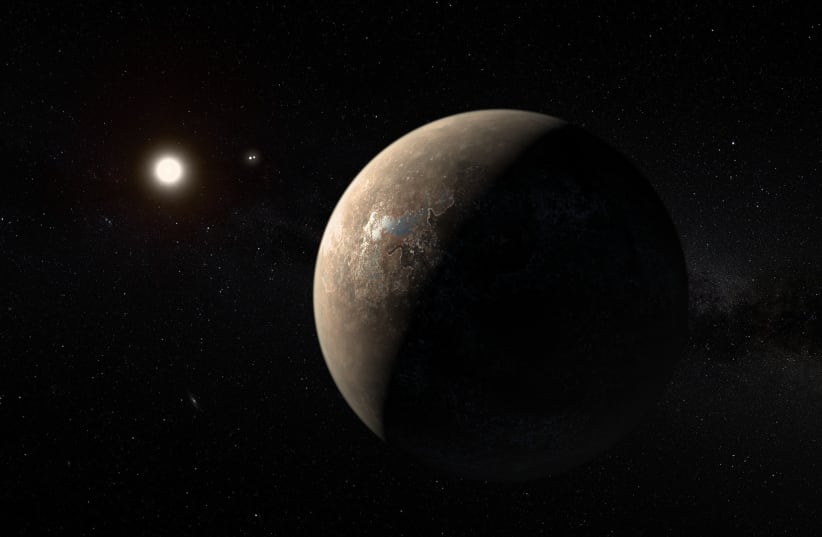
However, ozone is also a factor beyond our solar system – in exoplanets. In the quest for life beyond our solar system, a new study at the Hebrew University of Jerusalem (HU) investigates the atmospheric dynamics of planet Proxima Centauri b and ozone’s significant role in shaping planetary climates. The research signifies a significant leap forward in our understanding of habitable exoplanets.

A new study led by Dr. Assaf Hochman at HU’s Fredy and Nadine Herrmann Institute of Earth and his team has uncovered new insights into the atmospheres of Earth-like exoplanets


The 2023 Antarctic ozone hole reached its maximum size on September 21 NASA Earth Observatory Image of the Day for November 2, 2023 (credit: NASA Scientific Visualization Studio: Amy Moran, Lauren Dauphin, Paul Newman, Katie Jepson, Aaron E.)


The emergence of next-generation observatories, including the James Webb Space Telescope and advanced ground-based telescopes like ELTs, LIFE, and HWO, has ushered in a new era of exoplanetary exploration. 

The study led by Hochman in collaboration with Dr. Paolo De Luca of the Barcelona Supercomputing Center in Spain, Dr. Thaddeus Komacek of the University of Maryland, and Marrick Braam of the University of Edinburgh in Scotland focuses on the enigmatic Proxima Centauri b, an exoplanet tantalizingly close to the Earth’s solar system.

Researchers find connection between ozone levels and atmospheric stability

The team uncovered ozone’s role in shaping Proxima Centauri b's climate dynamics. Their findings, derived from sophisticated coupled climate chemistry model simulations and recent advances in dynamical systems theory, reveal a relationship between ozone levels and atmospheric stability.

“Imagine a world where ozone affects temperature and wind speed and holds the key to a planet's very habitability” Hochman said. “Our study unveils this intricate connection and underscores the importance of considering interactive ozone and other photochemical species in our quest to understand Earth-like exoplanets.”

The research paper has been published in Monthly Notices of the Royal Astronomical Society under the title “The Impact of Ozone on Earth-like Exoplanet Climate Dynamics: The Case of Proxima Centauri b”. 

Major findings from the study reveal the impact of interactive ozone on the planet’s atmospheric properties. Notably, the research highlights the significant influence of ozone on atmospheric temperature distribution and wind patterns. By incorporating ozone's influence, the team observed reduced hemispheric temperature differences and increased atmospheric temperature at specific altitudes, hinting at the delicate balance between the atmosphere’s chemical composition and climate dynamics.

Furthermore, the study unveils a framework for comprehending the influence of photochemical species on the climate dynamics of exoplanets, opening the door to a deeper understanding of habitable environments beyond our solar system.

“We stand at the brink of a new era in exoplanetary exploration,” enthused Hochman. “With each discovery, we inch closer to unraveling the mysteries of distant worlds and perhaps even finding signs of life beyond Earth.”

The team said their study advances our knowledge of Proxima Centauri b and lays the groundwork for future investigations into exoplanetary atmospheres. By extending this framework to other potentially habitable exoplanets, scientists aim to unravel the diverse range of atmospheric compositions and climate regimes across the cosmos, allowing a better understanding of Earth’s climate dynamics, they concluded.      


THIS PAGE WAS POSTED BY SPUTNIK ONE OF THE SPUTNIKS ORBIT BLOG   HTTPS://DISQUS.COM/HOME/FORUM/THESPUTNIKSORBIT-BLOGSPOT-COM/