Sunday, February 19, 2023

Leonardo da Vinci’s Forgotten Gravity Experiments Show He Was Centuries Ahead of His Time

By CALIFORNIA INSTITUTE OF TECH. FEB. 18, 2023


Researchers, in an article published in the journal Leonardo, revealed that after re-examining one of da Vinci’s notebooks, they discovered that the renowned polymath had conducted experiments aimed at proving that gravity is a type of acceleration. Additionally, they found that he had developed a model for the gravitational constant, which was accurate to around 97%.

Engineers from Caltech have discovered that Leonardo da Vinci’s understanding of gravity—though not wholly accurate—was centuries ahead of his time.

In an article published in the journal Leonardo, the researchers draw upon a fresh look at one of da Vinci’s notebooks to show that the famed polymath had devised experiments to demonstrate that gravity is a form of acceleration—and that he further modeled the gravitational constant to around 97 percent accuracy.

Da Vinci, who lived from 1452 to 1519, was well ahead of the curve in exploring these concepts. It wasn’t until 1604 that Galileo Galilei would theorize that the distance covered by a falling object was proportional to the square of time elapsed and not until the late 17th century that Sir Isaac Newton would expand on that to develop a law of universal gravitation, describing how objects are attracted to one another. Da Vinci’s primary hurdle was being limited by the tools at his disposal. For example, he lacked a means of precisely measuring time as objects fell.


Da Vinci’s experiments were first spotted by Mory Gharib, the Hans W. Liepmann Professor of Aeronautics and Medical Engineering, in the Codex Arundel, a collection of papers written by da Vinci that cover science, art, and personal topics. In early 2017, Gharib was exploring da Vinci’s techniques of flow visualization to discuss with students he was teaching in a graduate course when he noticed a series of sketches showing triangles generated by sand-like particles pouring out from a jar in the newly released Codex Arundel, which can be viewed online courtesy of the British Library.

“What caught my eye was when he wrote ‘Equatione di Moti‘ on the hypotenuse of one of his sketched triangles—the one that was an isosceles right triangle,” says Gharib, lead author of the Leonardo paper. “I became interested to see what Leonardo meant by that phrase.”


To analyze the notes, Gharib worked with colleagues Chris Roh, at the time a postdoctoral researcher at Caltech and now an assistant professor at Cornell University, as well as Flavio Noca of the University of Applied Sciences and Arts Western Switzerland in Geneva. Noca provided translations of da Vinci’s Italian notes (written in his famous left-handed mirror writing that reads from right to left) as the trio pored over the manuscript’s diagrams.

In the papers, da Vinci describes an experiment in which a water pitcher would be moved along a straight path parallel to the ground, dumping out either water or a granular material (most likely sand) along the way. His notes make it clear that he was aware that the water or sand would not fall at a constant velocity but rather would accelerate—also that the material stops accelerating horizontally, as it is no longer influenced by the pitcher, and that its acceleration is purely downward due to gravity.


If the pitcher moves at a constant speed, the line created by falling material is vertical, so no triangle forms. If the pitcher accelerates at a constant rate, the line created by the collection of falling material makes a straight but slanted line, which then forms a triangle. And, as da Vinci pointed out in a key diagram, if the pitcher’s motion is accelerated at the same rate that gravity accelerates the falling material, it creates an isosceles right triangle—which is what Gharib originally noticed that da Vinci had highlighted with the note “Equatione di Moti,” or “equalization (equivalence) of motions.”

Da Vinci sought to mathematically describe that acceleration. It is here, according to the study’s authors, that he didn’t quite hit the mark. To explore da Vinci’s process, the team used computer modeling to run his water vase experiment. Doing so yielded da Vinci’s error.

“What we saw is that Leonardo wrestled with this, but he modeled it as the falling object’s distance was proportional to 2 to the t power [with t representing time] instead proportional to t squared,” Roh says. “It’s wrong, but we later found out that he used this sort of wrong equation in the correct way.” In his notes, da Vinci illustrated an object falling for up to four intervals of time—a period through which graphs of both types of equations line up closely.

“We don’t know if da Vinci did further experiments or probed this question more deeply,” Gharib says. “But the fact that he was grappling with this problem in this way—in the early 1500s—demonstrates just how far ahead his thinking was.”

The paper is titled “Leonardo da Vinci’s Visualization of Gravity as a Form of Acceleration.”


Recommend this post and follow
Sputnik's Orbit


Posted by Chuck

https://disqus.com/home/forum/lifeofearth/

Saturday, February 18, 2023

Polarized shockwaves shake the universe's cosmic web

FEBRUARY 16, 2023, 
by International Centre for Radio Astronomy Research

A composite image showing the magnetic fields of the cosmic web, featuring a pull out of how radio data was stacked.
 Credit: Vernstrom et al. 2023

ICRAR researchers have discovered tantalizing evidence of magnetic fields in the universe's largest cosmic structures.

The cosmic web is how the universe looks at its largest scale—an interweaving web of filaments and clusters full of gases and galaxies which wind around cosmic voids millions of lightyears across.

This universe-spanning web was predicted by astrophysicists in the 1960s, with computer modeling giving us a glimpse of how this vast network truly looked in the 1980s.

Over the course of the past few decades, we've been able to map the Cosmic Web through observation, bringing with it the possibility of answering some of astronomy's biggest questions.

An area of particular interest is how magnetic fields behave on a cosmic scale, and what role they play in both galactic and cosmic structure formation.

New research published today in Science Advances and led by the International Center for Radio Astronomy Research (ICRAR) in partnership with CSIRO, Australia's national science agency, is helping us to further understand these cosmic magnetic fields.

A composite image of 3 different observations of the cosmic web (gas, radio and magnetic) accompanied by a composite image. 
Credit: Credit: F. Vazza, D. Wittor and J. West, Composition by K. Brown

Dr. Tessa Vernstrom from The University of Western Australia's (UWA) node of ICRAR, is the lead author of the research and describes magnetism as a fundamental force in nature.

"Magnetic fields pervade the universe—from planets and stars to the largest spaces in-between galaxies. However, many aspects of cosmic magnetism are not yet fully understood, especially at the scales seen in the cosmic web. When matter merges in the universe, it produces a shockwave which accelerates particles, amplifying these intergalactic magnetic fields," said Dr. Vernstrom.

Her research has recorded radio emissions coming from the cosmic web—the first observational evidence of strong shockwaves.
This phenomenon had previously only been observed in the universe's largest galaxy clusters and was predicted to be the "signature" of matter collisions throughout the cosmic web.

See article for short vid here CC

"These shockwaves give off radio emissions which should result in the cosmic web 'glowing' in the radio spectrum, but it had never really been conclusively detected due to how faint the signals are."

Dr. Vernstrom's team began searching for the cosmic web's "radio glow" in 2020 and initially found signals which could be attributed to these cosmic waves.

However, as these initial signals could have included emissions from galaxies and celestial objects other than the shockwaves, Vernstrom opted for a different signal type with less background "noise"—polarized radio light.

"As very few sources emit polarized radio light, our search was less prone to contamination and we have been able to provide much stronger evidence that we are seeing emissions from the shockwaves in the largest structures in the universe, which helps to confirm our models for the growth of this large-scale structure."

The research utilized data and all-sky radio maps from the Global Magneto-Ionic Medium Survey, the Planck Legacy Archive, the Owens Valley Long Wavelength Array, and the Murchison Widefield Array, stacking the data over the known clusters and filaments in the cosmic web.

The stacking method helps to strengthen the faint signal above the image noise, which was then compared to state-of-the-art cosmological simulations generated through the Enzo Project.

These simulations are the first of their kind to include predictions of the polarized radio light from the cosmic shockwaves observed as part of this research.

Our understanding of these magnetic fields could be used to expand and refine our theories on how the universe grows and has the potential to help us solve the mystery of the origins of cosmic magnetism.


Recommend this post and follow
Sputnik's Orbit


Posted by Chuck

https://disqus.com/home/forum/lifeofearth/

Space News: New steps in measuring the age of the universe discovered - study


New steps in measuring the age of the universe discovered - study


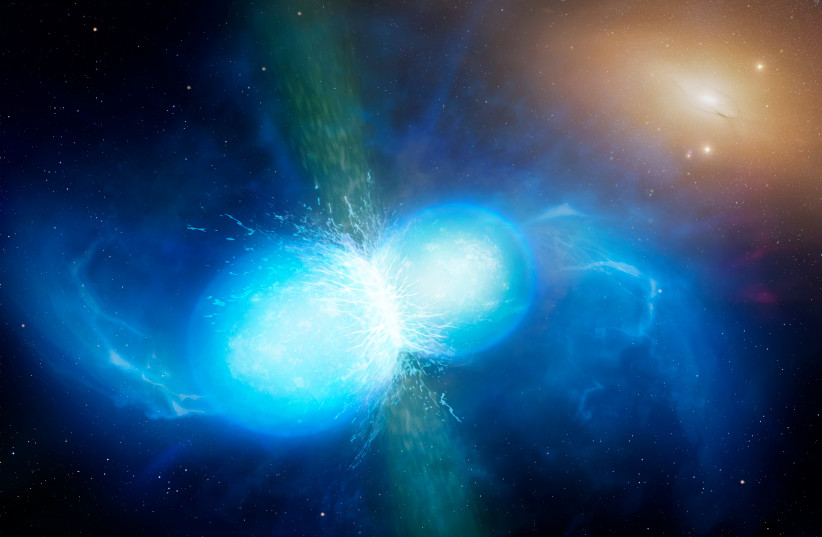
Scientists have confirmed the shape of a Kolovae, which may be the next step in dating the Universe's creation.


Friday, February 17, 2023

Technology News: Traffic lights 'could be obsolete in 20 years' after UK driverless cars trial


Traffic lights 'could be obsolete in 20 years' after UK driverless cars trial


At the same time that the UK's first trial of driverless technology involving roadside infrastructure found success, in the US, Tesla recalled more than 300,000 vehicles after concerns over self-driving software.

By Sky News, Friday 17 February 2023 

                  The Nissan Leaf, driving itself around Woolwich. Pic: ServCity Dynamic

Traffic lights could be made obsolete within 20 years, an engineer has claimed, after a landmark trial of driverless vehicles in the UK.

The two-year trial saw two self-driving cars built by Nissan complete hundreds of laps round a 2.7-mile long route in Woolwich, southeast London.

Believed to be the UK's first trial of driverless technology involving the use of roadside infrastructure as well as the vehicles' own systems, it formed part of the ServCity project.

Around 270 cameras placed on the route allowed the Japanese-made Nissan Leaf cars to predict potential warnings, such as buses stopped in lanes, enabling them to swiftly change lanes.

Smart Mobility Living Lab (SMLL) engineer Thomas Tompkin claimed the trial showed a "seismic shift in the way our roads are laid out" is possible.

He said: "If we think about maybe 20 or 30 years time, can you start to then think about the infrastructure outside?

"Can you start to remove some of that infrastructure, such as traffic signals?

"Obviously, there's a lot of work to be done before that ever takes place.

"But that's where you can start to see a seismic shift in the way our roads are laid out."

Pic: ServCity Dynamic
Image:                                                   Pic: ServCity Dynamic

The prospect of self-driving vehicles has, in the past, been backed by the UK government, which expressed its commitment to introducing legislation that will enable their use.

It has also invested £7m into the ServCity project in order to be at the "forefront of innovation", according to transport minister Jesse Norman.

Currently, high-specification roadside systems cost approximately £1m per kilometre, but Mr Tompkin believes a wider rollout of more basic technology could be done for a fraction of the price.

Increasing the risk of an accident

Meanwhile, in the US, Tesla recently announced it is recalling 362,000 cars over fears their full self-driving (FSD) software may cause a crash.

Watchdog NHTSA, which has been conducting an investigation into the company's autopilot systems, said Tesla's software allows a vehicle to "exceed speed limits or travel through intersections in an unlawful or unpredictable manner", increasing the risk of an accident.

"Possible situations where the problem could occur include travelling or turning through certain intersections during a yellow traffic light and making a lane change out of certain turn-only lanes to continue travelling straight," the regulator said in a statement.

Tesla said it was not aware of any injuries or deaths that may be related to the recall issue.


PLEASE RECOMMEND THIS PAGE & FOLLOW THE SPUTNIKS ORBIT AT HTTPS://DISQUS.COM/HOME/FORUM/THESPUTNIKSORBIT-BLOGSPOT-COM

New quantum sensing technique reveals magnetic connections

FEB. 16, 2023, by Leah Hesla, Argonne National Laboratory

Credit: CC0 Public Domain

Say you notice a sudden drop in temperature on both your patio and kitchen thermometers. At first, you think it's because of a cold snap, so you crank up the heat in your home. Then you realize that while the outside has indeed become colder, inside, someone left the refrigerator door open.

Initially, you thought the temperature drops were correlated. Later, you saw that they weren't.

Recognizing when readings are correlated is important not only for your home heating bill but for all of science. It's especially challenging when measuring properties of atoms.

Now scientists have developed a method, reported in Science, that enables them to see whether magnetic fields detected by a pair of atom-scale quantum sensors are correlated or not.

The ability to distinguish between standalone and correlated environments at the atomic scale could have enormous impacts in medicine, navigation and discovery science.
What happened

A team of scientists at Princeton University and the University of Wisconsin-Madison developed and demonstrated a new technique for teasing out whether magnetic fields picked up by multiple quantum sensors are correlated with each other or independent.

The team focused on a type of diamond-based sensor called a nitrogen-vacancy center, or NV center, which consists of a nitrogen atom next to an atom-sized hole in the crystal of carbon atoms that make up diamond.

Typically, scientists measure the magnetic field strength at a single NV center by averaging multiple readings; or they might take an average reading of many NV centers at once.

While helpful, average values provide only so much information. Knowing that the average temperature in Wisconsin will be 42 degrees Fahrenheit tomorrow tells you little about how much colder it will be at night or in the northern part of the state.

"If you want to learn not just the value of the magnetic field at one location or at one point in time, but whether there's a relationship between the magnetic field at one location and the magnetic field at another nearby—there wasn't really a good way to do that with these NV centers," said paper co-author Shimon Kolkowitz, associate professor at the University of Wisconsin-Madison and Q-NEXT collaborator. Q-NEXT is a U.S. Department of Energy (DOE) National Quantum Information Science Research Center led by DOE's Argonne National Laboratory.

The team's new method uses multiple simultaneous readings of two NV centers. Using sophisticated computation and signal-processing techniques, they obtained information about the relationship between the magnetic fields at both points and could say whether the two readings resulted from the same source.

"Were they seeing the same magnetic field? Were they seeing a different magnetic field? That's what we can get from these measurements," Kolkowitz said. "It's useful information that no one had access to before. We can tell the difference between the global field that both sensors were seeing and those that were local."

Why it matters

Quantum sensors harness the quantum properties of atoms or atom-like systems to pick up tiny signals—such as the magnetic fields arising from the motion of single electrons. These fields are 100,000 times weaker than that of a refrigerator magnet. Only ultrasensitive tools such as quantum sensors can make measurements at nature's smallest scales.

Quantum sensors are expected to be powerful. NV centers, for example, can distinguish features separated by a mere one ten-thousandth of the width of a human hair. With that kind of hyperzoom capability, NV centers could be placed in living cells for an inside, up-close look at how they function. Scientists could even use them to pinpoint the causes of disease.

"What make NVs special is their spatial resolution," Kolkowitz said. "That's useful for imaging the magnetic fields from an exotic material or seeing the structure of individual proteins."

With the Kolkowitz team's new method for sensing magnetic field strengths at multiple points simultaneously, scientists could one day be able to map atom-level changes in magnetism through time and space.

How it works

How did the team make these informative measurements? They got granular.

Rather than average over many raw values to arrive at the overall magnetic field strength, the researchers kept track of individual readings at each NV center, and then applied a mathematical maneuver called "covariance" to the two lists.

Comparing the covariance-calculated figures—which capture more detail than a couple of raw averages—let them see whether the fields were correlated.

"We're doing that averaging differently than what's been done in the past, so we don't lose this information in the process of averaging," Kolkowitz said "That's part of what's special here."

So why hasn't covariance magnetometry, as the method is called, been tested before now?

For one, the team had to build an experimental setup for taking simultaneous measurements at multiple NV centers. This microscope was built by the team at Princeton, led by Professor Nathalie de Leon, a member of the Co-Design Center for Quantum Advantage, another DOE National Quantum Information Science Research Center, led by Brookhaven National Laboratory.

For another, covariance magnetometry works only when the individual measurements of these tiny magnetic fields are highly reliable. (A readout is only as good as its contributing measurements.) That's why the researchers used a special technique called spin-to-charge conversion, which produces a raw reading with more information about the magnetic field for each measurement than other commonly used tools.

With spin-to-charge conversion, individual measurements take longer. That's the price scientists pay for higher reliability.

However, when combined with covariance to measure minuscule, correlated magnetic fields, it saves buckets of time.

"Using the conventional method, you'd have to average for 10 full days continuously to get one piece of data to say that you saw this correlated nanotesla signal," Kolkowitz said, "whereas with this new method, it's an hour or two."

By integrating covariance information with spin-to-charge conversion, researchers can gain access to atomic and subatomic details they didn't have before, supercharging the already powerful capabilities of quantum sensing.

"As far as I know, this is something people hadn't tried to do, and that's why we see these correlations where nobody else was able to," Kolkowitz said. "You really win from that."


Recommend this post and follow
Sputnik's Orbit


Posted by Chuck

Thursday, February 16, 2023

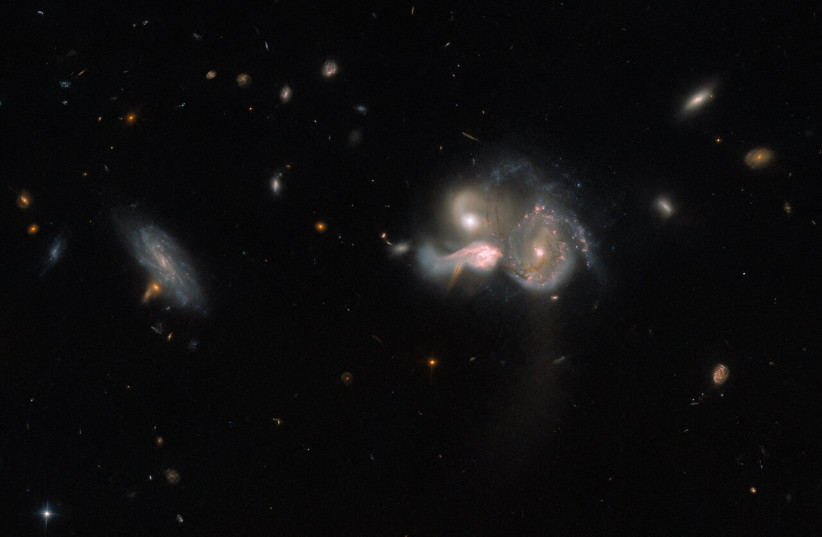
Space News: NASA's Hubble captures image of 3 galaxies colliding and merging together


NASA's Hubble captures image of 3 galaxies colliding and merging together


The three galaxies in question have been designated as SDSSCGB 10189 and are in the process of merging into one massive galaxy. A similar fate will befall the Milky Way in 4.5 billion years.


Tuesday, February 14, 2023

Defense News: Israel’s Steadicopter joins forces with Emirates Defense Technology


Israel’s Steadicopter joins forces with Emirates Defense Technology


The two companies will offer, a lightweight unmanned robotic helicopter that meets various challenges faced by HLS, military forces and law enforcement agencies

By Israel Defense, 02/12/2023

                                                         Photo: Steadicopter website

Emirates Defense Technology (EDT) a leading UAE-based integrator for comprehensive defense solutions, and Steadicopter – a Israeli company and leader in the Rotary Unmanned Aerial Systems (RUAS) industry, are joining forces regarding the supply of Steadicopter’s advanced rotary tactical unmanned aerial systems. The two companies will adapt Steadicopter’s RUAV products to meet the emerging requirements of various customers within the UAE and other specific market segments.  

 “As EDT continues to serve its customers with innovative, novel, unique, tailor-made solutions, we had scouted Steadicopter and its Eagle family – a platform of solutions which fits synergistically with other solutions manufactured in the region,” says Mohamed Bin Jabr Al Suwaidi, Owner & CEO of EDT.

“We found that Steadicopter’s systems, which are used by various armed forces around the world and have already been operationally proven in various missions, meet the highest standards and needs of our customers. We are proud to launch them in the UAE, using both companies’ strengths and relevant accumulated experience, and anticipate that this will be a long-term cooperation that will cater to the needs of various defense and HLS organizations. We continue to prioritize investments and partnerships that meet current and future needs.”

“We thank EDT for expressing confidence in the unique and proven systems developed by Steadicopter,” says Noam Lidor, VP Sales, Marketing & Business Development at Steadicopter. “We believe that, together, we will be able to provide comprehensive solutions for various end users. At the upcoming IDEX exhibition in Abu Dhabi, we will for the first time present the Black Eagle 50H in its new configuration, for the benefit of intelligence missions in challenging environmental conditions, and the protection of land and sea borders.”

Steadicopter’s Eagle family delivers exceptional, unprecedented, proven solutions for a wide range of military, HLS and civilian applications. The Eagle family provides full-featured solutions for any in-field requirement, enabling vertical take-off and landing and steady hovering, with advanced mission sensor suites for day and night operation. Weighing only ~20 kg as a platform, each model has the capacity to carry additional batteries for longer flights, heavier payloads and more.

The Black Eagle 50H is the first ever hybrid-powered unmanned helicopter. With a maximum takeoff weight of 50 kg, the system can carry multiple payloads, and is capable of up to five hours of flight time – extremely high endurance when compared to other VTOL platforms when carrying such heavy payloads. This enables high performance and maximum operational flexibility for various applications, such as military, low intensity conflict, law enforcement, search & rescue, cyber security, intelligence, offshore rigs and strategic infrastructure protection, high-end maritime missions and civilian applications. 


PLEASE RECOMMEND THIS PAGE & FOLLOW THE SPUTNIKS ORBIT AT HTTPS://DISQUS.COM/HOME/FORUM/THESPUTNIKSORBIT-BLOGSPOT-COM


Monday, February 13, 2023

SpaceX ignites giant Starship rocket in crucial pad test

FEBRUARY 10, 2023, by Marcia Dunn

In this image from video made available by SpaceX, a Starship first-stage Super Heavy booster performs an engine-firing test at the launch pad in Boca Chica, Texas, on Thursday, Feb. 9, 2023. 
Credit: SpaceX via AP

SpaceX is a big step closer to sending its giant Starship spacecraft into orbit, completing an engine-firing test at the launch pad on Thursday.

Thirty-one of the 33 first-stage booster engines ignited simultaneously for about 10 seconds in south Texas. The team turned off one engine before sending the firing command and another engine shut down—"but still enough engines to reach orbit!" tweeted SpaceX's Elon Musk.

Musk estimates Starship's first orbital test flight could occur as soon as March, if the test analyses and remaining preparations go well.

The booster remained anchored to the pad as planned during the test. There were no signs of major damage to the launch tower.

NASA is counting on Starship to ferry astronauts to the surface of the moon in a few years, linking up with its Orion capsule in lunar orbit. Further down the road, Musk wants to use the mammoth Starships to send crowds to Mars.

Only the first-stage Super Heavy booster, standing 230 feet (69 meters) tall, was used for Thursday's test. The futuristic second stage—the part that will actually land on the moon and Mars—was in the hangar being prepped for flight.

Altogether, Starship towers 394 feet (120 meters), making it the biggest and most powerful rocket ever built. It's capable of generating 17 million pounds of liftoff thrust, almost double that of NASA's moon rocket that sent an empty capsule to the moon and back late last year.

SpaceX fired up to 14 Starship engines last fall and completed a fueling test at the pad last month.

Flocks of birds scattered as Starship's engines came alive and sent thick dark plumes of smoke across the Starship launch complex, dubbed Starbase. It's located at the southernmost tip of Texas near the village of Boca Chica, close to the Mexican border.


Recommend this post and follow
Sputnik's Orbit

Sunday, February 12, 2023

Novel Experiment Sheds New Light on the Mechanism of Cosmic Magnetic Fields

By DOE/US DEPARTMENT OF ENERGY FEBRUARY 11, 2023

Contours of magnetic fields that emerge a result of self-organization of microscopic currents resulting from the Weibel instability in a carbon dioxide laser-produced plasma probed by an ultrashort relativistic electron beam.
 Credit:  Chaojie Zhang, the University of California Los Angeles


A groundbreaking experiment offers new insights into the potential mechanism that could seed magnetic fields for the galactic dynamo.

The Science

Plasma is a state of matter where the intense heat causes the separation of electrons from atoms, resulting in a mixture of free-floating electrons and ionized atoms. This ionized gas, known as plasma, constitutes the majority of the observable universe. Recent findings indicate that magnetic fields can emerge spontaneously within plasma. This occurs when there is a variation in temperature along different spatial directions, a phenomenon referred to as temperature anisotropy. This mechanism is referred to as the Weibel instability.

It was predicted by plasma theorist Eric Weibel more than six decades ago but only now has been unambiguously observed in the laboratory. The new research finds that this process can convert a significant fraction of the energy stored in the temperature anisotropy into magnetic field energy. It also finds that the Weibel instability could be a source of magnetic fields that permeate throughout the cosmos.

The Impact

The matter in our observable universe is plasma state and it is magnetized. Magnetic fields at the micro-gauss level (about a millionth of the Earth’s magnetic fields) permeate the galaxies. These magnetic fields are thought to be amplified from weak seed fields by the spiral motion of the galaxies, known as the galactic dynamo.

How the seed magnetic fields are created is a longstanding question in astrophysics. This new work offers a possible solution to this vexing problem of the origin of the microgauss level seed magnetic fields. The research used a novel platform that has great potential for studying the ultrafast dynamics of magnetic fields in the laboratory plasmas that are relevant to astro- and high-energy-density physics.

Summary

First theorized six decades ago, the Weibel instability driven by temperature anisotropy is thought to be an important mechanism for the self-magnetization of many laboratory and astrophysical plasmas. However, scientists have faced two challenges in unambiguously demonstrating the Weibel instability. First, until recently, researchers were not able to generate a plasma with a known temperature anisotropy as initially envisioned by Weibel. Second, researchers had no suitable technique to measure the complex and rapidly evolving topology of the magnetic fields subsequently generated in the plasma.

This work, enabled by the unique capability of the Accelerator Test Facility, a Department of Energy (DOE) user facility at Brookhaven National Laboratory, employed a novel experimental platform that allowed the researchers to create a hydrogen plasma with a known highly anisotropic electron velocity distributions on a tens of trillionth of a second timescale by using an ultrashort but intense carbon dioxide laser pulse.

The subsequent thermalization of the plasma occurs via self-organization of plasma currents that produces magnetic fields driven by Weibel instability. These fields are large enough to deflect relativistic electrons to reveal an image of the magnetic fields a certain distance from the plasma. The researchers obtained a movie of the evolution of these magnetic fields with exquisite spatiotemporal resolution by using an one picosecond relativistic electron beam to probe these fields.

Reference: “Mapping the self-generated magnetic fields due to thermal Weibel instability” by Chaojie Zhang, Yipeng Wu, Mitchell Sinclair, Audrey Farrell, Kenneth A. Marsh, Irina Petrushina, Navid Vafaei-Najafabadi, Apurva Gaikwad, Rotem Kupfer, Karl Kusche, Mikhail Fedurin, Igor Pogorelsky, Mikhail Polyanskiy, Chen-Kang Huang, Jianfei Hua, Wei Lu, Warren B. Mori and Chan Joshi, 5 December 2022, Proceedings of the National Academy of Sciences.
DOI: 10.1073/pnas.2211713119

The study was funded by the Department of Energy (DOE) Office of Science, the National Science Foundation, and the NSF Graduate Research Fellowships Program. The Accelerator Test Facility is supported by the DOE Office of Science. The principal investigator’s work at UCLA is supported by the National Science Foundation (NSF), the DOE Office of Science High Energy Physics program, and the NSF Graduate Research Fellowships Program.


Recommend this post and follow
Sputnik's Orbit


Posted by Chuck