
Mummy research unveils Ötzi the Iceman's unexpected ancestry
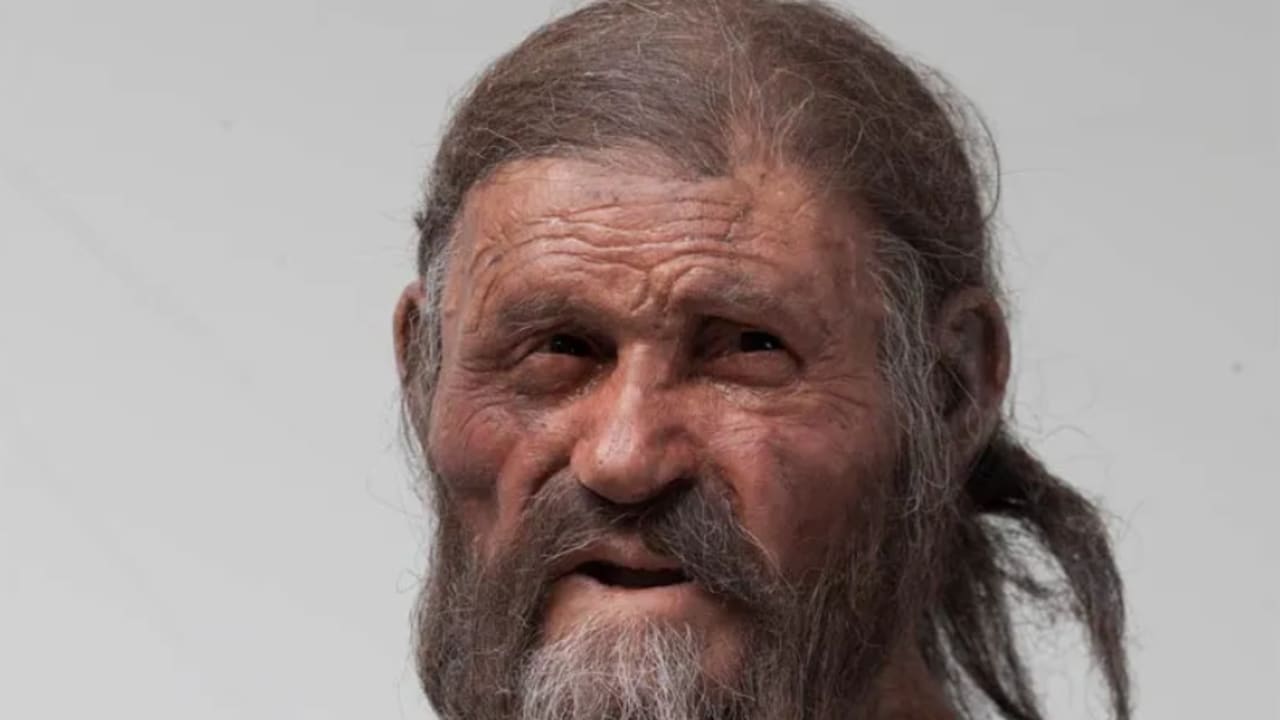 |
| A reconstruction of Ötzi the Iceman. (photo credit: Kennis © South Tyrol Museum of Archaeology) |
Scientists from the Institute for Mummy Studies in Bolzano, Italy, analyzed the genomes of 47 individuals who lived in the Tyrolean Alps from the Mesolithic to the Bronze Age (6400-1300 BCE), including 15 new samples from the Copper Age. Their research aimed to investigate whether Ötzi's contemporaries had similar genetic ancestry or differed significantly.
"Our analyses suggest that the Iceman, compared to other individuals of the same period, comes from a different group of farmers," said Valentina Coia, a researcher at the Institute for Mummy Studies in Bolzano, Italy, according to Live Science. "But this can only be discovered if we have more data on Neolithic individuals from Anatolia and northern Italy."
The study found that while most of these prehistoric Alpine inhabitants shared a homogeneous genomic structure, especially along the paternal line, Ötzi's genetic profile stood out as distinct. Almost all the men among the analyzed individuals had a Y chromosome prevalent among prehistoric populations of Germany and France, suggesting a close-knit male lineage in the region.
In contrast, Ötzi's paternal lineage was rare and more widely distributed compared to the similar paternal lineages of the prehistoric Alpine men. Additionally, his maternal lineage has never been identified in other ancient or modern individuals, which may indicate its extinction.
"But when looking more closely at the DNA to understand lineages, we were able to compare the results with those of the Iceman and found that it differs from the other Alpine samples in the area," Coia explained, according to Live Science. This divergence suggests that Ötzi may have originated from a different wave of farmers' migrations, distinct from those that settled in the Alps.
The researchers noted that the genomic structure of these ancient inhabitants was homogeneous, especially on the paternal line, while their maternal lineages were diverse. This pattern suggests that women may have been marrying into a close-knit group of men, leading to high uniformity of Y chromosomes alongside diversity in mitochondrial DNA.
"The diversity in mitochondrial DNA suggests that women came from outside, entering the community through marriage," Coia said. "Copper Age communities may have been organized in a patrilineal manner, around male lineages."
Both Ötzi and his neighbors likely had brown eyes associated with dark brown to black hair color. "These [people] likely had brown eyes associated with dark brown to black hair colour (similarly to the Iceman)," the researchers wrote, according to Live Science.
The study found that most ancient inhabitants of the region had a high proportion of Anatolian agricultural ancestry—approximately 80-90%—and a low proportion of hunter-gatherer ancestry. This high level of farmer ancestry was also observed in Ötzi, who previous studies suggested had "unusually high Anatolian farmer ancestry."
However, despite these similarities in overall ancestry, Ötzi differed from his Alpine peers in his paternal and maternal lineages. "Perhaps the Iceman, compared to other individuals of the same period, comes from a different group of farmers," Coia speculated. "Without further data from the Neolithic period from Anatolia and northern Italy, a definitive interpretation is difficult."
Ötzi's mummified and frozen corpse was discovered by tourists in 1991 in the Ötztal Alps on the border between Austria and Italy. Murdered over 5,300 years ago under unknown circumstances, Ötzi remains one of prehistoric Europe's most enigmatic figures, continuing to intrigue scientists and the public alike.
Prior to this study, only two genomes of Copper Age people from the eastern Italian Alps had been analyzed. The addition of 15 new genomes from Ötzi's neighbors is improving researchers' understanding of the lives of people who lived in this cold, high-altitude region.
"Ötzi may have originated from a completely different genetic circle," Coia suggested. Further research and more genetic data from Neolithic individuals in Anatolia and northern Italy may be needed to fully unravel the mysteries surrounding Ötzi's unique ancestry.
Written with the help of a news-analysis system.


No comments:
Post a Comment