Saturday, May 11, 2024

Unprecedented Sound Waves – New Metamaterial Redefines Wave Amplification

By AMOLF MAY 7, 2024

Artist impression of the bosonic Kitaev chain: multiple mechanical string resonators are linked to form a chain using light. Mechanical vibrations (sound waves) are transported and amplified along the chain. Credit: Ella Maru Studio

Researchers at AMOLF, working alongside colleagues from Germany, Switzerland, and Austria, have realized a new type of metamaterial through which sound waves flow in an unprecedented fashion. It provides a novel form of amplification of mechanical vibrations, which has the potential to improve sensor technology and information processing devices.

This metamaterial is the first instance of a so-called ‘bosonic Kitaev chain’, which gets its special properties from its nature as a topological material. It was realized by making nanomechanical resonators interact with laser light through radiation pressure forces. The discovery, which is published on March 27 in the renowned scientific journal Nature, was achieved in an international collaboration between AMOLF, the Max Planck Institute for the Science of Light, the University of Basel, ETH Zurich, and the University of Vienna.

The ‘Kitaev chain’ is a theoretical model that describes the physics of electrons in a superconducting material, specifically a nanowire. The model is famous for predicting the existence of special excitations at the ends of such a nanowire: Majorana zero modes. These have gained intense interest because of their possible use in quantum computers.

AMOLF group leader Ewold Verhagen: “We were interested in a model that looks mathematically identical, but describes waves like light or sound, instead of electrons. Since such waves consist of bosons (photons or phonons) rather than fermions (electrons), their behavior is expected to be very different. Nonetheless, in 2018 it was predicted that a bosonic Kitaev chain exhibits fascinating behavior that is not known of any natural material, nor of any metamaterial to date. While many scientists were interested, experimental realization remained elusive.”
Optical Springs

The bosonic Kitaev chain is essentially a chain of coupled resonators. It is a metamaterial, i.e., a synthetic material with engineered properties: the resonators can be thought of as the ‘atoms’ of a material, and the way they are coupled together controls the collective metamaterial behavior; in this case the propagation of sound waves along the chain.

“The couplings – the links of the bosonic Kitaev chain – need to be special, and can’t be made with regular springs, for example,” says first author of the Nature paper Jesse Slim, who graduated cum laude last year. “We realized that we could experimentally create the required links between nanomechanical resonators – small vibrating silicon strings on a chip – by coupling them with the help of forces exerted by light; thus creating ‘optical’ springs. Carefully varying the intensity of a laser over time then allowed linking five resonators and implementing the bosonic Kitaev chain.”

Exponential Amplification

The result was striking.

“The optical coupling mathematically resembles the superconducting links in the fermionic Kitaev chain,” says Verhagen. “But uncharged bosons do not exhibit superconductivity; instead, optical coupling adds amplification to the nanomechanical vibrations. As a result, sound waves, which are the mechanical vibrations propagating through the array, are exponentially amplified from one end to the other. Interestingly, in the opposite direction transmission of vibrations is forbidden. And even more intriguing, if the wave is delayed a bit – by a quarter of an oscillation period – the behavior is completely inverted: the signal is amplified backward and blocked forwards. The bosonic Kitaev chain thus acts like a unique type of directional amplifier, which could have interesting applications for signal manipulation, in particular in quantum technology.”

Topological Metamaterial

The interesting properties of Majorana zero modes in the electronic Kitaev chain are linked to the fact that the material is topological. In topological materials, certain phenomena are invariably connected to the general mathematical description of the material. Those phenomena are then topologically protected, meaning that they are guaranteed to exist, even if the material suffers from defects and perturbations.

The understanding of topological materials was awarded the Nobel Prize of physics in 2016, but this encompassed only materials that do not feature amplification or damping. The description of topological phases that do include amplification is still a topic of intense research and debate. Together with theory collaborators Clara Wanjura (Max Planck Institute for the Science of Light), Matteo Brunelli (University of Basel), Javier del Pino (ETH Zurich), and Andreas Nunnenkamp (University of Vienna), the AMOLF researchers showed that the bosonic Kitaev chain is in fact a new topological phase of matter.

The observed directional amplification is a topological phenomenon associated with this phase of matter, as the theory collaborators predicted in 2018. They demonstrated a unique experimental signature of the topological nature of the metamaterial: if the chain is closed, such that it forms a ‘necklace’, amplified sound waves in the ring of resonators keep circulating and reach a very high intensity, similar to how strong light beams are generated in lasers.

Boosting Sensor Performance?

Verhagen: “Because of topological protection, the amplification is in principle insensitive to disturbances. But interestingly, the chain is in fact extra sensitive to one particular type of disturbance; if the frequency of the last resonator on the chain is slightly perturbed, the amplified signals along the chain can suddenly travel backward again, experiencing amplification a second time. The result is that the system is very sensitive to such a small perturbation, which could be caused by the mass of a molecule adhering to the resonator or a qubit interacting with it.”

With the ERC Consolidator Grant that he recently acquired, Verhagen wants to investigate the possibilities to enhance the sensitivity of nanomechanical sensors in these systems. “We have seen the first indications of the sensing capabilities in our experiments, which is very exciting. We now need to investigate in more detail how these topological sensors work, whether the sensitivity is boosted in the presence of various types of noise sources, and which interesting sensor technologies can benefit from these principles. This is just the beginning of that endeavor.”


Recommend this post and follow
Sputnik's Orbit

Thursday, May 9, 2024

Defense News: Lufthansa Interested in Purchasing Elbit’s Hermes Drones


Lufthansa Interested in Purchasing Elbit’s Hermes Drones


The project concerns an offer to deliver and maintain up to eight of the Israeli Hermes 900 Starliner drones for the German Navy


By Eyal Boguslavsky,, Israel Defense, 09/05/2024


                                                   Photo: Elbit Systems Website


A spokesperson for the German flagship carrier Lufthansa announced this week that the company will collaborate with Israel’s Elbit Systems on military drones through its maintenance subsidiary, Lufthansa Technik. 


The website stated that the companies signed a memorandum of understanding in January of this year, but a formal contract has yet to be signed. The project involves an offer to deliver and maintain up to eight Israeli Hermes 900 Starliner drones for the German Navy.


Photo IDF spokesman


Lufthansa Technik will be responsible for maintenance and staff training, while Elbit will oversee the production of the drones. The project's value was not disclosed by either side.


This marks the first military drone project for the subsidiary of the German flagship carrier. Its defense business includes servicing and maintaining NATO's staple aircraft, such as the F-35 fighter jets, the Chinook transport helicopters, and the Poseidon reconnaissance planes.


THIS PAGE WAS POSTED BY SPUTNIK ONE OF THE SPUTNIKS ORBIT BLOG   HTTPS://DISQUS.COM/HOME/FORUM/THESPUTNIKSORBIT-BLOGSPOT-COM/

Wednesday, May 8, 2024

Defense News: U.S. Expands Number of Units Engaged in EW and Spectrum Warfare


U.S. Expands Number of Units Engaged in EW and Spectrum Warfare


The units will be integrated into combat scenarios to assist, among other things, the Air Force in seizing vast amounts of information

By Dan Arkin, Israel Defense, 07/05/2024

https://www.israeldefense.co.il/en/node/61938

                                                    U.S. Army photo by Staff Sgt. LaShic Patterson

The U.S. Air Force has added two new squadrons to its 350th Spectrum Warfare Wing. 

The 563rd Electronic Warfare Squadron (EWS) will focus on the development and distribution of programs and applications relevant to the field. It will operate from Lackland Air Force Base in Texas. The 388th EWS  will specialize in assessing adversaries' capabilities in this domain and operate from Eglin Air Base in Florida. 


THIS PAGE WAS POSTED BY SPUTNIK ONE OF THE SPUTNIKS ORBIT BLOG   HTTPS://DISQUS.COM/HOME/FORUM/THESPUTNIKSORBIT-BLOGSPOT-COM/

Tuesday, May 7, 2024

Compared to billions of years ago, Venus has almost no water: New study may reveal why

MAY 6, 2024, by U. of Colorado at Boulder

Venus today is dry thanks to water loss to space as atomic hydrogen. In the dominant loss process, an HCO+ ion recombines with an electron, producing speedy H atoms (orange) that use CO molecules (blue) as a launchpad to escape. 
Credit: Aurore Simonnet / Laboratory for Atmospheric and Space Physics / University of Colorado Boulder

Planetary scientists at the University of Colorado Boulder have discovered how Venus, Earth's scalding and uninhabitable neighbor, became so dry.

The new study fills in a big gap in what the researchers call "the water story on Venus." Using computer simulations, the team found that hydrogen atoms in the planet's atmosphere go whizzing into space through a process known as "dissociative recombination"—causing Venus to lose roughly twice as much water every day compared to previous estimates.

The team published their findings May 6 in the journal Nature.

The results could help to explain what happens to water in a host of planets across the galaxy.

"Water is really important for life," said Eryn Cangi, a research scientist at the Laboratory for Atmospheric and Space Physics (LASP) and co-lead author of the new paper. "We need to understand the conditions that support liquid water in the universe, and that may have produced the very dry state of Venus today."

Venus, she added, is positively parched. If you took all the water on Earth and spread it over the planet like jam on toast, you'd get a liquid layer roughly 3 kilometers (1.9 miles) deep. If you did the same thing on Venus, where all the water is trapped in the air, you'd wind up with only 3 centimeters (1.2 inches), barely enough to get your toes wet.

"Venus has 100,000 times less water than the Earth, even though it's basically the same size and mass," said Michael Chaffin, co-lead author of the study and a research scientist at LASP.

In the current study, the researchers used computer models to understand Venus as a gigantic chemistry laboratory, zooming in on the diverse reactions that occur in the planet's swirling atmosphere. The group reports that a molecule called HCO+ (an ion made up of one atom each of hydrogen, carbon and oxygen) high in Venus' atmosphere may be the culprit behind the planet's escaping water.

For Cangi, co-lead author of the research, the findings reveal new hints about why Venus, which probably once looked almost identical to Earth, is all but unrecognizable today.

"We're trying to figure out what little changes occurred on each planet to drive them into these vastly different states," said Cangi, who earned her doctorate in astrophysical and planetary sciences at CU Boulder in 2023.

Spilling the water

Venus, she noted, wasn't always such a desert.

Scientists suspect that billions of year ago during the formation of Venus, the planet received about as much water as Earth. At some point, catastrophe struck. Clouds of carbon dioxide in Venus' atmosphere kicked off the most powerful greenhouse effect in the solar system, eventually raising temperatures at the surface to a roasting 900 degrees Fahrenheit. In the process, all of Venus' water evaporated into steam, and most drifted away into space.

But that ancient evaporation can't explain why Venus is as dry as it is today, or how it continues to lose water to space.

"As an analogy, say I dumped out the water in my water bottle. There would still be a few droplets left," Chaffin said.

On Venus, however, almost all of those remaining drops also disappeared. The culprit, according to the new work, is elusive HCO+.

Missions to Venus

Chaffin and Cangi explained that in planetary upper atmospheres, water mixes with carbon dioxide to form this molecule. In previous research, the researchers reported that HCO+ may be responsible for Mars losing a big chunk of its water.

Here's how it works on Venus: HCO+ is produced constantly in the atmosphere, but individual ions don't survive for long. Electrons in the atmosphere find these ions, and recombine to split the ions in two. In the process, hydrogen atoms zip away and may even escape into space entirely—robbing Venus of one of the two components of water.

In the new study, the group calculated that the only way to explain Venus' dry state was if the planet hosted larger than expected volumes of HCO+ in its atmosphere. There is one twist to the team's findings. Scientists have never observed HCO+ around Venus. Chaffin and Cangi suggest that's because they've never had the instruments to properly look.

While dozens of missions have visited Mars in recent decades, far fewer spacecraft have traveled to the second planet from the sun. None have carried instruments capable of detecting the HCO+ that powers the team's newly discovered escape route.

"One of the surprising conclusions of this work is that HCO+ should actually be among the most abundant ions in the Venus atmosphere," Chaffin said.

In recent years, however, a growing number of scientists have set their sights on Venus. NASA's planned Deep Atmosphere Venus Investigation of Noble gases, Chemistry, and Imaging (DAVINCI) mission, for example, will drop a probe through the planet's atmosphere all the way to the surface. It's scheduled to launch by the end of the decade.

DAVINCI won't be able to detect HCO+, either, but the researchers are hopeful that a future mission might—revealing another key piece of the story of water on Venus.

"There haven't been many missions to Venus," Cangi said. "But newly planned missions will leverage decades of collective experience and a flourishing interest in Venus to explore the extremes of planetary atmospheres, evolution and habitability."


Recommend this post and follow

Sunday, May 5, 2024

Defense News: German Air Force Declares Heron TP UAV Ready for Missions


German Air Force Declares Heron TP UAV Ready for Missions


At the end of 2022, the Israeli-made UAVs received approval from the German Military Aviation Authority

By Dan Arkin, Israel Defense, 05/05/2024

https://twitter.com/Team_Luftwaffe/status/1786401518796603420

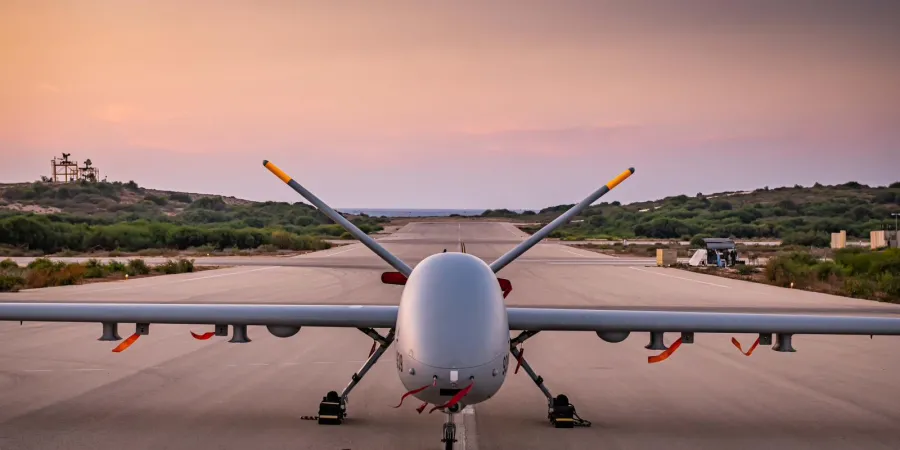
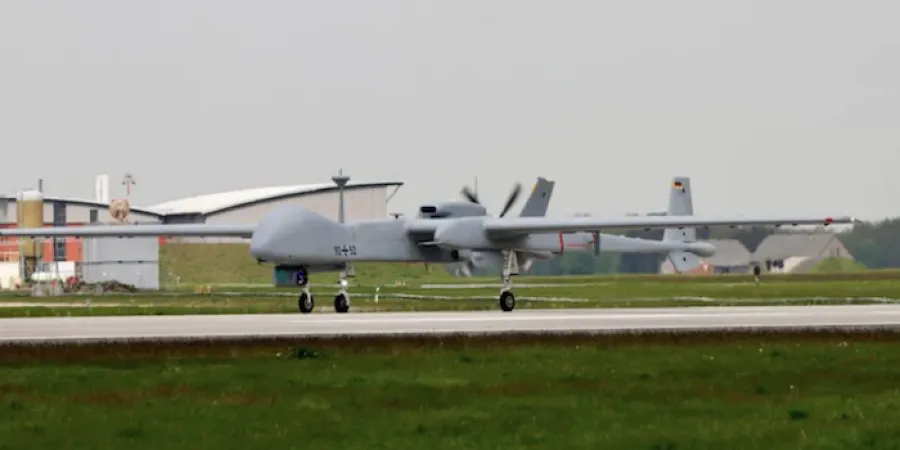
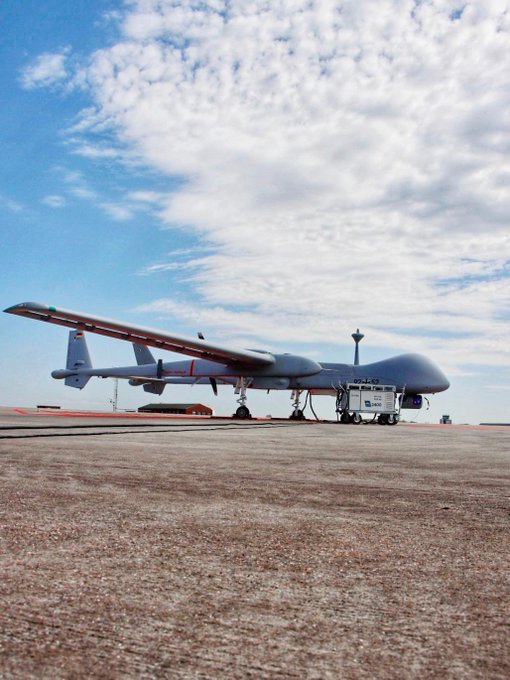
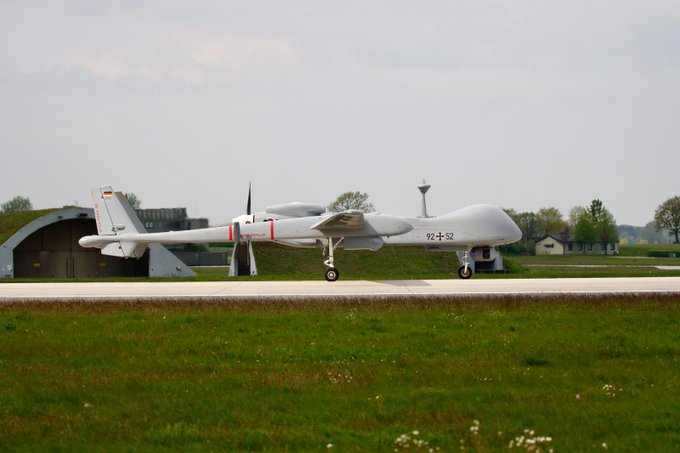
The German Luftwaffe has announced that its Israeli-made HERON-TP UAVs, manufactured by the Israel Aerospace Industries, are ready and authorized for operational use within Germany's borders, and flights will commence in mid-May.


Jane's reports that the Air Force announcement confirms that the airworthiness certificate was issued by the Federal Aviation Office in Kiel on May 2nd, and that the operational approval for the UAVs is valid globally. Flights will begin in May at the Luftwaffe base in Jagel in northern Germany. 


At the end of 2022, the Israeli-made UAVs received approval from the German Military Aviation Authority, and since then have been operated by German teams from a base in Israel.


The Heron TP UAV is intended in Germany to fill an interim role between the operation of the previous Heron-1 system and the future European medium-range UAV Airbus’ Eurodrone. 


THIS PAGE WAS POSTED BY SPUTNIK ONE OF THE SPUTNIKS ORBIT BLOG   HTTPS://DISQUS.COM/HOME/FORUM/THESPUTNIKSORBIT-BLOGSPOT-COM/

Saturday, May 4, 2024

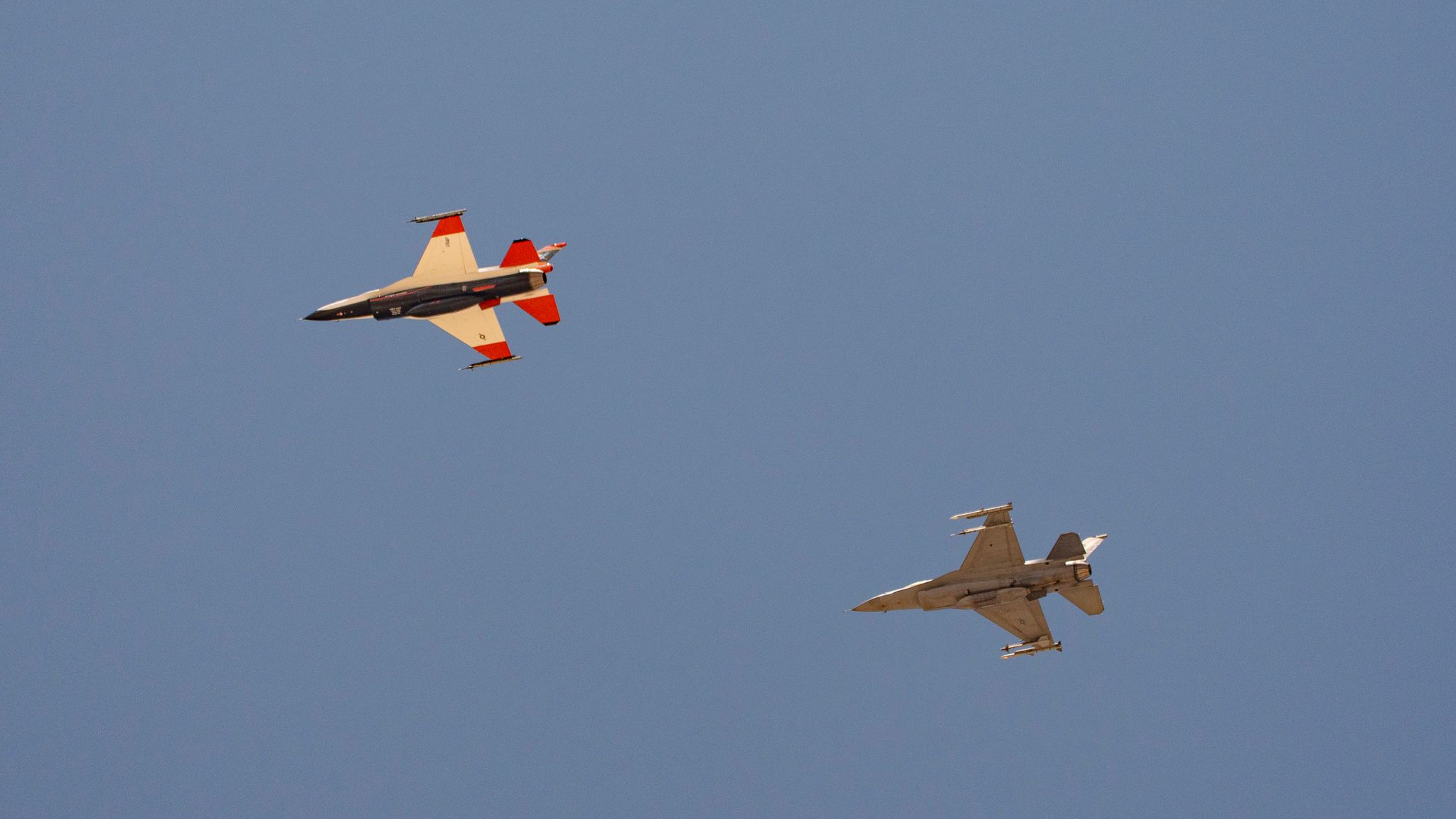
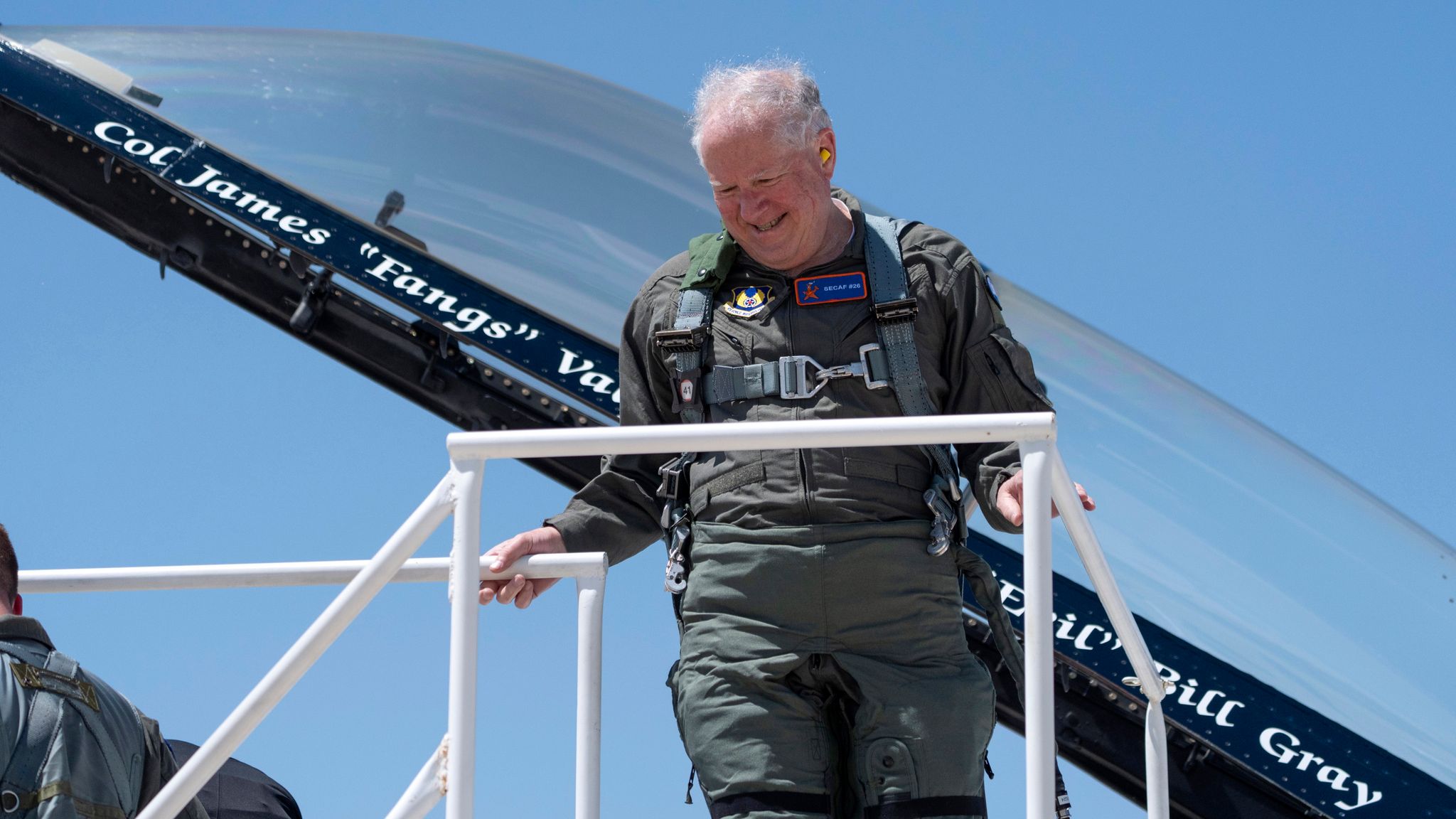
Defense News: AI-controlled F-16 takes US Air Force leader for high-speed ride - as he backs tech to launch weapons


AI-controlled F-16 takes US Air Force leader for high-speed ride - as he backs tech to launch weapons

Frank Kendall was so impressed after his flight that he said he'd trust it with the ability to decide whether to launch weapons.


Sky News, Saturday 4th May, 2024

https://news.sky.com/story/ai-controlled-f-16-takes-us-air-force-leader-for-high-speed-ride-as-he-backs-tech-to-launch-weapons-13128673


THIS PAGE WAS POSTED BY SPUTNIK ONE OF THE SPUTNIKS ORBIT BLOG   HTTPS://DISQUS.COM/HOME/FORUM/THESPUTNIKSORBIT-BLOGSPOT-COM/

Friday, May 3, 2024

Astronomers significantly impact the climate by traveling to conferences, say researchers

APRIL 30, 2024, by M. Martin, U. of Cologne

Localness vs. mean travel emissions per participants for the conferences. Different symbols indicate the continent on which a meeting took place.
Credit: PNAS Nexus (2024). DOI: 10.1093/pnasnexus/pgae143

In 2019, global travel to international academic conferences in the field of astronomy caused the equivalent of 42,500 tons of climate-damaging CO2 emissions. This equates to an average of one ton of CO2 per participant and conference. The total distance covered adds up to a truly astronomical sum: one and a half times the distance between the Earth and the sun.

This was discovered by a team led by Dr. Andrea Gokus from Washington University in St. Louis (U.S.). The researchers compiled a data set of all 362 known astronomy conferences in 2019 and the corresponding travel emissions. PD Dr. Volker Ossenkopf-Okada from the University of Cologne's Institute for Astrophysics contributed to the data analysis.

The study "Astronomy's climate emissions: global travel to scientific meetings in 2019" has now been published in PNAS Nexus.

A map showing the distribution of all 2019 astronomy/astrophysics meetings around the globe. Conferences are shown as circles and schools are shown as squares. The size of each marker corresponds to the overall amount of GHG emissions related to travel to each meeting, while the color-scale indicates the mean emission per participant for each meeting. A darker color implies a higher carbon footprint per person, which is related to travel over larger distances. 
Credit: Gokus et al

The authors emphasize the importance of networking as well as discussing new scientific findings at conferences to advance the field. However, adjustments can and must be made to reduce the effects on the climate. Examples include virtual conferences or choosing a conference venue that is as close as possible to most participants so that only a few participants have to take long-distance flights.

It is also important to give astronomers who are based far away from North America and Europe, where most astronomy conferences take place, the opportunity to attend the conferences. The authors propose hybrid formats and meetings held at several locations that are connected virtually.

Nested donut charts displaying the number of conference trips taken and divided by classification (short-, medium-, and long-haul) in the inner ring, versus the total emissions produced for each category in the outer ring. The 'long-haul' classification includes trips with ultra-long distances, which make up 0.2% of all trips and 1.3% of all emissions. 
Credit: Gokus et al

"If the 2019 American Astronomical Society meeting in Seattle had been held at four global hubs (Seattle and Baltimore in the U.S., Amsterdam in the Netherlands, and Tokyo in Japan), CO2 emissions could have been reduced by 70 percent," explained Gokus.

"Virtual and hybrid conference formats would also be more inclusive and thus more efficient for our field as a whole, as astronomers from less affluent institutes and countries and those with family duties would no longer be excluded from conferences due to the expensive and time-consuming travel," said Ossenkopf-Okada.


Recommend this post and follow
Sputnik's Orbit

Defense News: Introducing the New US Army Bradley Fighting Vehicle Equipped with the “Iron Fist" APS


Introducing the New US Army Bradley Fighting Vehicle Equipped with the “Iron Fist" APS

This advanced system, developed by Elbit, is slated to be installed on the Israeli Eitan armored fighting vehicle

Eyal Boguslavsky, Israel Defense,02/05/2024

https://www.israeldefense.co.il/en/node/61895

                                                                    Photo: US Army

The M2A4E1 Bradley emerges as the most advanced version yet, featuring a range of enhancements aimed at fortifying its defensive capabilities. A pivotal upgrade is the integration of the Iron Fist Light (IFL) active protection system, designed to effectively counter anti-armor threats.


Last week, the US Army unveiled a new variant of the Bradley M2A4E1 fighting vehicle, marking the first time it is equipped with an Active Protection System "Iron Fist Light" manufactured by Israeli Elbit Systems. According to the U.S. Army, the Iron Fist system is a crucial addition, equipping the Bradley to defend against various threats, including rocket-propelled grenades, across diverse environments, from open terrain to densely populated urban areas.


                                                                    Photo: US Army

As reported by Defense-blog.com, alongside the Iron Fist system, the M2A4E1 Bradley incorporates other improvements, including an enhanced High Definition Forward Looking Infrared Gunner’s Sight and an Environmental Control Unit. The latter is particularly significant for preventing heat stress among dismounted troops, highlighting the Army’s dedication to safeguarding the welfare of its personnel in demanding operational environments.

According to a statement from the Program Executive Office Ground Combat System, the Army has secured funding to procure an M2A4E1 for every Bradley donated to Ukraine.

THIS PAGE WAS POSTED BY SPUTNIK ONE OF THE SPUTNIKS ORBIT BLOG   HTTPS://DISQUS.COM/HOME/FORUM/THESPUTNIKSORBIT-BLOGSPOT-COM/