Sunday, November 28, 2021

Decorated Canadian WW2 Pilot "Falcon of Malta" Who Died Mysteriously in 1948

The Canadian 'Falcon of Malta' who died for Israel

'Top Guns': The little-known story of the decorated Canadian WWII pilot who died mysteriously in 1948 after joining the Israeli Air Force.

Erol Araf , 


Noorduyn Norseman
Noorduyn Norseman
ISTOCK

One of the most successful and decorated Canadian World War II "Top Guns," George Frederic' Buzz' Beurling, was born in Montreal one hundred years ago on December 6, 1921. After the war, he joined the nascent Israeli Air Force to fight in the War of Independence and was killed mysteriously in 1948: It was a lamentable end to a dazzling dream.

This is his story.

'Buzz' was, without a shadow of a doubt, among the most accomplished fighter pilots in military aviation. He was considered a "lone wolf" who spent more time mathematically calculating optimal shots from various angles and distances to maximize Spitfire ammunition than having a pint with his mates. For example, Beurling found that by shooting cannon on the approximated flight path of an enemy plane, one could attack the aircraft without straightening one's tail, utilizing a side angle. Pilots who flew with Beurling said that he would notice approaching planes before anyone else and count them. As others were unable to see what he was talking about, they thought that he was nervous or tense, but in the end, he was always accurate.

Known as "The Falcon of Malta," he and other ‘Top Guns’ played a significant role in preventing Hitler and Mussolini from occupying the island and turning the western Mediterranean into an Axis lake, thus securing the vital lines of communication for their North African campaigns. Accordingly, the dictators blockaded the strategically located island, intercepted supplies to the besieged British forces, and bombed the small island incessantly. The Germans and Italians flew over 3000 bombing raids, dropping 6,700 tons of bombs on the Grand Harbor area alone: the archipelago was largely reduced to rubble. In May 1941, Erwin Rommel warned that "Without Malta, the Axis will end by losing control of North Africa." In Churchill and Malta's War, 1939-1945, Douglas Austin argues that the Prime Minister understood that without Malta's ability to attack ships resupplying German forces in North Africa, victory in Europe would be delayed by up to a year. Victory on the shores of the burning island enabled the Allies to use it as an unsinkable carries in the subsequent invasion of Italy leading to the collapse of the Berlin-Rome Axis.

With little or no food, shortage of spare parts and fuel, Buzz and his fellow pilots fought bravely against all odds. They launched sorties after sorties, with little rest, as waves of enemy warplanes tried to force Malta into submission. Each Nazi assault was confronted and repulsed with the defiant roar of Spitfires resulting in the decimation of the Luftwaffe and the Regia Aeronautica Italiana. Those who fought the Axis were often reminded by Admiral of the Fleet, Andrew Browne Cunningham of the Great Siege of Malta in 1565 when the Ottoman Empire was defeated by the Knights Hospitaller who fought valiantly against Suleiman the Magnificent’s superior forces. 'Buzz' shot 27 Axis warplanes in two weeks in 1942 and earned another sobriquet:”Knight of the Sky.”

Churchill's commendation issued after the Battle of Britain in 1940 "Never in the field of human conflict was so much owed by so many to so few" found new resonance as the Pact of Steel's Maltese dreams were shattered on the shores of a blood-drenched island thanks mainly to Beurling and his band of brothers.

After the war, as Israel's War of Independence was about to start, 'Buzz' deeply felt that Arab threats to destroy the fledgling Jewish State would amount to granting Hitler a posthumous victory. Without hesitation, Beurling decided to take to the skies yet again and help Israel survive. The fledgling Israel Air Force was forged in battle, but most pilots and aircrew were overseas volunteers. The reason for this disastrous situation was that Britain, in charge of the Palestine Mandate before May 15, 1948, had refused to accept Palestinian Jews who wanted serve in the RAF until 1943 - almost four years into the war. When the 1948 War broke out, there were only 25 Jewish pilots: the rest came from abroad, including my boss at Israel Aerospace Industries, the late Al Shwimmer, an American, who organized the smuggling of jets into Israel.

'Buzz's' decision to join the fray did not come as a surprise to George's brother Rick who told Itay Itamar, writing for the Israel Air Force Journal that the family had been brought up on Holy Scriptures and that both he and 'Buzz' shared a Judeo-Christian world view.

"We very much identified with the history of the people of Israel. Our father always said that one day Israel would become an independent state, and we always waited for it to happen," remembered Rick. "I think that after George's experience in World War II, together with the fact that Israel was about to become a nation, he ran to help. Even though he wasn't Jewish, he had a Jewish heart “said Rick Beurling.

‘Buzz’ contacted Sydney Solomon, a Montreal Jewish community leader who was deeply involved in Jewish and Israeli affairs. It was not easy: Solomon was suspicious and questioned Buerling's motives. "Sydney sat with us in the kitchen and told us that it was challenging for them to believe my brother because he thought that it was a trick or a type of bait," recalled Rick during Itamar’s interview. But, 'Buzz' convinced him as he answered each question with a quote from the Bible. He wanted to be part of the epic struggle about to unfold and burned with the desire to defend the Jewish State. Beurling, a religious man versed in the Holy Books, could not imagine that a few years after the liberation of concentration camps, another holocaust might be inflicted on the Jewish people.

According to Itamar, as soon as Beurling received the green light at the outbreak of the War of Independence, he joined Leonard Yehuda Cohen, a British ace who had also fought in Malta. Both pilots volunteered in the nascent Israeli air force. 'Buzz's' first operation was to bring a Norseman plane from Italy to Israel on May 20, 1948. But, the aircraft exploded and crashed in mysterious circumstances in Rome as many believe that the plane was sabotaged before it took off. He was twenty-seven years old when he died.

His charred remains were unclaimed and kept in a warehouse in the Verano Monumental Cemetery for five months. Eventually, Beurling, the romantic war hero, was interred in Rome's Protestant Memorial Garden, appropriately enough, between the graves of Percy Bysshe Shelly and John Keats.

Although we don't have access to all the relevant documents, the suspicious circumstances concerning the crash have been discussed in many books, including Brian Nolan's The Buzz Beurling Story. Suffice to note that the World War II ace had many powerful foes: Pro- Arab western secret services were fiercely opposed to his activities; Rome was full of Nazis signing up to fight with the Arabs; remnants of the SS were sworn to settle scores with the "Maltese Falcon"; and Arab intelligence services were determined to prevent incipient Israel from attaining air superiority, especially as Beurling was about to fly the P-51 Mustang. But the possibility of an accident, however, cannot be discounted.

At the suggestion of the State of Israel and with the approval of the Beurling family, on November 9, 1950, George's remains were brought from Italy to Israel. He was laid to eternal rest with full military honors in the Christian cemetery in Haifa.

On the 60th Anniversary of his internment, it was decided, based on the family's request, to grant George a full Jewish commemorative service in Haifa. The memorial service was attended by the crew of the "Flying Camel" squadron, the commander of the squadron, and the head of the Department of Fallen Soldiers, Lt. Col. Danny Shneidman, who accompanied the Beurling family during their first visit to Israel. The Canadian Ambassador to Israel, Jon Allen, and the Canadian Defense Attaché to Israel Col. Geordie Elms, too, were present.

Friday, November 26, 2021

Gaia reveals that most Milky Way companion galaxies are newcomers to our corner of space

NOVEMBER 25, 2021, by European Space Agency
https://phys.org/news/2021-11-gaia-reveals-milky-companion-galaxies.html

Our galaxy, the Milky Way, is surrounded by about fifty dwarf galaxies. Most of these galaxies are only identifiable through telescopes and have been named after the constellation in which they appear on the sky (for example, Draco, Sculptor or Leo). However, the two most obvious dwarf galaxies are called the Large Magellanic Cloud (LMC) and the Small Magellanic Cloud (SMC), and these are easily visible to the unaided eye. Traditionally these dwarf galaxies have been thought of as satellites in orbit around the Milky Way for many billions of years. Now, however, new data from ESA’s Gaia spacecraft have shown that the majority of the dwarf galaxies are passing the Milky Way for the first time. This forces astronomers to reconsider the history of the Milky Way and how it formed, along with the nature and composition of the dwarf galaxies themselves. 
Credit: ESA/Gaia/DPAC, CC BY-SA 3.0 IGO

Data from ESA's Gaia mission is re-writing the history of our galaxy, the Milky Way. What had traditionally been thought of as satellite galaxies to the Milky Way are now revealed to be mostly newcomers to our galactic environment.

A dwarf galaxy is a collection of between thousand and several billion stars. For decades it has been widely believed that the dwarf galaxies that surround the Milky Way are satellites, meaning that they are caught in orbit around our galaxy, and have been our constant companions for many billions of years. Now the motions of these dwarf galaxies have been computed with unprecedented precision thanks to data from Gaia's early third data release and the results are surprising.

François Hammer, Observatoire de Paris—Université Paris Sciences et Lettres, France, and colleagues from across Europe and China, used the Gaia data to calculate the movements of 40 dwarf galaxies around the Milky Way. They did this by computing a set of quantities known as the three-dimensional velocities for each galaxy, and then using those to calculate the galaxy's orbital energy and the angular (rotational) momentum.

They found that these galaxies are moving much faster than the giant stars and star clusters that are known to be orbiting the Milky Way. So fast, that they couldn't be in orbit yet around the Milky Way, where interactions with our galaxy and its contents would have sapped their orbital energy and angular momentum.

Our galaxy has cannibalized a number of dwarf galaxies in its past. For example, 8-10 billion years ago, a dwarf galaxy called Gaia-Enceladus was absorbed by the Milky Way. Its stars can be identified in Gaia data because of the eccentric orbits and range of energies they possess.

More recently, 4-5 billion years ago, the Sagittarius dwarf galaxy was captured by the Milky Way and is currently in the process of being pulled to pieces and assimilated. The energy of its stars is higher than those of Gaia-Enceladus, indicating the shorter time that they have been subject to the Milky Way's influence.

In the case of the dwarf galaxies in the new study, which represents the majority of the dwarf galaxies around the Milky Way, their energies are higher still. This strongly suggests that they have only arrived in our vicinity in the last few billion years.

The discovery mirrors one made about the Large Magellanic Cloud (LMC), a larger dwarf galaxy so close to the Milky Way that it is visible as a smudge of light in the night sky from the southern hemisphere. The LMC was also thought to be a satellite galaxy of the Milky Way until the 2000s, when astronomers measured its velocity and found that it was traveling too fast to be gravitationally bound. Instead of a companion, LMC is visiting for the first time. Now we know that the same is true for most of the dwarf galaxies too.

So will these newcomers settle into orbit or simply pass us by? "Some of them will be captured by the Milky Way and will become satellites," says François.

But saying exactly which ones is difficult because it depends on the exact mass of the Milky Way, and that is a quantity that is difficult for astronomers to calculate with any real accuracy. Estimates vary by a factor of two.

The discovery of the dwarf galaxy energies is significant because it forces us to re-evaluate the nature of the dwarf galaxies themselves.

As a dwarf galaxy orbits, the Milky Way's gravitational pull will try to wrench it apart. In physics this is known as a tidal force. "The Milky Way is a big galaxy, so its tidal force is simply gigantic and it's very easy to destroy a dwarf galaxy after maybe one or two passages," says François.

In other words, becoming a companion to the Milky Way is a death sentence for dwarf galaxies. The only thing that could resist our galaxy's destructive grip is if the dwarf had a significant quantity of dark matter. Dark matter is the mysterious substance that astronomers think exists in the universe to provide the extra gravity to hold individual galaxies together.

And so, in the traditional view that the Milky Way's dwarfs were satellite galaxies that had been in orbit for many billions of years, it was assumed that they must be dominated by dark matter to balance the Milky Way's tidal force and keep them intact. The fact that Gaia has revealed that most of the dwarf galaxies are circling the Milky Way for the first time means that they do not necessarily need to include any dark matter at all, and we must re-assess whether these systems are in balance or rather in the process of destruction.

"Thanks in large part to Gaia, it is now obvious that the history of the Milky Way is far more storied than astronomers had previously understood. By investigating these tantalizing clues, we hope to further tease out the fascinating chapters in our galaxy's past," says Timo Prusti, Gaia Project Scientist, ESA.


Recommend this post and follow
Sputnik's Orbit


Posted by Orbiting Chuck

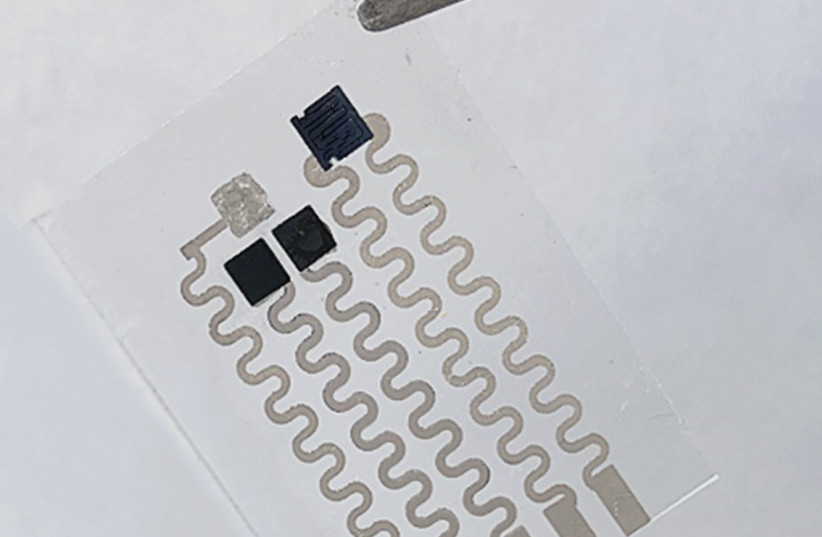
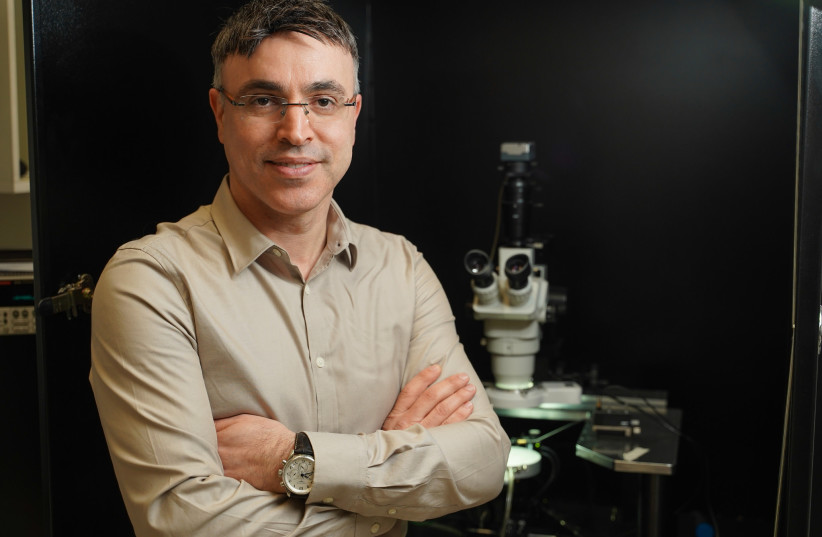
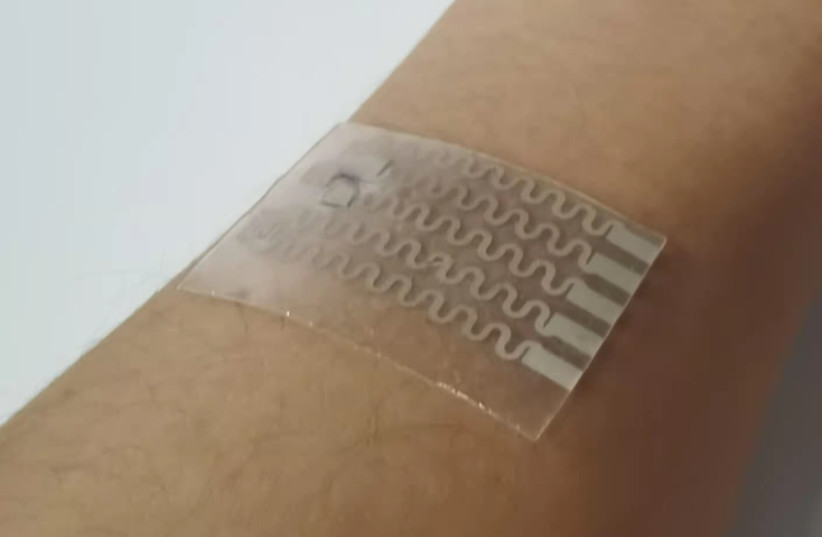
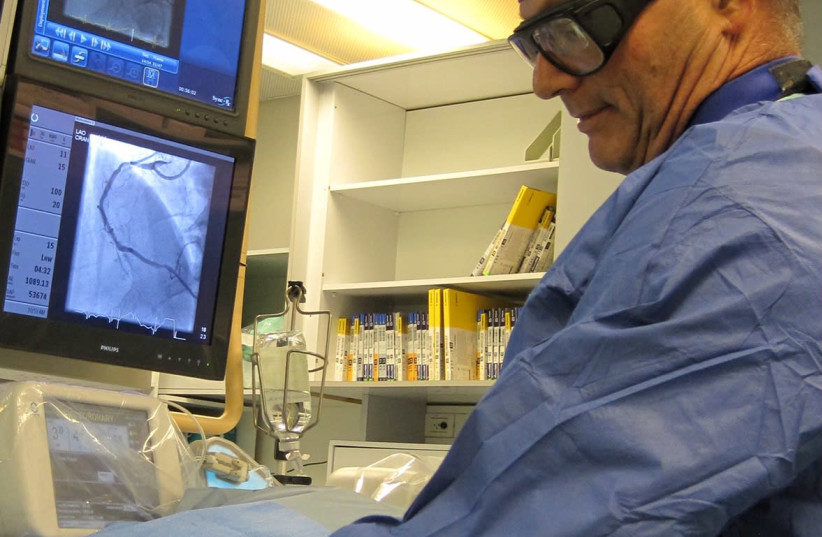
Medical Innovation News: Self-suturing bandage in Technion renders medical stitches unnecessary


Self-suturing bandage in Technion renders medical stitches unnecessary


The Technion team developed a polymeric mesh dressing that contracts the wound edges and allows skin healing - without the string holding it together.


Wednesday, November 24, 2021

NASA seeks ideas for a nuclear reactor on the moon

NOVEMBER 19, 2021, by Keith Ridler

This Nov. 29, 2018, file photo, shows the exterior of the Transient Reactor Test Facility at Idaho National Laboratory about 50 miles west of Idaho Falls, Idaho. NASA and the nation's top federal nuclear research lab on Friday, Nov. 19, 2021, put out a request for proposals for a fission surface power system. NASA is collaborating with the U.S. Department of Energy's Idaho National Laboratory to establish a sun-independent power source for missions to the moon by the end of the decade. 
Credit: AP Photo/Keith Riddler, File

If anyone has a good idea on how to put a nuclear fission power plant on the moon, the U.S. government wants to hear about it.

NASA and the nation's top federal nuclear research lab on Friday put out a request for proposals for a fission surface power system.

NASA is collaborating with the U.S. Department of Energy's Idaho National Laboratory to establish a sun-independent power source for missions to the moon by the end of the decade.

"Providing a reliable, high-power system on the moon is a vital next step in human space exploration, and achieving it is within our grasp," Sebastian Corbisiero, the Fission Surface Power Project lead at the lab, said in a statement.

If successful in supporting a sustained human presence on the moon, the next objective would be Mars. NASA says fission surface power could provide sustained, abundant power no matter the environmental conditions on the moon or Mars.

"I expect fission surface power systems to greatly benefit our plans for power architectures for the moon and Mars and even drive innovation for uses here on Earth," Jim Reuter, associate administrator for NASA's Space Technology Mission Directorate, said in a statement.

The reactor would be built on Earth and then sent to the moon.

The earth's shadow covers the full moon during a partial lunar eclipse, early Friday, Nov. 19, 2021, in Kansas City, Mo. NASA and the nation's top federal nuclear research lab on Friday, Nov. 19, put out a request for proposals for a fission surface power system. NASA is collaborating with the U.S. Department of Energy's Idaho National Laboratory to establish a sun-independent power source for missions to the moon by the end of the decade.
 Credit: AP Photo/Charlie Riedel

Submitted plans for the fission surface power system should include a uranium-fueled reactor core, a system to convert the nuclear power into usable energy, a thermal management system to keep the reactor cool, and a distribution system providing no less than 40 kilowatts of continuous electric power for 10 years in the lunar environment.

Some other requirements include that it be capable of turning itself off and on without human help, that it be able to operate from the deck of a lunar lander, and that it can be removed from the lander and run on a mobile system and be transported to a different lunar site for operation.

Additionally, when launched from Earth to the moon, it should fit inside a 12-foot (4-meter) diameter cylinder that's 18 feet (6 meters) long. It should not weigh more than 13,200 pounds (6,000 kilograms).

The proposal requests are for an initial system design and must be submitted by Feb. 19.

The Idaho National Laboratory has worked with NASA on various projects in the past. Most recently, the lab helped power NASA's Mars rover Perseverance with a radioisotope power system, which converts heat generated by the natural decay of plutonium-238 into electrical power.

The car-sized rover landed on Mars in February and has remained active on the red planet.

The Energy Department has also been working to team up with private businesses on various nuclear power plans, notably on a new generation of smaller power plants that range from small modular reactors to small mobile reactors that can quickly be set up in the field and then removed when not needed.


Recommend this post and follow 
Sputnik's Orbit


Posted by fissile Chuck

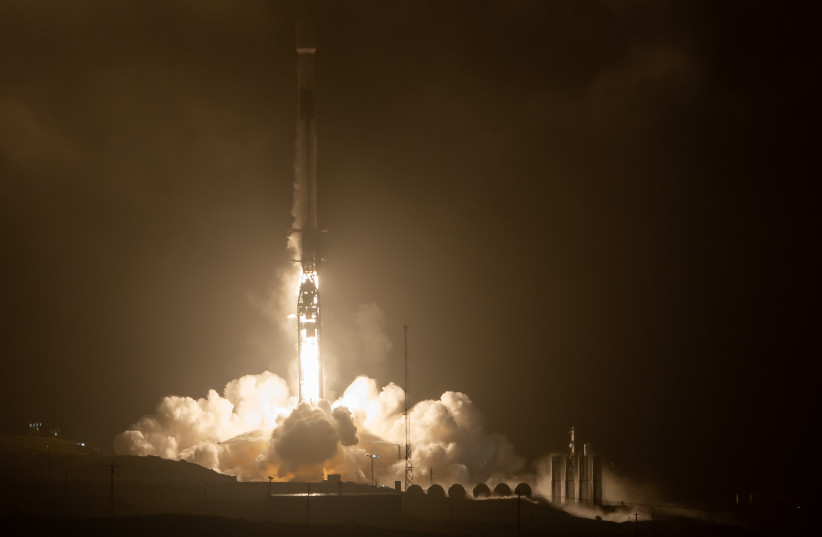
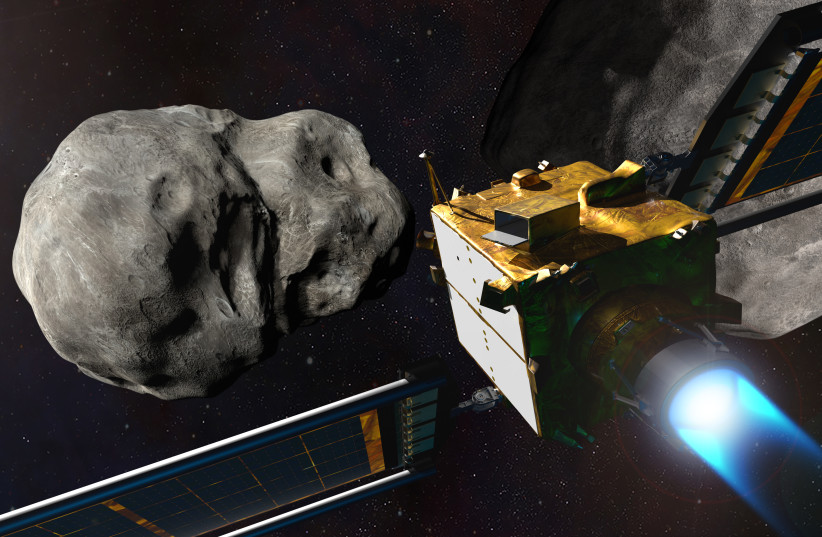
Space News: NASA’s Iron Dome: DART takes off to test asteroid deflection


NASA’s Iron Dome: DART takes off to test asteroid deflection


The first-of-its-kind mission will head to the asteroid Dimorphos in the Didymos system and test kinetic impactors to see if an asteroid’s trajectory can be altered.


Tuesday, November 23, 2021

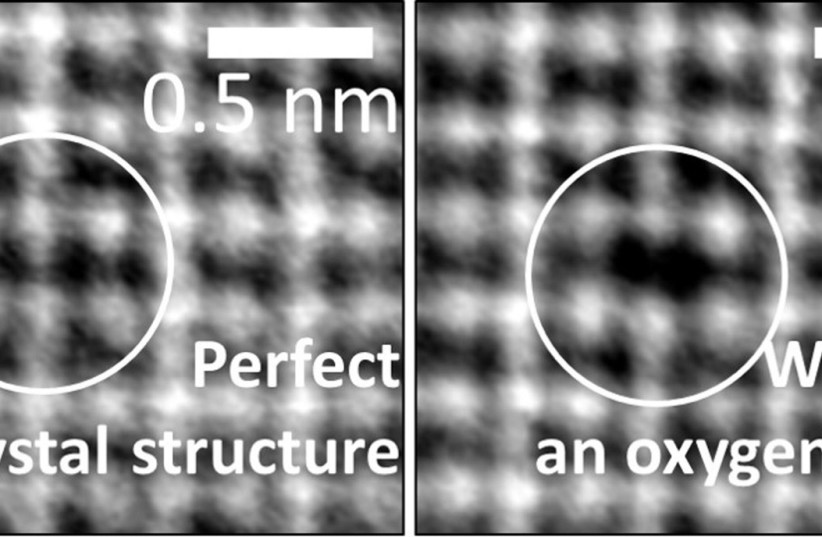
Science News: Technion team's breakthrough research vacates single oxygen atoms


Technion team's breakthrough research vacates single oxygen atoms


A study, which was published in the peer-reviewed scientific journal 'ACS Nano,' shares findings that are a potential breakthrough in the development of ferroelectric materials.


An absolutely bonkers plan to give Mars an artificial magnetosphere

NOVEMBER 22, 2021, by Brian Koberlein, Universe Today

A torus of charged particles could give Mars a magnetic field.
 Credit: Ruth Bamford

Terraforming Mars is one of the great dreams of humanity. Mars has a lot going for it. Its day is about the same length as Earth's, it has plenty of frozen water just under its surface, and it likely could be given a reasonably breathable atmosphere in time. But one of the things it lacks is a strong magnetic field. So if we want to make Mars a second Earth, we'll have to give it an artificial one.

The reason magnetic fields are so important is that they shield a planet from solar wind and ionizing particles. Earth's magnetic field prevents most high-energy charged particles from reaching the surface. Instead, they are deflected from Earth, keeping us safe. The magnetic field also prevents solar winds from stripping Earth's atmosphere over time. Early Mars had a thick, water-rich atmosphere, but it was gradually depleted without the protection of a strong magnetic field.

Unfortunately, we can't just recreate Earth's magnetic field on Mars. Our field is generated by a dynamo effect in Earth's core, where the convection of iron alloys generates Earth's geomagnetic field. The interior of Mars is smaller and cooler, and we can't simply "start it up" to create a magnetic dynamo. But there are a few ways we can create an artificial magnetic field, as a recent study shows.

Ideas for generating a Martian magnetic field have been proposed before, and usually involve either ground-based or orbital solenoids that create some basic level of magnetic protection. In the TV series "The Expanse," you can see a couple of scenes where you catch a glimpse of them. While this latest study acknowledges that might work, it proposes an even better solution.

As the study points out, if you want a good planetary magnetic field, what you really need is a strong flow of charged particles, either within the planet or around the planet. Since the former isn't a great option for Mars, the team looks at the latter. It turns out you can create a ring of charged particles around Mars, thanks to its moon Phobos.

Phobos is the larger of the two Martian moons, and it orbits the planet quite closely—so closely that it makes a trip around Mars every eight hours. So the team proposes using Phobos by ionizing particles from its surface, then accelerating them so they create a plasma torus along the orbit of Phobos. This would create a magnetic field strong enough to protect a terraformed Mars.

It's a bold plan, and while it seems achievable, the engineering hurdles would be significant. But as the authors point out, this is the time for ideas. Start thinking about the problems we need to solve, and how we can solve them, so when humanity does reach Mars, we will be ready to put the best ideas to the test.


Recommend this post and follow
Sputnik's Orbit.


Posted by Magnetic Chuck

Sunday, November 21, 2021

Innovation Technology: GenCell, EV Motors to work on off-grid charging


GenCell, EV Motors to work on off-grid charging


The project will provide demonstration sites that are expected to attract interest from e-mobility companies worldwide. 


REENERGIZING AN electric car at a mobile charging station. (photo credit: DAVID W. CERNY / REUTERS)

REENERGIZING AN electric car at a mobile charging station. 
(photo credit: DAVID W. CERNY / REUTERS)

GenCell Energy, a leading Israel-based manufacturer of fuel-cell energy solutions, announced it has signed an agreement with EV Motors Ltd., an Israeli importer of electric vehicles, chargers and energy storage systems for electric vehicles.

EV is also the exclusive Israeli representative of several companies, among them Sun Surplus Energy and Co. Ltd., a leading developer of energy storage and advanced EV charging systems.

The two companies have agreed to cooperate on the development of a joint project integrating GenCell’s alkaline fuel cells with EV Motors’ electric vehicle-charging technologies to enable autonomous, off-grid, hybrid-electric vehicle-charging stations that eliminate the need for fossil-fuel backup generators.

The project will provide demonstration sites that are expected to attract interest from e-mobility companies worldwide. 

This collaboration will contribute to the worldwide delivery of the charging infrastructure required to meet the global EV-charging market demand, which is expected to exceed $207 billion by 2030. GenCell and EV Motors will create a new off-grid hybrid charging solution that will provide reliable local power supplies with zero emissions from the vehicle.

GenCell's G5 fuel cell being used at the Hillel Yaffe Medical Center of Hadera, Israel (credit: Courtesy)

GenCell's G5 fuel cell being used at the Hillel Yaffe Medical Center of Hadera, Israel (credit: Courtesy)


The joint system is expected to be ready for initial deployment in Israel by the first half of 2022.

Following the success of the initial project in Israel, the two companies will consider expanding the cooperation to similar projects in China and other territories via EV’s existing partner network including Sun Surplus Energy and Co Ltd.

“EV Motors and its subsidiaries have been constantly researching and developing a solution to the challenges of the transition from fossil-fueled vehicles to electrically driven ones. We are very glad to have connected with GenCell to provide sustainable and environmental fuel cells for our charging stations, thus offering the market a reliable, clean and effective solution,” remarked EV Motors chairman Ohad Seligmann. 

GenCell CEO Rami Reshef commented, “GenCell is extremely excited about this agreement with EV Motors and the opportunity to demonstrate the significant value that alkaline fuel cells can contribute to maintaining zero-emission continuous power at autonomous off-grid hybrid EV charging stations. As the number of electric vehicles increases, the demand for a wide network of distributed EV charging stations will grow exponentially.

“On the one hand, forecasts indicate that grid power will not be sufficient to power the estimated quantity of EVs that will reach the roads, and on the other, many destinations to which EVs will need to travel will be beyond the power grid. In both of these scenarios, autonomous off-grid EV charging stations powered by hydrogen and ammonia will be a key solution.

“As a fuel-cell pioneer based in Israel, GenCell is proud to be able to resolve this important challenge for the Israeli market and will be even more excited to demonstrate the proven use case to e-mobility providers around the globe. As the world’s eyes are focused on COP26 and climate issues, GenCell is proud to bring innovative clean-energy technologies that can play an important role in accelerating the transition to renewable energy in Israel and around the world.”


Please recommend this page & follow the Sputniks Orbit

https://disqus.com/home/forum/thesputniksorbit-blogspot-com

Saturday, November 20, 2021

Defense News: Israel’s next-gen robots could replace ground troops on front lines


Israel’s next-gen robots could replace ground troops on front lines


Elbit Systems and Roboteam have released the ROOK UGV, which will support infantry in a number of frontline roles.


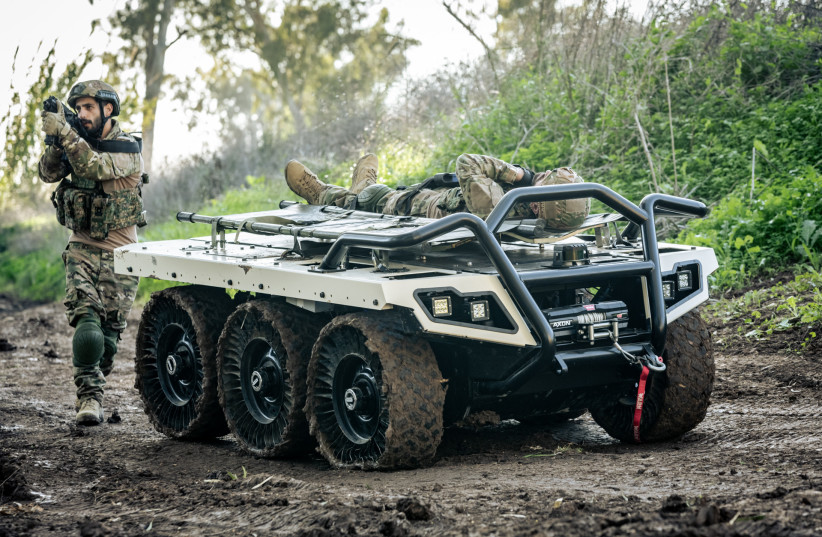
Elbit's new Rook Unmanned Ground Vehicle, demonstrating medical evacuation capabilities. (credit: ELBIT)

Elbit's new Rook Unmanned Ground Vehicle, demonstrating medical evacuation capabilities. (credit: ELBIT)

“If you want to send robots where you don’t want to send soldiers, you need a solution for that,” said Elad Levy, CEO and founder of Roboteam.

His company, together with Elbit Systems, on Tuesday, announced the debut of what they are calling “the mothership of unmanned vehicles”: ROOK, a multi-payload military 6x6 Unmanned Ground Vehicle (UGV).

The UGV’s innovative design and built-in autonomy suite offers improved capacity, maneuverability and agility from its previous models, creating “a human machine” that is “really part of the team,” said Yoav Poizner, the senior director of Elbit C4I and Cyber.

He said the ROOK is the next step toward enabling “everything that happens in the sky” through use of drones and aerial robots to occur on the ground and in the field where soldiers need it, too.

The ROOK was developed based on the operational experience accumulated through fielding of the 4x4 PROBOT UGV systems, which became operational a few years ago through a first collaboration between the two companies.


Elbit / ROOK / Roboteam System Launches Newest Unmanned Ground Vehicle


What makes ROOK most unique is that it started as a connected system, the teams said.

“Because we built it from the first screw, we know how the robot works with the software,” Levy said.
“It has built-in autonomy and built-in artificial intelligence that provides a full solution. Without that level of sophistication, you would not want to rely on it in the field.”

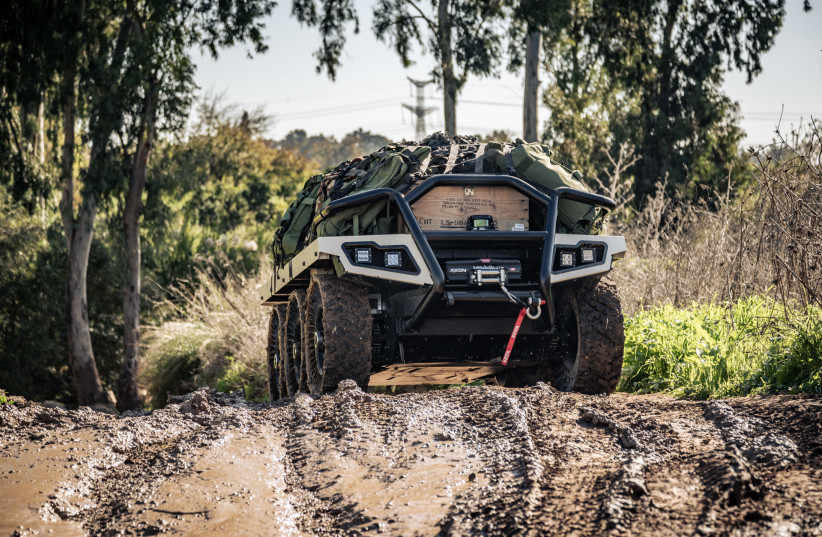
The ROOK was designed from scratch as a robotic UGV platform in compliance with applicable military standards, a release explained. It has a modular box structure that allows for components to be replaced by users in the field without the support of the manufacturer.

Other features include a low center of gravity, essential for carrying heavy payloads on rough terrain.

The ROOK weighs 1,200 kg. (2,646 lbs.) and can carry a payload equivalent to its own body weight. It stands 24 cm. above the ground and travels at a speed up to 30 kilometers an hour (19 mph).

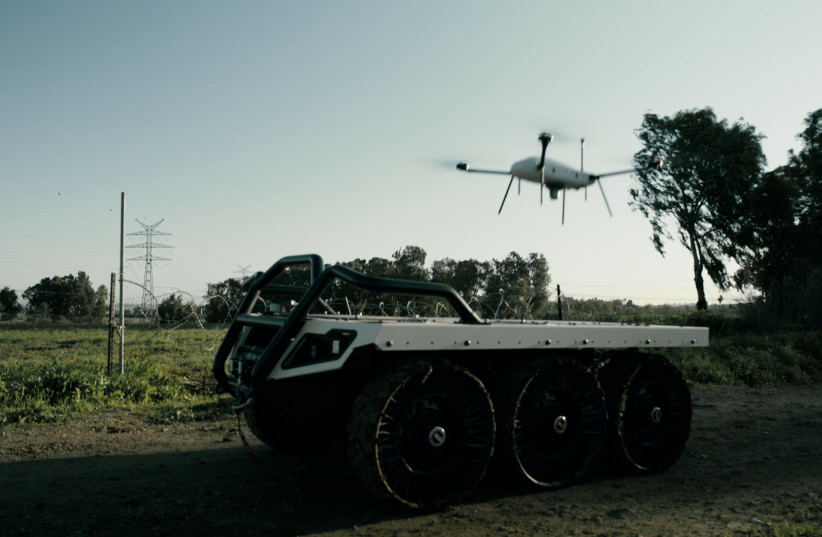
Elbit's new Rook Unmanned Ground Vehicle being used as a drone platform. (credit: ELBIT) 

Elbit's new Rook Unmanned Ground Vehicle being used as a drone platform. (credit: ELBIT)

The machine has full compliance with the UGV Interoperability Profile (IOP) for seamless plug-and-play payload integration.

The battery weighs 40 kg. (88lbs.) and lasts up to eight hours. There is an option to carry a spare battery or set up an internal generator for longer missions.

ROOK is operated either via the TORCH-X RAS application or through an all-weather seven-inch ruggedized display unit, enabling a single operator to control several unmanned systems.

The machine can navigate the desert, snow or other rough terrain, and during sunlight or at night. Its sophisticated sensors can recognize soldiers and follow after them in the field, allow it to drive off-road without toppling, and give it the power to tell the difference between grass, stone and other pathways to keep it on course and avoid an accident – just as if a human was driving it.

The company expects the machine to be used to deliver supplies, function as medevac to pull casualties from the field, take part in intelligence gathering missions - including carrying and dispatching drones - and serve as a remote weapons system.

Elbit's new Rook Unmanned Ground Vehicle carrying supplies such as ammunition that would ordinarily be carried on the backs on infantry. (credit: ELBIT) 

 Elbit's new Rook Unmanned Ground Vehicle carrying supplies such as ammunition that would ordinarily be carried on the backs on infantry. (credit: ELBIT)

“You can send the ROOK to places you don’t want to go,” said Levy.

Roboteam was founded in 2009. Today, it has 40 employees working out of its United States and Israeli headquarters. All of the employees were either in the Israel Defense Forces or the US military, giving the company the ability to match and meld its engineering with the actual reality of the battlefield.

The company, Levy said, started with a vision in his grandmother’s house. Roboteam scored its first big contract in 2012 when it supplied 100 man-carried robots to soldiers in Afghanistan, a deal worth $10 million. Since then, the company has expanded, and now has robots in 20 countries worldwide.

It has contracts in Norway, the United Kingdom, France, Italy, Thailand and other places.

Roboteam and Elbit joined forces in mid-2019 with a commercial agreement that led to making its PROBOT operational. The ROOK is its latest collaboration.

The machine will cost between $150,000 and $300,000 the company said, depending on configurations. The TOOK is ready to be deployed, Levy said, and is already being evaluated by some of its clients. Eventually, he believes there will be hundreds of thousands of ROOKs in the field.

What is next? Collaboration between air and land robots, he said, for example deploying an aerial and a land robot to photograph a certain area and then merging the pictures for a complete perspective.

“There is no end to the vision and imagination,” Levy said. “The ROOK is just the first step. We are talking about a revolution.”


Please recommend this page & follow the Sputniks Orbit

https://disqus.com/home/forum/thesputniksorbit-blogspot-com