Friday, July 22, 2022

Capturing an Eagle at Waterloo

Household Cavalry Museum
July 20, 2022

For the first time in two centuries a Napoleonic Eagle captured on the battlefield at Waterloo has been reunited with the long-lost medal of the soldier who won it. Here General Barney White-Spunner, Waterloo expert, author and former Household Cavalry commander, tells us how the eagle was captured, who captured it and why it remains important to this day. 

The Household Cavalry Museum will officially reopen this summer championing this Waterloo story and many others in a new exhibition from 21st June to 26th September. We'll be putting on special Waterloo walking tours, activity trails and special events. The new exhibition will explore the courage, carnage and controversies of Wellington’s cavalry at a battle which secured almost a century of peace in Europe.


Recommend this post and follow
Sputnik's Orbit

Thursday, July 21, 2022

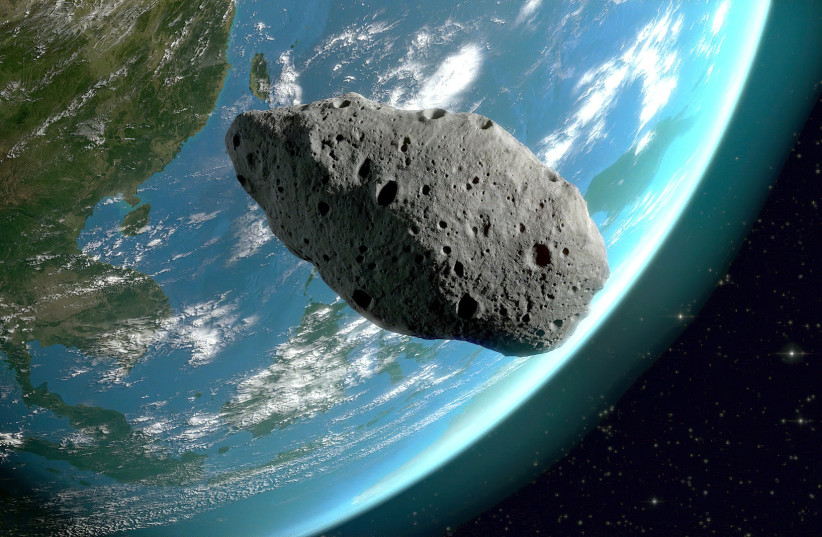
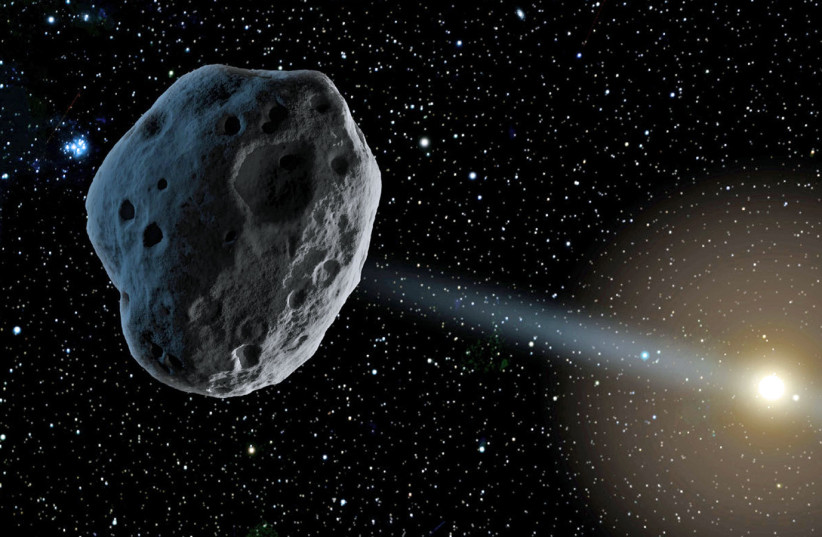
Space News: Asteroids can be pushed to Earth for mining with 2 spacecraft - study


Asteroids can be pushed to Earth for mining with 2 spacecraft - study


The "pitcher" and "catcher" spacecraft model will allow asteroids to quickly be pushed towards Earth for mining with high efficiency and without the need for costly return trips.


Astrophysicists Think They've Found The Mysterious Source of High-Energy Neutrinos

MICHELLE STARR, 20 JULY 2022

Artist's impression of a blazar accelerating neutrinos and cosmic rays. 
(Benjamin Amend)

Some of the brightest, most energetic objects in the Universe are the mystery source of high-energy cosmic neutrinos, new research has confirmed.

A comprehensive analysis has pretty conclusively linked galaxies hosting blazing nuclei known as blazars with these enigmatic particles.

It's a result that provides a really unexpected solution to a problem that has had astrophysicists scratching their heads for years.

"The results provide, for the first time, incontrovertible observational evidence that the sub-sample of PeVatron blazars are extragalactic neutrino sources and thus cosmic ray accelerators," said astrophysicist Sara Buson from Julius Maximilian University of Würzburg in Germany.

Neutrinos are weird little things at the best of times. These subatomic particles are ubiquitous and among the most abundant in the Universe.

However, their mass is almost zero, they're electrically neutral, and they interact very little with anything else in the Universe. To a neutrino, the normal matter of which most of the Universe consists might as well be a shadow; this is why they are known as ghost particles.

We know pretty well where neutrinos – normal neutrinos – come from.

They're produced by radioactive decay, which is pretty common. Most of the neutrinos we detect at Earth are by-products of nuclear reactions in the Sun, but they can also be produced by supernovae, artificial nuclear reactions, or the interaction between cosmic rays and atoms, for example.

But a special observatory in Antarctica revealed some really bizarre ones.

Although neutrinos don't interact much with normal matter, every now and again, they do. When they interact with molecules in water atoms, they can produce a very small flash of light.

The IceCube Neutrino Observatory has detectors embedded deep in the Antarctic ice at the south pole that can detect these flashes. These detections can reveal the energy of the neutrino.

In 2012, IceCube detected two neutrinos that were like nothing we'd ever seen. Their energies were on petaelectronvolt (PeV) scales – 100 million times more energetic than supernova neutrinos. And these high-energy neutrinos had come from intergalactic space, source unknown.

We got a hint as to that source in 2018. Because neutrinos don't interact, they pretty much travel on a straight line through space – so a huge international collaboration of scientists was able to trace a high-energy neutrino back to a blazar.

That's the nucleus of a massive galaxy powered by an active supermassive black hole, angled so that jets of ionized matter accelerated to near light-speed point directly at Earth.

"It is interesting that there was a general consensus in the astrophysics community that blazars were unlikely to be sources of cosmic rays, and here we are," University of Wisconsin-Madison physicist Francis Halzen said at the time.

Still, some questions remained about the association between blazars and high-energy neutrinos. So a team of scientists led by Buson did what scientists do: they went a-digging.

They took 7 years' worth of all-sky neutrino data from IceCube, and painstakingly compared it against a catalog of 3,561 objects that are either confirmed blazars, or highly likely to be.

They performed positional cross-matching of these catalogs, trying to determine if high-energy neutrinos could be conclusively linked to blazar locations in the sky.

"With this data, we had to prove that the blazars whose directional positions coincided with those of the neutrinos were not there by chance," explained astrophysicist Andrea Tramacere of the University of Geneva in Switzerland.

"After rolling the dice several times, we discovered that the random association can only exceed that of the real data once in a million trials! This is strong evidence that our associations are correct."

According to the team's analysis, the probability of a random occurrence is 0.0000006. This suggests that at least some blazars are capable of producing high-energy neutrinos, which, in turn, helps solve another problem. The origin of high-energy cosmic rays – protons and atomic nuclei that stream through space at close to the speed of light – is also a huge mystery.

According to Buson, high-energy neutrinos are produced exclusively in processes that involve the acceleration of cosmic rays. This means, by inference, that we can now link blazars with cosmic ray acceleration, the team said.

"The accretion process and the rotation of the black hole lead to the formation of relativistic jets, where particles are accelerated and emit radiation up to energies of a thousand billion of that of visible light!" Tramacere said.

"The discovery of the connection between these objects and the cosmic rays may be the 'Rosetta stone' of high-energy astrophysics."

From here, there are several avenues that warrant further exploration. One is to try to discover why some blazars are efficient particle accelerators while others are not. This will help the team work out what the characteristics of a neutrino factory are, and where else in the cosmos we might find them.

In addition, further, more detailed analyses of neutrino data may yield more discoveries about the birthplaces of these peculiar, ghostly particles.


Recommend this post and follow
Sputnik's Orbit


Posted by micro Chuck

Wednesday, July 20, 2022

A unique stone-skipping-like trajectory of asteroid Aletai

JULY 20, 2022 ** FEATURE ** by Thamarasee Jeewandara , Phys.org

Map of the recovery sites of Aletai masses. 
The close-up of recovery sites in Xiaodonggou area shown in the top right corner. Only the masses listed in the Meteoritical Bulletin (www.lpi.usra.edu/meteor/metbull.php) are plotted. The base map is from Google Earth. 
Asterisk denotes the unnamed 15 kg of mass that was found in the Xiaodonggou area close to Wuxilike and Akebulake without precise latitude and longitude. We plot it in the middle between Wuxilike and Akebulake. 
Credit: Science Advances (2022). DOI: 10.1126/sciadv.abm8890

During their entry to Earth, meteoroids and asteroids can deposit energy, causing great concerns to astrophysicists. Recent discoveries of the massive Aletai irons in Northwest China constitute the longest-known strewn field, approximating 430 kilometers, that indicate this unique process. Using petrographic and trace elemental studies, scientists suggest that Aletai masses exhibit unique compositions, and therefore may be from the same event.

In a new report now published in Science Advances, Ye Li and a team of scientists at the Chinese Academy of Sciences, the University of Arizona, U.S., and the Institute for Nuclear Research in Hungary, used numerical models to suggest the stone skipping–like trajectory is associated with a shallow-entry angle to facilitate the exceptionally long-strewn field for a single-body entry scenario. While the trajectory of stone-skipping would not contribute to a large impact energy on the ground, the team believes it could lead to energy dissipation during its extremely long-distance flight.

Meteoroids entering Earth's atmosphere

Meteoroids and asteroids can invade the Earth's atmosphere at different entry angles and velocities to break into fragments in the atmosphere and fall as meteor showers to create funnels and craters. During the process, meteoroids and asteroids can deposit large amounts of kinetic energy causing explosions and affecting the ecosystem. It is therefore crucial to understand how meteoroids fall through the atmosphere. The massive Aletai irons were first recovered in the Aletai region in Northwest Xinjiang, China, close to the China-Mongolia Border. The extraordinary long-strewn field implies the trajectory or dynamics of the asteroid Aletai to be unique. In this work, Li and the team conducted a comprehensive study of petrology and whole-rock trace element geochemistry with radionuclide analysis and numerical modeling for Aletai irons. The outcomes showed a 430-km-long strewn field.

Trace elements versus Au for Aletai irons. Aletai data from this study, and IIIE and IIIAB data for comparison. IIIAB data from Chabot and Zhang. IIIE data from Malvin et al. and online Meteoritical Bulletin Database (www.lpi.usra.edu/meteor/metbull.php). U, Ulasitai; Wu, Wuxilike; Ak, Akebulake; Ar, Armanty. 
Credit: Science Advances (2022). DOI: 10.1126/sciadv.abm8890The experiments

Researchers had previously conducted petrographic studies for some large masses and in this work, the team performed detailed mineralization studies for previously retrieved masses of Akebulake and WuQilike asteroids. They then used neutron activation analysis data of Aletai irons and noted select elements, including copper and gold content. The researchers studied the radionuclide contents and the initial mass of Aletai and credited a larger initial mass to the asteroid; which is more realistic. Using numerical simulations, the team next indicated the flying direction of Aletai to be from Southwest to Northwest, with disintegration occurring near the Northwest region. The team tested the dynamics of the asteroid by assuming a single body entry in the atmosphere. During numerical simulations, they used the Monte Carlo method and input three basic parameters including the initial velocity, initial mass and entry angle. Among the variables, the stone skipping–like trajectory described the flight path of the samples.

The unique strewn field of a stone skipping–like trajectory

For all samples with a strewn field length of more than 430 km, the stone skipping–like trajectory appeared to be necessary. The scientists explored the trajectory of Aletai via the Markov Chain Monte Carlo method, and the outcomes revealed the Aletai asteroid to have an initial velocity approximating 11.9 to 14.9 km/s. The researchers also calculated an entry angle of 6.5 to 7.5 degrees with an initial mass approximating 280 to 3440 tons with a radius ranging from 2.1 to 4.7 m. The final impact velocity and impact energy were relatively low with an impact angle of 19 to 26 degrees.

MC modeling results for asteroid Aletai. The entry angle versus initial velocity plotting 
(A) and length of the strewn field versus entry angle plotting 
(B) based on the Monte Carlo method. 
In (A), the gray spots refer to the samples with direct falling trajectory, the red spots refer to the samples with stone skipping–like trajectory, and the blue spots refer to the samples as earth’s grazers. The schematic trajectory diagrams from Monte Carlo modeling are shown to the right. 
In (B), the open circles refer to the samples with a stone skipping–like trajectory, and the solid circles refer to the direct falling objects. The length of strewn field is assumed to be equivalent to the longest distance between fragments weighing over 0.5 tons individually. Panel (B) only shows the samples with length of strewn field less than 3000 km; there are also a few samples with length over 3000 km. 
Credit: Science Advances (2022). DOI: 10.1126/sciadv.abm8890Outlook: Understanding asteroid Aletai

A representative trajectory motion of asteroid Aletai. The numbers above the x axis refer to the computed weight of final masses, and only the fragments with weight over 0.5 tons are shown here. The currently known Aletai masses are marked by red ellipses along the x axis. θi = entry angle, mi = initial mass, vi = initial velocity, mTF = the weight of total final fragments, mMF = the weight of the largest final fragment, D>0.5 tons = the longest distance between fragments with individual weight over 0.5 tons (assumed to be equal to the length of the strewn field), D>20 tons = the longest distance between fragments with individual weight over 20 tons, and WuQ = WuQilike. The base map is from Google Earth. Credit: Science Advances (2022). DOI: 10.1126/sciadv.abm8890

Posterior distributions of entry angle, initial velocity and initial mass or radius from MCMC modelling. In the histograms, the red line marks the median value, the dotted light blue lines constrain 95% credible bounds, and the dotted dark blue lines constrain 99% credible bounds. The results shown on the top of histograms are from 99% credible bounds. 
Credit: Science Advances (2022). DOI: 10.1126/sciadv.abm8890

In this way, Ye Li and colleagues showed how the asteroids Akebulake, WuQilike and Aletai masses shared strong similarities in mineral chemistry. The scientists analyzed these masses that maintained identical bulk compositions to suggest pairing in the Aletai masses. They characterized the Aletai irons by higher gold and copper content, and unexpected contents of iridium. The team then combined additional geochemical data with petrologic compositions of Aletai iron to describe its unique and incomparable nature to other samples in the world meteorite collection. The outcomes suggest all Aletai masses to be from the same fall event. The modeling results further highlighted the fragmentation of Aletai into smaller pieces in the atmosphere while emphasizing the entry angle to Earth. The team underscored the significance of the stone skipping–like trajectory, which had not been previously identified, and potentially overlooked in the historical record, and credited its uniqueness to its geochemistry and extremely long-distance flight.


Recommend this post and follow
Sputnik's Orbit


Posted by skipper/Captain Chuck

Tuesday, July 19, 2022

Defense News: Rafael continues to upgrade U.S. Army Stryker ICVs with 30mm medium caliber weapon system


Rafael continues to upgrade U.S. Army Stryker ICVs with 30mm medium caliber weapon system


The company received an order, together with its partners Oshkosh Defense and Pratt Miller, to install 30 mm Medium Caliber Weapon System (MCWS) onto 95 additional Stryker ICVs, worth $130 million


By Eyal Boguslavsky, Israel Defense, 07/18/22

https://www.israeldefense.co.il/en/node/55211


Stryker Double-V Hull Infantry Carrier Vehicles (ICVVA1) with the 30 mm Medium Caliber Weapon System (MCWS).Photo : US Army

The U.S. Army Contracting Command announced that it has awarded Oshkosh Defense, together with its partners Pratt Miller Defense and Rafael Advanced Defense Systems, an order valued at $130 Million to upgrade 95 additional Stryker Double-V Hull Infantry Carrier Vehicles (ICVVA1) with the 30 mm Medium Caliber Weapon System (MCWS).


In June 2021, the U.S. Army selected Oshkosh Defense and partners Pratt Miller Defense and Rafael Advanced Defense Systems to integrate the 30 mm MCWS onto the Stryker Double V Hull Infantry Carrier Vehicle (ICVVA1).  The six-year requirements contract is for the production and fielding of the Oshkosh Defense MCWS for up to six Stryker brigades. The first delivery order covered 91 vehicles valued at $130 million. The second award (August 2021) called for an additional 83 vehicles valued at $99 million.

GDLS - Stryker A1 8X8 30mm Medium Caliber Weapon System (MCWS) Vehicle


According Oshkosh Defense, including the last order, the U.S. Army has ordered 269 upgraded vehicles valued at $356 Million to outfit three SBCTs in addition to 20 vehicles for Product Verification Testing (PVT), Follow-on Operational Testing & Evaluation (FOT&E), and logistics development.


Please recommend this page & follow the Sputniks Orbit

https://disqus.com/home/forum/thesputniksorbit-blogspot-com

Asteroid impacts create diamond materials with exceptionally complex structures

JULY 19, 2022, by University College London

Credit: Pixabay/CC0 Public Domain

Shockwaves caused by asteroids colliding with Earth create materials with a range of complex carbon structures, which could be used for advancing future engineering applications, according to an international study led by UCL and Hungarian scientists.

Published today in Proceedings of the National Academy of Sciences, the team of researchers has found that diamonds formed during a high-energy shock wave from an asteroid collision around 50,000 years ago have unique and exceptional properties, caused by the short-term high temperatures and extreme pressure.

The researchers say that these structures can be targeted for advanced mechanical and electronic applications, giving us the ability to design materials that are not only ultra-hard but also malleable with tunable electronic properties.

For the study, scientists from the UK, US, Hungary, Italy and France used detailed state-of-the-art crystallographic and spectroscopic examinations of the mineral lonsdaleite from the Canyon Diablo iron meteorite first found in 1891 in the Arizona desert.

Named after the pioneering British crystallographer Professor Dame Kathleen Lonsdale, the first female professor at UCL, lonsdaleite was previously thought to consist of pure hexagonal diamond, distinguishing it from the classic cubic diamond. However, the team found that it is in fact comprised of nanostructured diamond and graphene-like intergrowths (where two minerals in a crystal grow together) called diaphites. The team also identified stacking faults, or "errors" in the sequences of the repeating patterns of layers of atoms.

Lead author Dr. Péter Németh (Institute for Geological and Geochemical Research, RCAES) said, "Through the recognition of the various intergrowth types between graphene and diamond structures, we can get closer to understanding the pressure-temperature conditions that occur during asteroid impacts."

The team found that the distance between the graphene layers is unusual due to the unique environments of carbon atoms occurring at the interface between diamond and graphene. They also demonstrated that the diaphite structure is responsible for a previously unexplained spectroscopic feature.

Study co-author Professor Chris Howard (UCL Physics & Astronomy) said, "This is very exciting since we can now detect diaphite structures in diamond using a simple spectroscopic technique without the need for expensive and laborious electron microscopy."

According to the scientists, the structural units and the complexity reported in the lonsdaleite samples can occur in a wide range of other carbonaceous materials produced by shock and static compression or by deposition from the vapor phase.

Study co-author Professor Christoph Salzmann (UCL Chemistry) said, "Through the controlled layer growth of structures, it should be possible to design materials that are both ultra-hard and also ductile, as well as have adjustable electronic properties from a conductor to an insulator.

"The discovery has therefore opened the door to new carbon materials with exciting mechanical and electronic properties that may result in new applications ranging from abrasives and electronics to nanomedicine and laser technology."

As well as drawing attention to the exceptional mechanical and electronic properties of the reported carbon structures, the scientists also challenge the current simplistic structural view of the mineral denoted as lonsdaleite.

The researchers are also grateful to the late co-author Professor Paul McMillan, who was the Sir William Ramsay Chair of Chemistry at UCL, for bringing the team together, his tireless enthusiasm for this work and his lasting contributions to the field of diamond research.


Recommend this post and follow
Sputnik's orbit


Posted by in the rough Chuck

Sunday, July 17, 2022

Defense News: US Air Force mulls skipping tanker competition as confidence in Boeing’s KC-46 builds


US Air Force mulls skipping tanker competition as confidence in Boeing’s KC-46 builds


By Stephen Losey, Defense News, July 16, 2022


A KC-46 Pegasus assigned to the 931st Air Refueling Wing, McConnell Air Force Base, Kansas, refuels an F-15C Eagle while an F-16 Fighting Falcon and F-15C assigned to Eglin AFB, Florida, fly alongside over the Gulf of Mexico on Nov. 18, 2021. The Air Force is considering skipping a competition for its KC-Y bridge tanker and going straight to buying more KC-46s. (Staff Sgt. Betty R. Chevalier/Air Force)


RAF FAIRFORD, England — The U.S. Air Force’s next budget proposal will likely show whether it is going to hold a competition for its next aerial refueling tanker or buy more KC-46 Pegasus aircraft from Boeing.


The Air Force needs more tankers to bridge the gap between current capabilities and the next-generation KC-Z tanker it is planning. The KC-46 is one option, as is Lockheed Martin’s LMXT tanker, which is a modified Airbus A330 Multi Role Tanker Transport.


In recent months, Air Force Secretary Frank Kendall has suggested the Air Force could opt to skip the competition for the bridge tanker, dubbed the KC-Y, and instead buy more KC-46 planes.


In a roundtable with reporters at the Royal International Air Tattoo at RAF Fairford in England on July 16, U.S. Air Force acquisition chief Andrew Hunter said that he will be the one who decides on a potential competition, in consultation with Kendall and Chief of Staff Gen. CQ Brown.


Hunter said by this fall, the service will have collected the information it needs to chart a course. He will need some time to digest and consider the information, and make sure Air Force officials are in agreement on the way ahead.


“You can expect us to have our plan” as the Air Force moves into the 2024 budget cycle, Hunter said.


Kendall told reporters in a March that studies into what the Air Force will need for its future tanker led it to start reconsidering whether a competition is necessary. The requirements for this tanker “started to look like a modified KC-46, more than they do a completely new design.”


The suggestion has been criticized by some lawmakers. Rep. Jerry Carl, R-Alabama, last month introduced an amendment during the House Armed Services Committee’s markup of the National Defense Authorization Act that would have required the Air Force to hold a competition for the KC-Y. That amendment was voted down.


“We cannot let the DoD, the Air Force, any branch of the government continue to run away with our checkbook and do what they want to do,” Carl said at the time. “They have to be responsible.”


Hunter said that in addition to figuring out what the Air Force’s requirements will be for its bridge tanker, it must consider what mix of aircraft it will need in its fleet to decide how big of a buy it will make.


When asked whether he is confident enough in Boeing and the Pegasus to consider going with more of them, he pointed to the improvement in the KC-46′s capabilities over the last year.


“Compared to a year ago at this time … we’d say ‘We’re not using the KC-46, it’s not really operational,’” Hunter said. “There’s been a huge sea change in the last year, and Air Mobility Command has really cleared the way for operational use of the KC-46.”


The Good News about the KC-46 Tanker


Last month, AMC announced the KC-46 had been approved to refuel 97% of the aircraft flown on U.S. Transportation Command missions.


And a year from now, Hunter predicted the Air Force will have a “very robust and operationally viable KC-46.”


He acknowledged quality control issues Boeing has had with the KC-46, most notably multiple problems with debris left in some planes when they were delivered to the Air Force, and said he wouldn’t minimize those problems. But, he said, their work has improved since then.


Please recommend this page & follow the Sputniks Orbit

https://disqus.com/home/forum/thesputniksorbit-blogspot-com

Scientists Have Found a Way to Save Energy And Boil Water More Efficiently

DAVID NIELD 16 JULY 2022

(Song et al.)

Water gets boiled a lot – whether it's a cup of tea brewing in a kitchen or a power plant generating electricity. Any improvements in the efficiency of this process will have a huge impact on the overall amount of energy used for it every day.

One such improvement could come with a newly developed treatment for surfaces involved in heating and evaporating water. The treatment improves two key parameters that determine the boiling process: the heat transfer coefficient (HTC) and the critical heat flux (CHF).

Most of the time, there's a trade-off between the two – as one improves, the other gets worse. After years of investigation, the research term behind the technique has found a way of enhancing both.

"Both parameters are important, but enhancing both parameters together is kind of tricky because they have intrinsic trade-off," says bioinformatics scientist Youngsup Song from the Lawrence Berkeley National Laboratory in California.

"If we have lots of bubbles on the boiling surface, that means boiling is very efficient, but if we have too many bubbles on the surface, they can coalesce together, which can form a vapor film over the boiling surface."

Any vapor film between the hot surface and the water introduces resistance, lowering the heat transfer efficiency and the CHF value. To get around the issue, the researchers devised three different kinds of surface modification.

First, a series of microscale tubes are added. This array of 10-micrometer-wide tubes, spaced about 2 millimeters apart, controls bubble formation and keeps the bubbles pinned to the cavities. That prevents a vapor film from forming.

At the same time, it reduces the concentration of bubbles on the surface, reducing boiling efficiency. To tackle that, the researchers introduced an even smaller-scale treatment as the second modification, adding bumps and ridges just nanometers in size within the surface of the hollow tubes. That increases the available surface area and promotes evaporation rates.

Lastly, the microscale cavities were housed in the center of a series of pillars on the material surface. These pillars speed up the drawing-off process for the liquid by adding more surface area. In combination, the boiling efficiency is significantly increased.

(Song et al.)
Above: A slowed-down video of the researchers' set-up shows water boiling on a specially treated surface that causes bubbles to form at specific separate points.

As the nanostructures also promote evaporation under the bubbles, and the pillars keep up a steady supply of liquid to that bubble base, a layer of water between the boiling surface and the bubbles can be maintained – enhancing the maximum heat flux.

"Showing that we can control the surface in this way to get enhancement is a first step," says mechanical engineer Evelyn Wang from the Massachusetts Institute of Technology. "Then the next step is to think about more scalable approaches."

"These kinds of structures we're making are not meant to be scaled in their current form."

Taking the work from a small-scale laboratory setting into something that can be used in commercial industries won't be all that straightforward, but the researchers are confident that it can be done.

One challenge is going to be finding ways of creating the surface textures and the three "tiers" of modifications. The good news is that there are different approaches that can be explored, and the procedure should work for different kinds of liquids too.

"Those kinds of details can be changed, and that can be our next step," says Song.


Recommend this post and follow
Sputnik's Orbit


Posted by bubbly Chuck

Saturday, July 16, 2022

Space News: What can a Martian meteorite teach us about Earth’s origins?


What can a Martian meteorite teach us about Earth’s origins?


The chemistry of the meteorite indicates that Mars had volcanic activity similar to that found on Earth, recording the first stage of Mars’ geological evolution.


It may seem odd to compare Iceland and Mars today, but more than 4.5 billion years ago, it’s possible the Red Planet had a crust comparable to modern-day Iceland.

Information hidden in the oldest Martian meteorite fragments found on Earth could provide insight into our planet that was lost over billions of years of geological movement, providing further explanations on why the Earth developed into a planet that sustains a broad diversity of life, while Mars did not.

A new peer-reviewed study, published in Nature Communications by an international team of researchers, led by Anthony Lagain from Curtin University in Australia, details how they found the likely martian origin of a 4.48-billion-year-old meteorite, informally named Black Beauty, originating from one of the oldest regions of Mars.

The team searched for the location of origin of the martian meteorite (officially named NWA—Northwest Africa—7034 for where it was found on Earth).

The chemistry of the meteorite indicates that Mars had volcanic activity similar to that found on Earth, recording the first stage of Mars’ geological evolution.


“This meteorite recorded the first stage of the evolution of Mars and, by extension, of all terrestrial planets, including the Earth,” said Valerie Payré, a postdoctoral researcher in the Department of Astronomy and Planetary Science.


“As the Earth lost its old surface mainly due to plate tectonics, observing such settings in extremely ancient terrains on Mars is a rare window into the ancient Earth surface that we lost a long time ago,”  Payré explained.

Although it was ejected from the surface of Mars five to 10 million years ago after an asteroid impact, its source region and geological context has remained a mystery, until now.

“For the first time, we know the geological context of the only brecciated Martian sample available on Earth, 10 years before the NASA’s Mars Sample Return mission is set to send back samples collected by the Perseverance rover currently exploring the Jezero crater,” said Lagain, a research fellow in the School of Earth and Planetary Sciences at Curtin.

“This research paved the way to locate the ejection site of other Martian meteorites, in order to create the most exhaustive view of the Red Planet’s geological history,” he added.

Studying the asteroid

The team studied the chemical and physical properties of Black Beauty to pinpoint where it came from, determining it was from Terra Cimmeria-Sirenum, one of the most ancient regions of Mars.

Planetary bodies like Mars have impacts craters all over their surface, so finding the right one is challenging. In a previous study, Lagain’s team developed a crater detection algorithm that uses high-resolution images of the surface of Mars to identify small impact craters, finding about 90 million as small as 50 meters in diameter.

Using this technology, they were able to isolate the most plausible ejection site, the Karratha crater that excavated ejecta of an older crater named Khujirt.

“As of today, Mars’ crust complexity is not understood, and knowing about the origin of these amazing ancient fragments could lead future rover and spatial missions to explore the Terra Sirenum-Cimmeria region that hides the truth of Mars’ evolution, and perhaps the Earth’s,” Payré said.

“As of today, Mars’ crust complexity is not understood, and knowing about the origin of these amazing ancient fragments could lead future rover and spatial missions to explore the Terra Sirenum-Cimmeria region that hides the truth of Mars’ evolution, and perhaps the Earth’s."

Valerie Payré

Payré studies the nature and formation of Mars’ crust to determine if Earth and Mars share a common past that includes both a continent-like and ocean-like crust. She uses orbital observations captured in this region to investigate whether traces of volcanism similar to Iceland exist on Mars.

“This work paves the road to locate the ejection site of other martian meteorites that will provide the most exhaustive view of the geological history of Mars and will answer one of the most intriguing questions: why Mars, now dry and cold, evolved so differently from Earth, a flourishing planet for life?” Payré inquired. 


Strange Martian Meteorite That Points At Origins of Water On Earth


Please recommend this page & follow the Sputniks Orbit

https://disqus.com/home/forum/thesputniksorbit-blogspot-com