Tuesday, July 27, 2021

Form Energy announces Iron-Air 100-hour storage battery

JULY 26, 2021 ** REPORT ** by Bob Yirka , Tech Xplore

Credit: Form Energy

Officials with battery maker Form Energy have announced the development of the Iron-Air 100-hour storage battery—a battery meant to store electricity created from renewable sources such as solar and wind. As part of their announcement, they note that their new battery is based on iron, not lithium, and thus is much less expensive to produce.

The team at Form Energy describe their new battery as a multi-day energy storage system—one that can feed electricity to the grid for approximately 100 hours at a cost that is significantly lower than lithium-ion batteries.

The basic idea behind the iron-air battery is that it takes in oxygen and then uses it to convert iron inside the battery to rust, later converting it back to iron again. Converting back and forth between iron and rust allows the energy that is stored in the battery to be stored longer than conventional batteries.

The batteries are much too big and heavy for use in small applications (or cars)—each battery is approximately the size of a washing machine. Instead, they are meant to be hooked together in massive grids capable of storing enormous amounts of electricity for days at a time. Cells are stacked inside of a water-based, non-flammable electrolyte, which the company claims is similar to that used in standard AA batteries—the cells are made of iron and air electrodes.

When grouped together, thousands of the batteries could be used to store huge amounts of power—they suggest that a grid covering approximately one acre using their low-density batteries could provide power for a one-megawatt system. The high-density version, would be triple that.

On the website, officials with Form Energy suggest that their batteries provide a solution to a growing problem—managing the variability of renewable energy sources. They suggest that other current battery technologies are not cost-effective, noting that they typically cost up to $80 per kw/hour of storage. Their new battery, they claim, costs under $6 per kw/hour in its most basic form, and approximately $20 per kw/hour when outfitted as part of a total system—a price point, they further claim, that many in the field describe as necessary for renewable systems to replace those based on fossil fuels. They also note that some big names have invested in their company, such as Bill Gates and Jeff Bezos, and that they have already forged deals with some utilities, such as Great River Energy in Minnesota.


Recommend this post and follow
Sputnik's Orbit


Posted by Chuck Rust

SPACE - S0 - 20210727 - Auroral Anomaly, Another CME, Earth's Rotation

SPACE - S0 - 20210727 - Auroral Anomaly, Another CME, Earth's Rotation

Good Morning, 0bservers!


Solar wind speeds calmed down a bit after their rather odd and jittery readings between 0600-0900 UTC yesterday, dropping below 300 KPS briefly around 1400 UTC before rising to 330 KPS by midnight UTC. It's currently in the 300-320 KPS range as of 1000 UTC. Particle Density has been on a slow but steady rise for most of the period, while Temperatures had a drop of a few hundred degrees Kelvin around 2200, with the line riding along 4000°K. The Phi Angle was busy, and not in a good way, destabilizing and shifting a number of times due to Bt/Bz polarity collisions. The KP-Index remained quite calm, not rising above KP-1 for the past few days, so that "glancing blow" from the CME that was expected must've missed or was so dispersed that it had no effect. The latter is doubtful, though, considering the weakness of our magnetic "shield". Magnetometer readings are a nominal sine wave, and both the Proton Flux and Electron Flux are also nominal, save a gap of several hours on the Electron Flux chart. They're all getting a bit glitchy (yes, that is a scientific term) up there. There was a (very) minor rise in X-Ray Flux production around 1400 UTC and then again around 0130 UTC, barely reaching Class B-1 levels. The background radiation has finally dipped into the upper Class A region for the first time in a while. We've got another "difference" between the two ENLIL spiral forecasts (one from SpaceWeatherNews, the other from NOAA). SWN is showing what appears to be a rather hefty CME headed directly for Earth with impact by the end of this week. NOAA, on the other hand, is showing... nothing. Hasn't updated in several days, and they generally only do a new GIF/video loop when something interesting happens. The LASCO C3 did show an ejection starting around 2300 UTC, and the video loops at 193, 131 and 304 do show a blowout from the large Southern sunspot group around 0200 UTC. The first one on LASCO seems to be an ejection from the Northwest (upper right) corner past the lim, so that one coincides with the video loops, but the potential CME at 0230 hasn't reached the LASCO C3 loop as yet. We'll have to wait and see.
  
Please Recommend this page and be sure to follow the Sputnik's Orbit 


AND WHILST YOU ARE HERE BE SURE TO FOLLOW AND RECOMMEND THE THANK GOODNESS ITS OWEN FRIDAY BLOGSPOT! https://tgiof.blogspot.com/

Monday, July 26, 2021

Simthetiq Delivers Large-Scale Synthetic Training Environment for NATO Military End User

23.07.2021


Montreal-based Simthetiq, a leading provider of 3D solutions for the defense sector, has completed the delivery of a highly efficient and large scale synthetic training environment to a European defense OEM.

Developed for use in both legacy and VR-based simulation devices, the tactical training environment is currently deployed in armored vehicle simulators using Bohemia Interactive’s Virtual Battlespace (VBS3), paired to the Unity game engine to handle high performance Virtual Reality rendering.

Simthetiq CEO, Vincent Cloutier, explained: “A perfectly correlated synthetic training environment (STE) was required to allow devices running different rendering technology to be interconnected to create a joint training solution. With a single investment, the end user was also able to meet multiple training and simulation objectives, whilst supporting joint training between their diverse user communities.”

Simthetiq’s visual products are deployed in mission-critical training solutions with major airlines, used by emergency responders, defense forces and OEM’s around the world.


Recommend this post and follow

SPACE - S0 - 20210726 - Odd Land Movement, Nova Evidence, Disaster Cycle

SPACE - S0 - 20210726 - Odd Land Movement, Nova Evidence, Disaster Cycle

Good Morning, 0bservers!

     
We're continuing to see odd readings from the DSCOVR satellite. Saturday between 0500UTC and 1000 UTC showed major drops in Temperature, Particle Density, and Solar Wind Speed that jumped right back up to "normal" (pre-drop) readings. Yesterday had major fluctuations in wind speeds between 300-475 KPS for nearly three hours starting at 0400 UTC with no corresponding changes in Particle Density. And this morning at around 0630, we saw a brief jump again from 320 KPS to 450 KPS before returning to around 330 KPS by 1000 UTC. That one at least showed a strong dip in Particle Density (and a jittery one as well) and some pretty strong Temperature fluctuations to boot. The Phi Angle is pretty jumbled right now, partly due to a polarity collision on the Bt/Bz chart around 0400 UTC (which is not the same time as the other foibles on the other charts). Just an FYI, the ACE charts shoed none of these errors or anomalies. Weirdness... The "good" news is that we seem to have been missed by that potential glancing blow from the CME the other day, as the KP-Index has remained well entrenched in the green zone with mostly KP-1 readings.  We've seen three straight days of normal sine wave activity from the GOES Magnetometer, so we should be building up for a high/low day today or tomorrow. Proton Flux and Electron Flux charts remain nominal. The X-Ray Flux levels are pretty low for the recent past, with background radiation riding the Class B flare line. There were only a couple of very small sparks into perhaps Class B-1 energies. However, I am seeing a pretty solid CME heading out ahead of Earth's orbit on the ENLIL spiral. That's not reflected on any of the video loops, however, nor the LASCO C3, and the WSA-ENLIL projection hasn't been updated since Saturday. Go figure. The Magnetogram is showing two sunspot groups, North and South, crossing the midpoint at this moment, with a larger Southern group less than a day behind. 
* * *
A new video from Suspicious0bservers, "Who Remembers The Yellow Sun?". [Uh, Superman, maybe?]
 
Enjoy!
  
Please Recommend this page and be sure to follow the Sputnik's Orbit 


AND WHILST YOU ARE HERE BE SURE TO FOLLOW AND RECOMMEND THE THANK GOODNESS ITS OWEN FRIDAY BLOGSPOT! https://tgiof.blogspot.com/

Defense News: Navy wants to see big uptick in Zumwalt-class destroyer operations over the next year


Navy wants to see big uptick in Zumwalt-class destroyer operations over the next year


Sunday, July 25, 2021

How a sudden stratospheric warming affected the Northern Hemisphere

JULY 23, 2021, by Nancy Wolfe Kotary, Massachusetts Institute of Technology

Ionospheric anomalies observed on Sept. 15, 2019 over North America. 
Anomalies are shown for TEC (total electron content) and expressed as percentage compared to the average values for this season. A 50-80 percent increase in TEC observed over western United States is linked to the Antarctic sudden stratospheric warming. The colored areas show where the TEC levels are shifted over North America and Europe in the afternoon;
 red indicates an increase of up to 80 percent versus the baseline regular levels, and blue indicates a decrease of up to –40 percent versus regular levels. 
Credit: Goncharenko et al.

Weather is a tricky science—even more so at very high altitudes, with a mix of plasma and neutral particles.

In sudden stratospheric warmings (SSWs)—large meteorological disturbances related to the polar vortex in which the polar stratosphere temperature increases as it is affected by the winds around the pole—the polar vortex is weakened. SSWs also have profound atmospheric effects at great distances, causing changes in the hemisphere opposite from the location of the original SSW—changes that extend all the way to the upper thermosphere and ionosphere.

A study published on July 16 in Geophysical Research Letters by MIT Haystack Observatory's Larisa Goncharenko and colleagues examines the effects of a recent major Antarctic SSW on the Northern Hemisphere by studying changes observed in the upper atmosphere over North America and Europe.

In an SSW-caused anomaly, changes over the pole cause changes in the opposite hemisphere. This important interhemispheric linkage was identified as drastic shifts at altitudes greater than 100 km—for example, in total electron content (TEC) measurements as well as variations in the thermospheric O/N2 ratio.

SSWs are more frequent over the Arctic; these cause TEC and other related anomalies in the Southern Hemisphere, and thus more observations have been made on this linkage. Since the Antarctic SSWs are less common, there are fewer opportunities to study their effects on the Northern Hemisphere. However, the greater density of TEC observation locations in the Northern Hemisphere allows for precise measurement of these upper atmospheric anomalies when they do occur.

In September 2019, an extreme, record-breaking SSW event occurred over Antarctica. Goncharenko and colleagues found significant resulting changes in the upper atmosphere in mid-latitudes over the Northern Hemisphere following this event; more observations are available for this region than in the Southern Hemisphere. The changes were notable not only in severity, but also because they are limited to a narrow (20–40 degrees) longitude range, differ between North America and Europe, and persist for a long time.

In the figure above, red areas show where TEC levels are shifted over North America and Europe in the afternoon; red indicates an increase of up to 80 percent versus the baseline regular levels, and blue indicates a decrease of up to –40 percent versus regular levels. This TEC shift persisted throughout September 2019 over the western United States, but was short-lived over Europe, indicating different mechanisms at play.

The authors suggest that a change in the thermospheric zonal (east–west) winds are one reason for the variance between regions. Another factor is differences in magnetic declination angles; in areas with greater declination, the zonal winds can more efficiently transport plasma to higher or lower altitudes, leading to the build-up or depletion of plasma density.

More study is needed to determine the precise extent to which these factors affect the linkage between polar stratospheric events and near-Earth space in the opposite hemisphere. These studies remain a challenge, given the relative rarity of Antarctic SSWs and sparse availability of ionospheric data in the Southern Hemisphere.


Recommend this post and follow
Sputnik's Orbit


Posted by Electron counted Chuck


Saturday, July 24, 2021

Electromagnetism is a property of the spacetime itself, study finds

July 23, 2021 by Jussi Lindgren and Jukka Liukkonen

Credit: Pixabay/CC0 Public Domain

Imagine if we could use strong electromagnetic fields to manipulate the local properties of spacetime—this could have important ramifications in terms of science and engineering.

Electromagnetism has always been a subtle phenomenon. In the 19th century, scholars thought that electromagnetic waves must propagate in some sort of elusive medium, which was called aether. Later, the aether hypothesis was abandoned, and to this day, the classical theory of electromagnetism does not provide us with a clear answer to the question in which medium electric and magnetic fields propagate in vacuum. 
On the other hand, the theory of gravitation is rather well understood. General relativity explains that energy and mass tell the spacetime how to curve and spacetime tells masses how to move. Many eminent mathematical physicists have tried to understand electromagnetism directly as a consequence of general relativity. The brilliant mathematician Hermann Weyl had especially interesting theories in this regard. The Serbian inventor Nikola Tesla thought that electromagnetism contains essentially everything in our universe. So what is the mutual relationship of electromagnetism and gravitation? We provide one possible explanation to the riddle.

Maxwell's equations and general relativity—what are these all about?

Maxwell's equations are the key linear partial differential equations that describe classical electromagnetism. The equations relate the electromagnetic field to currents and charges. On the other hand, in general relativity, the Einstein field equation is a set of nonlinear partial differential equations describing how the metric of spacetime evolves, given some conditions, such as mass density in the spacetime. Both equations are ultimately of second order, if seen properly.

Therefore, we thought that perhaps we are talking about the same governing equation, which could describe both electromagnetism and gravitation. Indeed, it becomes clear that Maxwell's equations hide inside the Einstein field equations of general relativity. The metric tensor of spacetime tells us how lengths determine in spacetime. The metric tensor also thus determines the curvature properties of spacetime. Curvature is what we feel as "force." In addition, energy and curvature relate to each other through the Einstein field equations. Test particles follow what are called geodesics—the shortest paths in the spacetime.

The missing link

The link between general relativity and electromagnetism becomes clear by assuming that the so-called four-potential of electromagnetism directly determines the metrical properties of the spacetime. In particular, our research shows how electromagnetism is an inherent property of spacetime itself. In a way, spacetime itself is therefore the aether. Electric and magnetic fields represent certain local tensions or twists in the spacetime fabric. Our research shows that the Lagrangian of electrodynamics is just the Einstein-Hilbert action of general relativity; it reveals how Maxwell's equations of electromagnetism are an optimality condition for the metric of spacetime to be sufficiently flat. As Einstein's theory of general relativity provides that the metric is optimal in a sense, electromagnetism is hidden in the nonlinear differential equations of general relativity. On the other hand, this means that general relativity is a generalized theory of nonlinear electromagnetism.

Geometrization of the material world

John Wheeler, the famous physicist, put forward the idea that all of the material world is constructed from the geometry of the spacetime. Our research strongly supports this kind of natural philosophy. It means that the material world always corresponds to some geometric structures of spacetime. Tensions in spacetime manifest themselves as electric and magnetic fields. Moreover, electric charge relates to some compressibility properties of spacetime. Electric current seems to be a re-balancing object, which transports charge in order to keep the spacetime manifold Ricci-flat. This is aesthetically pleasing, as nature seems to strive for harmony, efficiency and simplicity.

Riemann curvature tensor is more than just Ricci curvature—electromagnetic fields stretch and bend the spacetime

Although our theory shows that Maxwell's equations are a condition for the spacetime to be Ricci-flat, electromagnetic fields do seem to cause special curvature in spacetime nevertheless. The relevant curvature is what is known in differential geometry as the Weyl curvature. Weyl curvature in spacetime is the local curving of spacetime in such a way that locally, volumes are preserved. It is a special kind of stretching and bending of spacetime.

Conclusions

We believe that empirical research on this topic is important. This means measuring the local curvature of spacetime when there are strong electromagnetic fields present. Perhaps one could use, e.g., superconducting coils and laser light to measure any deviations in the fabric of spacetime. Artificial modifying of spacetime could have extensive benefits in the field of engineering, for example. Finally, it is worth mentioning that our approach has the benefit of simplicity—we do not need extra dimensions, torsion tensors, asymmetric metric tensors or the like.

This story is part of Science X Dialog, where researchers can report findings from their published research articles. Visit this page for information about ScienceX Dialog and how to participate.

More information: Jussi Lindgren et al., Maxwell's equations from spacetime geometry and the role of Weyl curvature, Journal of Physics: Conference Series (2021), doi.org/10.1088/1742-6596/1956/1/012017


Bio: Jussi Lindgren is finishing his D.Sc. degree at Aalto University, Espoo, Finland and Jukka Liukkonen holds a PhD in applied physics, he works full-time at Nuclear and Radiation Safety Authority, STUK, Helsinki, Finland.


Recommend this post and follow
Sputnik's Orbit

AI breakthrough could spark medical revolution

By Paul Rincon, Science editor, BBC News website, July 23, 2021


KAREN ARNOT  Only a fraction of proteins made by the human genome have confirmed structures

Artificial intelligence has been used to predict the structures of almost every protein made by the human body.

The development could help supercharge the discovery of new drugs to treat disease, alongside other applications.

Proteins are essential building blocks of living organisms; every cell we have in us is packed with them.

Understanding the shapes of proteins is critical for advancing medicine, but until now, only a fraction of these have been worked out.

Researchers used a program called AlphaFold to predict the structures of 350,000 proteins belonging to humans and other organisms.

The instructions for making human proteins are contained in our genomes - the DNA contained in the nuclei of human cells.

There are around 20,000 of these proteins expressed by the human genome. Collectively, biologists refer to this full complement as the "proteome".

Commenting on the results from AlphaFold, Dr Demis Hassabis, chief executive and co-founder of artificial intelligence company Deep Mind, said: "We believe it's the most complete and accurate picture of the human proteome to date.

"We believe this work represents the most significant contribution AI has made to advancing the state of scientific knowledge to date.

"And I think it's a great illustration and example of the kind of benefits AI can bring to society." He added: "We're just so excited to see what the community is going to do with this."

GETTY IMAGES 
The research could lead to enzymes that can break down the plastic polluting our environment


Proteins are made up of chains of smaller building blocks called amino acids. These chains fold in myriad different ways, forming a unique 3D shape. A protein's shape determines its function in the human body.

The 350,000 protein structures predicted by AlphaFold include not only the 20,000 contained in the human proteome, but also those of so-called model organisms used in scientific research, such as E. coli, yeast, the fruit fly and the mouse.

This giant leap in capability is described by DeepMind researchers and a team from the European Molecular Biology Laboratory (EMBL) in the prestigious journal Nature.

AlphaFold was able to make a confident prediction of the structural positions for 58% of the amino acids in the human proteome.

The positions of 35.7% were predicted with a very high degree of confidence - double the number confirmed by experiments.

Traditional techniques to work out protein structures include X-ray crystallography, cryogenic electron microscopy (Cryo-EM) and others. But none of these is easy to do: "It takes a huge amount of money and resources to do structures," Prof John McGeehan, a structural biologist at the University of Portsmouth, told BBC News.

Therefore, the 3D shapes are often determined as part of targeted scientific investigations, but no project until now had systematically determined structures for all the proteins made by the body.

In fact, just 17% of the proteome is covered by a structure confirmed experimentally.

Commenting on the predictions from AlphaFold, Prof McGeehan said: "It's just the speed - the fact that it was taking us six months per structure and now it takes a couple of minutes. We couldn't really have predicted that would happen so fast."

"When we first sent our seven sequences to the DeepMind team, two of those we already had the experimental structures for. So we were able to test those when they came back. It was one of those moments - to be honest - where the hairs stood up on the back of my neck because the structures [AlphaFold] produced were identical."

GETTY IMAGES 
The development could supercharge the development of new drugs to treat disease

Prof Edith Heard, from EMBL, said: "This will be transformative for our understanding of how life works. That's because proteins represent the fundamental building blocks from which living organisms are made."

"The applications are limited only by our understanding."

Those applications we can envisage now include developing new drugs and treatments for disease, designing future crops that can resist climate change, and enzymes that can break down the plastic that pervades the environment.

Prof McGeehan's group is already using AlphaFold's data to help develop faster enzymes for degrading plastic. He said the program had provided predictions for proteins of interest whose structures could not be determined experimentally - helping accelerate their project by "multiple years".

Dr Ewan Birney, director of EMBL's European Bioinformatics Institute, said the AlphaFold predicted structures were "one of the most important datasets since the mapping of the human genome".

DeepMind has teamed up with EMBL to make the AlphaFold code and protein structure predictions openly available to the global scientific community.

Dr Hassabis said DeepMind planned to vastly expand the coverage in the database to almost every sequenced protein known to science - over 100 million structures.


Recommend this post and follow
Sputnik's Orbit


Posted by Digital Chuck


Friday, July 23, 2021

Innovation Technology: Israeli air-to-water technology wins prestigious water innovation prize


Israeli air-to-water technology wins prestigious water innovation prize


Developed by the Technion-Israel Institute of Technology, the H2OLL Atmospheric Water Generator boasts technological superiority to any other similar system around.


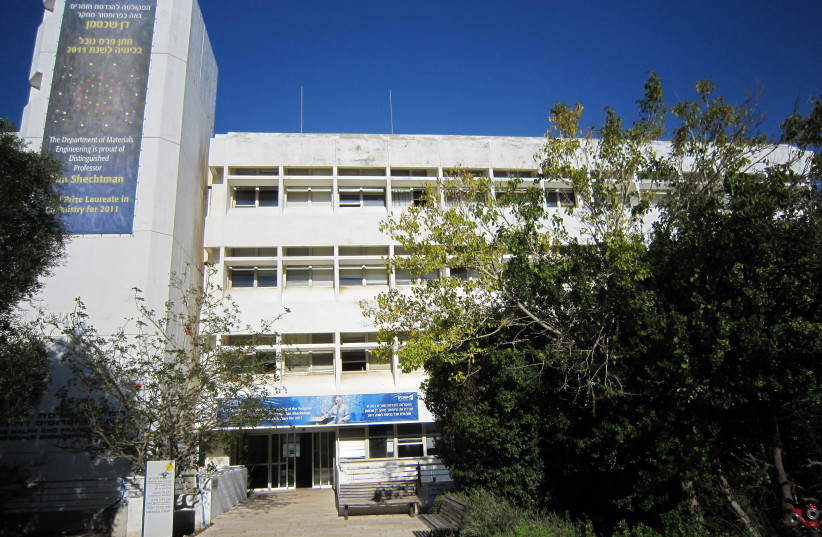
Faculty of Materials Science and Engineering at Technion University. (photo credit: Wikimedia Commons)


An innovative new Atmospheric Water Generator (AWG) developed by the Technion-Israel Institute of Technology has taken home the prestigious Water Europe Innovation Award, the university announced on Thursday.

Titled H2OLL, the AWG functions by converting water vapor that is abundant in the air into drinkable water. While this technology is similar to other products, such as Watergen, the team behind H2OLL is confident that it is technologically superior and can function without an external power source.

It functions using Atmospheric Moisture Harvesting (AMH) technology to extract moisture from the air, which is something that can even be found in arid and desert regions.

Producing Water from Air New Technion Moisture Harvesting System, Feb 17, 2020


Water shortage is a serious problem faced by states worldwide, with over 670 million people (over 10% of the global population) believed to have little to no access to drinking water. But solutions like H20LL can help solve this, which is notable for being in line with the UN's Sustainable Development Goals (SDGs), which include the right of every person to have access to clean water.

The prototype for the H2OLL technology has been used throughout the winter of 2019-2020, during the COVIDE-19 pandemic, and is currently on its way to becoming a company.


Unravelling the knotty problem of the sun's activity

JULY 21, 2021, by Royal Astronomical Society

Simulation of twisted magnetic field lines emerging through the photosphere, the visible surface of the Sun.
 Credit: MacTaggart et al.

A new approach to analyzing the development of magnetic tangles on the Sun has led to a breakthrough in a longstanding debate about how solar energy is injected into the solar atmosphere before being released into space, causing space weather events. The first direct evidence that field lines become knotted before they emerge at the visible surface of the Sun has implications for our ability to predict the behavior of active regions and the nature of the solar interior. Dr. Christopher Prior of the Department of Mathematical Sciences, Durham University, will present the work today at the virtual National Astronomy Meeting (NAM 2021).

Researchers are generally in agreement that solar activity is caused by instabilities in giant twists of magnetic ropes threading the visible surface of the Sun, known as the photosphere. However, there has been an ongoing debate about how these tangles form. The two dominant theories have suggested either that coils of field lines emerge through the photosphere from the convection zone below, or that the feet of arching field lines wrap around each other on the surface itself and create braids. Both mechanisms could theoretically produce effects like sunspot rotation and dramatic solar flares but, to date, no direct observational evidence had conclusively supported either scenario.

Prior and colleagues from the University of Glasgow and INAF-Osservatorio Astrofisico di Catania in Italy came up with a new direct measure of the entanglement of the magnetic field by tracking the rotation of field lines at the points where they intersect with the photosphere. This "magnetic winding" should manifest in different ways for each of the two theories. Thus, applying magnetic winding to observations of the photosphere and examining the resulting patterns could enable a definitive answer to be reached for which theory was correct.

The image on the left shows a series of magnetic loops on the Sun, as captured by NASA's Solar Dynamics Observatory. The image on the right has been processed to highlight the edges of each loop and make the structure clearer. 
Credit: NASA's Goddard Space Flight Center/SDO.

The researchers studied the magnetic winding for 10 active regions on the Sun in observations by solar missions. In every case, the results matched the emergence theory of pre-twisted magnetic field lines rising up from the convection zone.

Prior explains, "The pattern for pre-twisted field lines exactly matched the observational data we considered initially, and this has since been found to be true for all data sets of active regions we have looked at so far. We anticipate that magnetic winding will become a staple quantity in the interpretation of magnetic field structure from observational data."


Recommend this post and follow 
Sputnik's Orbit


Posted by Chuck spaced

SPACE - S0 - 20210723 - Here We Go Again, EFSQ, Mars Quakes

SPACE - S0 - 20210723 - Here We Go Again, EFSQ, Mars Quakes

Good Morning, 0bservers!


Solar winds calmed down a bit more from yesterday, but you couldn't tell that from the DSCOVR charts. They seem to be "stuck" in the past with no new updates. Luckily the ACE satellite seems to be working, although their charts are harder to read. That said, we're currently in the 350-370 KPS range after a steady decline from the 480 KPS range yesterday. Particle Density remained marginally elevated but there were no grand drops or jumps there. Temperatures took a steady fall to a current 4700°K after rising around noon UTC to over 5300°K. The (very) wide gap in the Bt/Bz polarities finally came back together starting around noon UTC and began a series of polarity collisions after 1700 UTC, which destabilized the Phi Angle. We're not getting updates on the KP-Index, same as the DSCOVR satellite charts, so we're going to be flying blind until they get that up and running again. Remember, NOAA is predicting a couple KP-5 hits late tonight. Those glitches on the GOES satellite seem to have abated, and the Magnetometer is showing a shallow sine-wave. Still nominal, though, as are the Proton Flux and Electron Flux readings. The X-Ray Flux also looks to be calmer today, with only a few bumps in the X-Ray road up to mid-Class B, and a continuing slow decline in the background radiation levels. There are a couple of very small pops visible on the video loops at 193Å, as well as a "poof" along the Southeast incoming lim, but it appears they were intra-atmospheric. Nothing showed as an ejection on LASCO C3. The Magnetogram is showing the smaller sunspot group in the North just passing the midpoint, with the larger and more complex Northern sunspot group about two days behind, and the Southern ones a further one to three days behind that.
  
Please Recommend this page and be sure to follow the Sputnik's Orbit 


AND WHILST YOU ARE HERE BE SURE TO FOLLOW AND RECOMMEND THE THANK GOODNESS ITS OWEN FRIDAY BLOGSPOT! https://tgiof.blogspot.com/